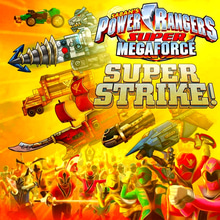
The sirens start like a rumor and become a chorus. Red beacons wash the skyline, the waterline flickers with enemy hulls, and you feel the morph call settle into your bones like a drumbeat. Power Rangers Super Megaforce Super Strike is an arcade action rush about timing, aim, and the thrill of calling a Zord when the city needs a bigger voice. You pick your favorite Ranger, strap into a gleaming machine that feels half legend and half engine, and head for the bay where the first wave already crests. The objective sounds simple—defeat the invasion and post a score that makes the Command Center grin—but the heartbeat of the game is in the little choices you make every second.
🛡️ Morph up and roll out
From the first second you are moving. The HUD pops with readable icons, your blaster pings with a crisp report, and enemy drones stitch patterns across the screen that look chaotic until your hands learn their grammar. You strafe left to slide under a spread, tap a charged shot to crack a shielded frigate, and sweep up energy orbs that arc toward your Zord like friendly comets. Every Ranger brings a different groove—one fires tight, rapid bursts for precision; another loves wide fan shots that clean the field when things get loud; a third charges a massive beam that begs you to line up three targets and whistle as the scoreboard sings.
🤖 Zords that feel like legends
Calling your Zord is not a cutscene, it is a decision. You earn the right with clean play, then trigger a short, cinematic swap that hands you power with responsibilities attached. Zords carry harder-hitting weapons, wider hitboxes, and the kind of presence that makes enemy formations lose their manners. A lion leaps through a broadside barrage and turns metal to confetti. A dragon dives from the clouds and carves a bright lane across deck guns that were starting to shout. The trick is picking the window. Trigger too early and you waste potential on small fry; trigger too late and you enter a storm without room to breathe. Nail it and the fight turns theatrical in the best way.
🎯 The gospel of aim and position
This is not a spray-and-pray shooter. It is a dance about angles. You learn to read enemy tells—a shimmer before a missile bloom, a stutter before a ramming run, a three-light countdown before a turret rotates into your lane. You stay just off-center so you can roll into danger or away from it with a tiny flick. Shots that pass clean through two targets are worth more than panicked taps that turn the air into glitter. After a few stages your thumbs will start drawing invisible lines, connecting threats into a path that your Ranger clears like a signature.
💥 Super strikes and meter management
Under your life bar sits the reason your score will spike: a strike meter that fills on combos, near-miss dodges, and clean waves. Spend a little for a screen-clear that buys breathing room. Save a lot for a Super Megaforce strike that erases a battleship and its rude friends with a beam bright enough to make the shoreline cheer. The choice is yours: cash out often and stay safe, or hold for a heroic punch that flips the level from “survive” to “dominate.” The game rewards both, but the scoreboard clearly loves bravely timed supers.
🌀 Boss ships with personalities
Every few stages the invasion sends something with a name. A carrier that spawns drones in crescendos, daring you to cut the rhythm at its source. A siege cruiser that throws slow, heavy shells—easy to dodge, unless you let them herd you into the corner where a laser grid is waiting. A flagship with segmented armor that only opens its heart after a feint; when it does, you have one clean window for a full-meter strike. Bosses are tests you can study for. They telegraph fairly, escalate honestly, and fall apart beautifully when you answer with the right tool at the right second.
🧩 Pickups, loadouts, and tiny advantages
Energy orbs feed your meter. Shield tokens forgive one mistake so you can keep a combo alive. Damage boosts shorten arguments with mid-boss armor. You do not need a spreadsheet—this is arcade math, clear and friendly. The fun is in how these pickups shape your next thirty seconds. Grab a shield and you permit yourself a greedier angle; snag a damage chip and you stop nibbling at that destroyer and finally bite. Between runs, you can favor a Ranger whose special suits your style: precision for tight patterns, spread for crowd control, or charge for boss windows. The difference is real but never punishing; the game wants you to succeed, then experiment.
🌊 Stages with a mood
The bay at sunset is all gold reflections and clean sightlines, a place to learn the feel. Open ocean rides bring swell and surge that nudge your aim in ways you notice after the first miss. Dockyard approaches pack cranes and pylons into narrow lanes where patience is louder than speed. Night missions paint the horizon with tracer fire and neon UI cues, a contrast that keeps hazards readable while your eyes enjoy the glow. Weather matters too—wind gusts push missile trails, rain softens explosions into a warm hiss, and snow makes the world quiet in a way that makes boss roars feel bigger.
🎮 Feels right on phone or desktop
On keyboard, taps and dashes have that neat snap that lets you thread impossible-looking gaps. On mobile, your thumbs draw curves that map directly to movement without sticky drift. Haptics (where supported) offer polite confirmation on pickups and a firmer tick for strike activation, and the sound mix does real work—a low growl before a battleship volley, a rising chime on combo chains, a satisfying thunk when a shield token saves a run you were willing to fight for.
🧠 Score chasing and smart habits
High scores do not come from panic fire. They come from clean waves, safe greed, and meter turns that look reckless but are secretly planned. Watch the edges of the screen, not the center—threats are born at the borders. Dodge through danger, not away from it, so your counter window stays open. Break formation only to grab a pickup that changes the next minute, not for vanity. And after a mistake, breathe once. A calm player recovering at 60 percent health posts better numbers than a tilted ace at 90.
⚙️ Difficulty that respects you
Early waves teach the alphabet. Midgame asks you to spell without looking. Late levels compose full sentences in missiles and beams and then give you the pen for the last word. Continues are fair, checkpoints are honest, and each retry feels like another draft of the same story—tighter, cleaner, braver. You do not need to memorize patterns to survive; you need to learn how the game talks and answer in its language.
🏆 Moments you will remember
The first time you time a dodge so close the screen sighs and the combo counter adds a little sparkle. The boss core you strip in a three-second window with a beam that you charged across two entire waves. The pickup run where a shield token let you hug danger long enough to clear a score gate by one point and you laughed out loud because close is beautiful when you planned it. These are the tiny epics that live in arcade games, and this one is generous with them.
🎬 Why you queue “one more strike”
Because piloting a Zord never stops feeling cool. Because every Ranger changes the tempo without changing the rules. Because waves escalate like a well told action movie and boss ships reward nerve that listens to timing. Because the scoreboard is a mirror that reflects attention, not just survival. And because when the invasion finally breaks and the city lights blink a little steadier, you still have a better run in you, and the bay is right there, waiting.





 Share
Share
 Embed
Embed