🔦😶 The rulebook fits on two lines: light, silence
You wake up to a humming darkness that feels crowded. The air is stale, the floor remembers footsteps that aren’t yours, and something out there refuses to breathe when you do. Pulse Of Fear drops you inside an abandoned facility where survival is simple to understand and hard to perform: keep it quiet, keep it lit. Your flashlight chews through battery like a nervous habit; generators cough when you coax them; locked doors hoard secrets the way shadows hoard teeth. On Kiz10, movement is smooth whether you play with WASD and mouse or a mobile joystick; every step prints a new decision on the floor.
⚡🗝️ What the dark is hiding (and why it hates you)
The building is a stitched-together maze: offices with tables nailed to memory, maintenance corridors lined with grumpy fuse boxes, a cafeteria that never learned how to be comforting. Generators are your fragile friends—old, resentful, loud in all the wrong ways. Bring them back online and narrow cones of safety flicker to life: automatic lights hum, locked doors consider forgiveness, emergency panels stop blinking question marks. You’ll scavenge batteries from desk drawers, snap fuses into panels that whine like they’re being asked to grow up, and pocket keys that do not promise to fit the locks you fear the most. Somewhere behind it all, something listens. It prefers you loud, panicked, and in a hallway that does not offer left turns.
🩸🩹 Triage for cowards and champions
You will get clipped. Splinters, scrapes, a misstep into a broken shelf, the kind of encounter that writes an exclamation point on your timeline. First-aid kits turn up in med cabinets and disaster stations, dull green and trustworthy. Use them when the corners of your screen start pretending to be curtains. But here’s the trick: healing is time, and time is noise, and noise is an RSVP. Choose your moments like you choose your words in a room that loves misunderstandings.
👂🫗 The soundtrack of staying alive
Silence in Pulse Of Fear is not empty. It’s geometry. It has shape. Your footsteps are a metronome; slow them when the hum in the walls rises a half note. Crouch near vents to borrow the wind’s disguise. Press E to interact like you’re apologizing to the furniture. The thing—whatever it is—hunts by pattern: a steady tapping that accelerates when you fumble a latch, a faraway drag that stops when you dare to look back, a throat-click that means “do not run unless you’re sure.” When a generator rattles itself awake, it sings relief and risk at once; the corridors bloom with light, and the map of your fear redraws itself.
🧭🔋 The map is in your pockets
Your inventory slots—1 through 5 on desktop, quick-swap icons on mobile—are tiny lifelines. Batteries sit warm and hopeful, a little sun in a cylinder. Fuses ride along like bored chess pieces until they slip into a panel and become destiny. Keys are patience that clinks. Each item is weight in your head more than your hands: do you carry a spare battery or a second fuse? Will the next door hiss for a key, or will it demand that you brave the dark while you snake a cable across the floor? Drop with Q if you misjudged; the floor remembers where you left your mistakes.
🏃♀️💨 Run when you must, never when you want
Shift gives you sprint, but sprint spends silence. Use it as punctuation—a dash between sentences, not your whole language. The thing answers speed with speed; it will not race you, it will herd you. The safest run is a short one, past a doorway you pre-checked, into a pocket of light you earned earlier by nursing a generator back to life. On mobile, the run button takes the same hint: press and release like you’re finishing a sentence.
🧩🔧 Lights on, lies off
Every generator is a small puzzle: a blown breaker that needs a rhythm on its switches, a manual crank you have to time with the flicker of a dying gauge, a fuel feeder that balks unless you prime it twice and wait for the cough. When the power returns, pathways unlock and the building accidentally tells the truth about itself. You’ll spot maintenance notes on walls that didn’t exist in the dark. You’ll read a memo about a “temporary shutdown” with a date scratched out and replaced by a shaky tomorrow. You’ll see the shadow of something too high to be human and too patient to be animal, painted on a stairwell by a light that should not reach that far.
🗝️🚪 Doors that promise, doors that lie
The clinic door has a keyhole shaped like a sigh. The workshop door asks for a fuse and a favor. The security office wants both power and permission. Keys are coded with colors and nicknames in tape: “COBALT,” “BIRCH,” “MESS.” You’ll learn the language quickly. You’ll also learn the betrayal: sometimes a key opens onto a room full of nothing but dust and an empty battery blister pack. Sometimes the prize is behind a door that was never locked, just loud.
👁️🗨️ Monsters you barely see are monsters you believe
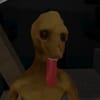
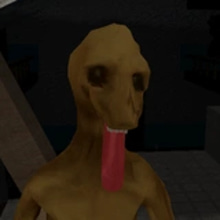
Pulse Of Fear refuses to photograph your nightmare. It sketches it: a slice of silhouette across the far hall, a reflection caught in cracked glass, the hint of joints in the wrong places, the sound of hands used for crawling rather than grabbing. When your flashlight beam lands on the shape, it does not charge; it pauses. This is worse. If you blink first, it owns the aisle. If you hold steady, slowly lowering the beam when your battery wheezes, it might retreat into a stairwell that was not there a minute ago. You will hate it and also respect it.
🧠🕯️ Micro-habits of people who make it out
Plan your routes in triangles, not lines—generator, objective, safe light, and back again. Open every door you pass, even if you don’t enter; creating escape options costs less than remembering you forgot. Knife your flashlight in quick pulses rather than painting halls continuously; brief beams buy seconds and burn less battery. Count your steps between cover spots; eight strides to the locker, five to the fuse panel, three to the stairwell lip. If you must run, bounce off thresholds—doorframes swallow sound for a half-beat, enough to trick a listener into overcommitting. And practice the smallest skill of all: when you hear the click behind you, don’t look. Looking is a loud movement.
🎮📱 Controls that respect panic
Desktop feels surgical: WASD for legs that still listen, mouse to parse the dark a few degrees at a time, E to work miracles, F to carry your portable sunrise. Tab opens a pause that is also a prayer. On mobile, the joystick slides with intent, touch-look drags just enough, and every button is big, honest, and silent. Nothing fights you except the building.
🔊🎶 Sound that tells on you
Heat pipes ping when power returns. Loose paper rasps underfoot like gossip. Emergency lights hum in a frequency that makes bravery itchy. When you slot a fuse, the panel exhales; when you miss the slot, it complains loud enough that the thing tilts its head. Wear headphones if you want the walls to have opinions; they do.
🧯🌀 When everything collapses at once
You miscounted steps, burned your last battery, and now the corridor is a throat you live inside. Stop. Kneel by instinct. Thumb the flashlight once—one strobe to steal a map from the dark—and crawl two body lengths toward the cold draft. The air means a stairwell or a broken window; both are better than guessing. If the thing clicks close, drop an item. Noise plus surprise equals one second of borrowed life. Reach the landing, breathe in numbers, and remember where you left the last generator that still owes you a favor.
🚪🌟 Escape is not a door; it’s a sequence
You will repair a chain of systems that pretend not to know each other: bring power to the corridor, unlock the security office, snag the master key, feed the final generator, trip the gate release, and choose to step into weather that might be louder than the thing you fled. The first time the main exit groans and the outside air hits your face, it won’t feel like victory—it will feel like your heartbeat leaving the building ahead of you. That’s fine. Follow it.
🏁🫀 A dare before you kill the lights
Do a full wing on one battery, using only generator light and two flashlight pulses per room. Or complete the panel repairs without ever running, counting steps instead of trusting your eyes. Braver still: leave one door locked on purpose to force yourself into the maintenance crawl and prove the map in your head is more accurate than fear. Pulse Of Fear on Kiz10 is a survival puzzle written in light and quiet—tight controls, hungry darkness, and the beautiful, terrible knowledge that your calm is a louder weapon than any scream.





 2 (159 votes)
 Share
Share
 Embed
Embed