🌲 Footsteps, fog, and a too-quiet path The forest doesn’t rustle so much as listen. Needles drink the moonlight, mist clings low like it remembers names, and a crimson hood moves between trunks the way a heartbeat moves between thoughts. Red Girl in the Woods is a side-view puzzle adventure with stealth veins and horror edges, the kind that lets silence argue until you’re sure the trees are whispering advice. Your job is simple, on paper: reach the next lantern, solve the obstacle, outsmart whatever is breathing just beyond the frame. In practice, it’s a string of tiny survival stories—quick decisions, small miracles, a hood pulled tight against the night.
🧠 Puzzles that click like cold latches Nothing here screams “logic test,” yet every scene is a problem asking for a neat answer. A ravine isn’t a gap; it’s a balance beam once you nudge a fallen branch to bite against a rock. A creek isn’t a wall; it’s a timing puzzle when the current coughs in repeating bursts that carry your improvised raft just far enough. Locked gates don’t crave keys so much as leverage: if you drag the stump two steps left and wedge your basket handle in the latch, the hinge sighs open like it wanted to be helpful all along. The best solutions feel improvised and inevitable, like you merely noticed the world’s preferred order.
🐺 Stealth with teeth and patience This fairy tale has predators and they behave like they study you. Wolves pad slow circles, ears pricking when twigs complain. Listen first. Their patterns are music: two paces, sniff, turn; three paces, sit, stare. Move only when the rhythm leaves you space. Human silhouettes appear, too—trappers with lamp cones that slice the dark, cultish figures who mutter to trees, a hunter who whistles an off-key lullaby as if daring you to breathe. Hide behind bramble thickets that mute light. Flatten against bark until the cone passes. Throw a pebble to move the melody two beats to the left. You won’t win by fighting; you’ll win by rewriting routes the moment danger composes a new verse.
🕯️ Light is tool and threat Carry a candle and you halve the forest’s lies while doubling your own silhouette. It’s warmth with a price. Hold the flame to read carvings that nudge you toward safe footholds or to reveal chalk symbols that sleep under moss. Snuff the wick when eyes glint at the path’s edge. Some puzzles demand courage with the lantern fully raised—shadow puppets align into a code only when cast large against a standing stone. Others reward darkness: luminous mushrooms pulse in a sequence that maps a safe crossing, visible only when you let the night own your edges. The trick is learning when to let your fear steer and when to let your curiosity.
🧺 A basket of clever nonsense Your inventory reads like a scavenger’s dream. Twine turns into a tripline that persuades a snare to waste its spring. A tin whistle stalls a stalking shape for exactly one note’s length. Chalk marks cliffs so your second try hits the true handhold. A red ribbon tied to a branch marks wind direction for a glider improvisation you’re going to be unreasonably proud of. Nothing feels like a superpower; everything feels like a kid’s determination rebranded as genius.
🌫️ Sections that change the forest’s mood The briar maze is all angles and listening, a place where shortcuts are rumors and patience is a blade. The marshland is slow motion strategy, stepping stones and dragonfly rhythms, reeds that bend toward the safe route if you watch them breathe. The abandoned camp speaks in metal and regret—rusted traps you disarm by reading their springs, half-burnt maps that only confess trails when warmed by candle glow. Then the stone circle, where the air tastes like old stories; decipher echoes by tapping posts in a pattern the owls keep muttering, and a standing stone rolls aside like a courteous giant. Each biome is a new dialect of danger, a new way to feel smart for listening.
🧩 Little lessons the woods won’t put in writing Don’t jump on the first rock; jump on the one that’s wet—it sits lower, which makes the second hop honest. Stack items with intent: stick on stone on plank turns a rumor of a bridge into an actual bridge. When two patrol cones overlap, stand in the seam and let both mistakes cancel. If a wolf lifts its head but doesn’t turn, freeze; if it turns but doesn’t lift its head, creep sideways—eyes and ears make different rules. Candles gutter before wind gusts by a half second; watch the flame for weather telegraphs. And if the path splits, pick the route that smells like sap—human routes smell like oil and disappointment.
🌙 Story told with glances, not lectures There are notes, sure, but the forest mostly prefers glances. Scratches on bark tally nights since someone came home. Ribbons tied at intervals mark the pace of a child counting steps between safe trees. Boot prints stutter where a grownup once sprinted, then slow into calm where a trap lay disarmed. A cottage door sits ajar with bowls on a table like the room paused mid-breath. Your red hood catches every candle and every moonbeam, a moving marker on a map nobody else can read. The tale is shy but insistent: someone vanished, something hunts, and you’re the only person stubborn enough to argue with the dark politely and win.
🎮 Feel of movement when nerves are loud Controls are gentle on purpose. Walk has weight; run has consequences. A short hop is polite; a long leap insists on planning your landing before your toes leave the earth. Crawling under deadfall feels like threading a needle with your heartbeat. Holding your breath—a real button—shrinks your sound radius and steals a tiny slice of your vision, a trade you’ll accept gladly at the first crunch in the brush. Everything supports the fantasy of surviving by intention rather than luck.
🔊 Sound you can navigate by Wind edits ferns in whispered Morse. A distant chain clinks, mapping a trap’s position before the art does. Crows fake alarms unless you bribe them with crumbs, after which they become your loud, opinionated doorbells. Footsteps change tone by ground—roots thud, stones click, damp moss barely sighs—letting you plan routes with your ears. Music doesn’t command; it lingers at the edge, strings tightening only when you forget to, easing when you’ve earned a breath.
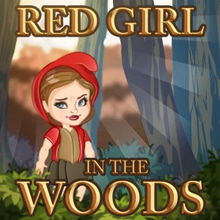
🎨 A picture book that grew a spine The palette swims between hush and hazard. Moss glows just enough to mark walkable edges, nettles shine like warnings, puddles mirror moon slivers you can follow when everything else lies. Your cloak is the one loud color on purpose, a moving exclamation in a page of muted greens and browns. Animations do quiet acting: a hand extending toward bark before a climb, a pause at a cliff where a shoe tests faith, a quick glance back when a path finally opens as if you can’t resist sharing the relief with the trees.
🔥 Moments the night remembers A log rolls, a lamp swings, a wolf sniffs followed by the tiniest squeak of your sole; you hold your breath and discover you can actually hear it on the audio track. A lantern puzzle clicks and scattered moths rise, guiding you through fog like glitter torn from the moon. At the stone circle, the final tone lands and the whole forest seems to exhale, opening a path that was always there, just polite about it. The game excels at these small crescendos—no fireworks, just a soft “yes” from the world when you’ve been careful and brave.
🏁 Why this walk grips your hands Because it makes fear human-sized and solvable. Because puzzles respect intuition more than manuals. Because stealth here is empathy—listening, timing, moving like you belong. And because every success feels like a personal story you’ll retell even if no one believes the part with the moths. Red Girl in the Woods on Kiz10 is a dark fairy-tale hike where clever beats strong and quiet beats loud, a game that trusts you to survive with a candle, a ribbon, and a very good sense of when to freeze.





 Share
Share
 Embed
Embed