🏃♂️🌀 A Runner That Refuses to Go in a Straight Line
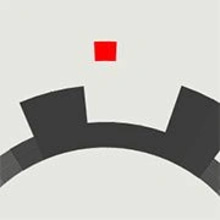
Running Round doesn’t do the usual “run left to right and hope for the best” routine. It’s a runner game with a twist that feels simple for about ten seconds… then it starts messing with your timing. You’re sprinting in loops, circling tight paths, and dealing with hazards that seem placed specifically to punish anyone who plays on autopilot. On Kiz10, it feels like a compact arcade challenge: quick to start, instantly readable, and strangely hypnotic once you get into the rhythm. The only problem is that rhythm is fragile. One tiny mistake and the loop turns into chaos. 😅
This is the kind of endless runner where the real enemy isn’t distance. It’s precision. It’s your ability to keep your cool while everything repeats just fast enough that you start thinking, “Okay, I know this pattern,” right before the game introduces one small change that ruins your confidence.
🎯🧠 The Core Skill: Timing, Not Speed
Running Round is all about control. You’re not just holding a button and watching your character fly forward. You’re making micro-decisions constantly. When to turn. When to accelerate into a gap. When to hesitate for half a heartbeat so you don’t clip a hazard. It’s not slow, but it’s not a raw speed contest either.
What makes it satisfying is how clearly it rewards clean inputs. When you hit the timing right, the run looks smooth, like you’re gliding through danger with perfect rhythm. When you’re off by even a little, you feel it instantly. You scrape something. You misjudge a corner. You collide and everything ends like a comedy skit with a sudden cut. 🙃
And because the game is built around repeating routes, you’re constantly learning. Each loop teaches you something: where the danger sits, how long a gap stays open, how quickly the turn comes back around. You start predicting instead of reacting, and that’s when the score begins to climb.
🌀⚠️ Loops That Turn Familiarity Into a Trap
The “round” part isn’t just a name. The looping design is what makes Running Round different. In a normal runner, once you pass an obstacle, it’s gone. Here, you’re going to see it again. And again. And again.
That creates a strange kind of pressure. You can’t just survive one tricky moment. You have to survive it repeatedly. Consistency becomes everything. One good dodge doesn’t matter if you mess up the next time the loop comes around.
It also creates that funny psychological thing where you start feeling safe because you’ve done it a few times… and then you get sloppy. You drift a little too wide. You cut a corner too tight. You take a risk because you’re bored. And that boredom gets you eliminated immediately. Running Round is very good at punishing casual arrogance. 😅
🔥🧩 Obstacles, Patterns, and “Why Is This So Hard Suddenly?”
The hazards in Running Round aren’t just random walls. They’re pattern-based traps designed to test your focus. Some obstacles demand sharp turns. Some demand you wait for an opening. Some demand you commit and not panic mid-move.
The game plays with your instincts. It encourages you to move fast, but it rewards you for being precise. It makes openings look generous until you approach them at speed and realize they’re not. It makes you think a path is safe until the loop returns and the timing is slightly different because you moved differently last cycle.
That’s a key detail: your movement affects your future. If you hesitate earlier, you reach the next hazard at a different moment, and that changes everything. You’re not just dodging obstacles. You’re managing timing across the entire loop like you’re keeping a beat in a song. 🎵🏃♂️
🎮😈 The “One More Run” Problem
Running Round is built for replay. Not the boring kind of replay where you’re grinding for a tiny upgrade. The satisfying kind where every run teaches you something, and you can feel improvement immediately. You don’t need a new item or a new skin to get better. You just need cleaner timing.
That’s why it fits Kiz10 so well. You can jump in, fail, and instantly know what you did wrong. You can jump back in, fix it, and push your score higher. It’s addictive in that pure arcade way: your score is your story, and your story is basically “I almost had it.” 😭
Then one run later, you actually have it, and you feel like a speed wizard for five seconds. Then the next hazard cycle humbles you again. Balanced suffering. Perfect.
🧠💨 Small Habits That Make You Survive Longer
If you want to score higher, you don’t need fancy tricks. You need habits. Keep your turns clean. Don’t oversteer. Don’t cut corners too tightly when you’re nervous. If an opening is tight, approach it with control instead of desperation.
Also, pay attention to the loop rhythm. If you’re reaching a hazard at a bad time, that usually means you need to adjust earlier, not at the hazard itself. That’s the hidden strategy: fixing timing upstream. It’s like playing chess, except the pieces are your own mistakes and they move at 200 bpm. 😅
And when you’re on a good run, don’t celebrate early. Celebration is how you die. You’ll feel yourself relax, your input gets sloppy, and the loop ends you instantly. Stay calm. Stay boring. Boring is how you win.
🌈🏁 Why Running Round Works on Kiz10
Running Round is a quick arcade runner with a looping twist that turns simple movement into a skill challenge. It’s a timing game, a reflex test, and a pattern-learning puzzle all packed into one fast experience. You’ll like it if you enjoy endless runner games, high score challenges, short intense sessions, and that feeling of slowly mastering a repeating routes until you can run it cleanly without thinking.
Play it on Kiz10 when you want something that’s easy to understand, hard to perfect, and weirdly satisfying once you get into the loop. Just don’t trust the loop. The loop is not your friend. 🌀😈














 4.2 (11 votes)
 Share
Share
 Embed
Embed


