🌊🚢 Small submarine, big ocean, zero mercy
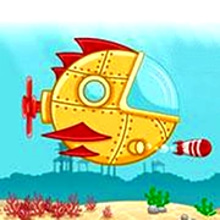
Submarine Dash drops you into the deep with a tiny sub that looks cute until the sea starts trying to erase it. This isn’t a slow, realistic naval sim where you calmly calculate angles and sip coffee. This is an arcade survival sprint underwater: you move, you dodge, you scoop up coins and power-ups, and you pray your next micro-correction doesn’t send you straight into a rock that was hiding in the blue like it pays rent there. The game’s genius is how simple it feels in your hands and how complicated it becomes in your head. One second you’re cruising, the next you’re threading between hazards while your brain is doing rapid math like “okay if I tilt up now I’ll hit the rocket lane, but if I stay low I’ll clip the coral… WAIT WHY IS THERE ANOTHER ROCKET?” 😅
On Kiz10, Submarine Dash is the kind of quick-hit skill game that turns into a personal challenge without warning. You’re not trying to “win a story.” You’re trying to survive longer, collect more, upgrade smarter, and eventually reach that sweet flow state where the ocean feels readable instead of random. It’s tense in a clean, arcade way. No complicated menus. Just you versus the depth.
🧭🐠 Movement feels easy… until it suddenly isn’t
The controls are friendly, which is exactly why the game becomes dangerous. Steering a submarine should be chill, right? Smooth little adjustments, gentle arcs through the water. Submarine Dash agrees for about ten seconds, then it starts tossing obstacles in patterns that punish lazy steering. Rocks sit at angles that catch you when you drift too long. Enemy rockets show up at the exact moment you decide to relax. And the water itself feels like it’s daring you to overcorrect. Because overcorrecting is how you die in games like this. You see danger, you jerk the controls, and your sub swings into the other danger you weren’t looking at. Classic underwater tragedy.
The best runs come from calm hands. Tiny inputs. Early corrections. Treat the submarine like it has weight and momentum, even if the game is fast. If you drive it like a twitchy drone, you’ll bounce into trouble. If you drive it like a smooth little predator sliding through the deep, suddenly your path opens up.
💰✨ Coins, boosts, and the greedy little voice in your head
Coins aren’t just shiny decoration. They’re the reason you start taking risks you absolutely don’t need to take. You’ll see a coin line hovering near a hazard and think, I can grab that. Then your submarine grazes a rock and you learn a valuable lesson about greed. But that’s the fun, honestly. Submarine Dash turns collecting into temptation. The ocean is basically a casino and every coin trail is the slot machine handle.
Power-ups make it even better. A good boost can turn a shaky run into a strong one. You grab something helpful, your confidence spikes, and suddenly you’re moving like you own the sea. Then the next obstacle wave humbles you, because confidence doesn’t change physics. Still, those moments are addictive. The game creates these little surges of hope, like “yes, this is the run,” and you keep chasing that feeling because it’s the perfect arcade loop: risk, reward, panic, recovery, repeat.
🛠️⚙️ Upgrades that turn survival into strategy
Here’s where Submarine Dash stops being “just a dodging game” and becomes a small upgrade strategy puzzle. The money you collect feeds into improvements that help you go farther. Maybe you want better durability so a small mistake doesn’t instantly ruin you. Maybe you want better speed control or stronger boosts so you can slip through danger zones with more confidence. Maybe you want upgrades that increase coin gain so the whole economy snowballs faster. You’re not just improving your sub, you’re shaping your playstyle.
And it matters, because the difficulty curve is basically the ocean tightening its grip. Early on, you can survive by reacting late and getting lucky. Later on, luck runs out. You need upgrades, but you also need discipline. The game becomes a two-part challenge: build a better submarine, then prove you can actually pilot it.
🚀🧨 Rockets, rocks, and the art of staying unpredictable
The threats in Submarine Dash are simple, but they combine into stressful patterns. Rocks are the permanent danger, the silent “you weren’t paying attention” punishment. Rockets are the active danger, the “move now” pressure. When both show up together, that’s when your brain starts doing that survival game thing where it focuses too hard on one hazard and forgets the other exists.
One of the best habits you can build is scanning ahead instead of staring at your submarine. Watch where the next gap will be, not where you are now. It’s a small mental shift that makes everything feel easier. And when rockets appear, don’t just dodge them… dodge into space that keeps your future options open. Dodging into a corner is basically borrowing trouble with interest.
You’ll also learn not to be predictable. If you always ride the same vertical lane, you’ll eventually get trapped by a pattern that closes that lane. Good runs use the whole water column. Drift up, drift down, stay loose, keep options open. It’s like dancing with the sea, except the sea is holding a knife. 😄
🎮😵 The “one more try” effect is brutal
Submarine Dash is dangerous for your time because the failures are fast and educational. You don’t die and think, “That was unfair.” You die and think, “I know exactly what I did.” Maybe you chased coins too close to rocks. Maybe you panicked when rockets came in. Maybe you overcorrected because you were late. Those are fixable problems, and fixable problems are addictive because they create immediate motivation.
So you restart. And you do better for a bit. Then you die again, but later, which feels like progress. Then you restart again because now you want to push even farther. This is how the game quietly turns into a high-score obsession. Not because it forces you, but because it makes improvement feel real.
🌌🫧 The best moment: when the ocean finally feels readable
If you stick with it, there’s a moment where everything clicks. You’re not reacting late anymore. You’re predicting. You see coin trails and instantly judge whether they’re safe. You spot the rocket lanes early. You glide through rock clusters without panics. And suddenly the game feels smooth, almost cinematic. You’re a tiny submarine cutting through danger like it’s routine. That’s the payoff. Not just “surviving,” but controlling the chaos.
And when you lose after that, it doesn’t feel like defeat. It feels like the ocean reminding you: stay sharp. Which is rude, but fair. Submarine Dash is one of those arcade games that rewards calm focus, smart upgrades, and just enough restraint to ignore bait coins when the path is too tight. Play it on Kiz10 when you want fast action with a skill ceiling that keeps pulling you back down into the deep. 🌊🚀





 Share
Share
 Embed
Embed


