🌲 𝗧𝗛𝗘 𝗙𝗢𝗥𝗘𝗦𝗧 𝗜𝗦 𝗡𝗢𝗧 𝗣𝗘𝗔𝗖𝗘𝗙𝗨𝗟, 𝗜𝗧 𝗜𝗦 𝗣𝗘𝗥𝗦𝗢𝗡𝗔𝗟
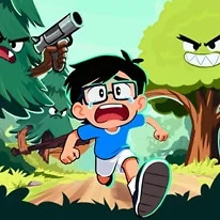
Trees Hate You begins with the kind of setup that sounds harmless enough to trust for about five seconds. You had a picnic. You want to go home. Very normal. Very reasonable. Unfortunately, the forest appears to have reviewed that plan and rejected it with extreme hostility. From that point on, the game turns a simple walk through nature into a first-person nightmare of traps, fake safety, sudden deaths, and cruel little jokes that feel engineered by woodland chaos itself.
That is what makes the game memorable right away. It takes an everyday idea and mutates it into something ridiculous, mean, and strangely hilarious. This is not a normal horror game, and it is not a standard walking simulator either. It is a rage game with black humor, built around the idea that the world around you is not just dangerous but actively mocking you. The trees are not scenery. They are accomplices. The path is not guidance. It is bait.
On Kiz10, Trees Hate You stands out because it knows exactly what kind of misery it wants to deliver. The funny kind. The kind that makes you groan, fail, laugh, and try again even though some part of you knows the forest is clearly enjoying this too much 😅
🍄 𝗧𝗥𝗜𝗔𝗟, 𝗘𝗥𝗥𝗢𝗥, 𝗔𝗡𝗗 𝗣𝗨𝗥𝗘 𝗠𝗜𝗦𝗧𝗥𝗨𝗦𝗧
The heart of Trees Hate You is not pure reflex skill. It is suspicion. The game teaches you very quickly that trusting anything is a bad habit. A quiet path may hide a trap. A familiar object may behave differently than expected. A moment that feels safe may exist only to make the next death more insulting. Progress comes through repetition, memory, and the slow construction of a paranoid brain.
That trial-and-error structure is where the rage game identity really kicks in. You do not move forward because the game is fair and predictable. You move forward because you slowly learn the exact shape of its cruelty. The first time a trap catches you, it feels cheap. The second time, it feels like a lesson. The third time, it becomes personal.
And somehow, that loop works. It works because the game does not frame failure as tragedy. It frames failure as part of the joke. You are supposed to get caught off guard. You are supposed to feel briefly betrayed by reality. Then you restart with a little more knowledge and a little less innocence. The forest strips both away efficiently.
💀 𝗗𝗘𝗔𝗧𝗛 𝗜𝗦 𝗙𝗔𝗦𝗧, 𝗦𝗧𝗨𝗣𝗜𝗗, 𝗔𝗡𝗗 𝗢𝗙𝗧𝗘𝗡 𝗩𝗘𝗥𝗬 𝗙𝗨𝗡𝗡𝗬
A big reason Trees Hate You works so well is its sense of black humor. The game is not just hard. It is rude in a way that becomes entertaining. Surprises are not simply there to stop you. They are there to embarrass you. To make you think you had control for one short, beautiful moment before the game reaches over and smacks that illusion out of your hands.
This balance between frustration and comedy is difficult to get right, but Trees Hate You understands it. If the punishments were only harsh, the game would become exhausting. If the humor were too soft, the tension would disappear. Instead, it keeps both alive. You are annoyed, yes, but also curious. You want to know what nonsense is waiting next. You want to see what kind of absurd death the forest has prepared. That curiosity is powerful.
There is a special kind of laughter that only comes after a completely unfair trap. Not a happy laugh. More of a stunned, offended, “oh come on” laugh. Trees Hate You seems built entirely around chasing that reaction.
👀 𝗙𝗜𝗥𝗦𝗧-𝗣𝗘𝗥𝗦𝗢𝗡 𝗖𝗛𝗔𝗢𝗦 𝗠𝗔𝗞𝗘𝗦 𝗘𝗩𝗘𝗥𝗬𝗧𝗛𝗜𝗡𝗚 𝗪𝗢𝗥𝗦𝗘
The first-person view is a huge part of the game’s identity. In another perspective, the traps might feel easier to read or emotionally distant. Here, everything is immediate. You are inside the mess. When the forest cheats, it cheats directly in your face. That closeness makes every fake clue and sudden ambush more effective.
It also changes how you move through the environment. You are not simply looking at a character in danger. You are the one inching forward, scanning the path, second-guessing every object, wondering whether the next ten steps are safe or whether the game is politely setting the table for your next disaster. That tension makes even slow movement feel active.
This is where the atmosphere becomes stronger than the story. Trees Hate You does not need long explanations or heavy narrative scenes. The mood does the work. The forest itself becomes the villain. The layout, the silence, the weird surprises, the visual hostility of nature turning against you... that is the storytelling. It is minimal, but it sticks.
🎩 𝗔 𝗦𝗠𝗔𝗟𝗟 𝗪𝗢𝗥𝗟𝗗 𝗪𝗜𝗧𝗛 𝗝𝗨𝗦𝗧 𝗘𝗡𝗢𝗨𝗚𝗛 𝗩𝗔𝗥𝗜𝗘𝗧𝗬
Even though the concept is simple, Trees Hate You avoids feeling too narrow because it sprinkles in just enough variety. Changing biomes help the journey feel less repetitive, and collectible items like hats add a playful incentive that fits the game’s offbeat tone. It is not trying to become a giant progression-heavy adventure. It is just giving you enough texture to keep the run interesting while the forest continues trying to ruin your day.
That is a smart choice. The game’s strength is its sensation of constant tension, not complexity for its own sake. A little visual change, a few collectibles, a new kind of trap, and suddenly your attention resets. You stay alert. You stay curious. You also stay emotionally prepared for betrayal, which is healthy here.
The hats are a nice detail because they add personality without slowing the pace. In a game this hostile, even a small cosmetic goal can feel oddly comforting. It gives you something to care about besides survival and revenge.
😈 𝗪𝗛𝗬 𝗥𝗔𝗚𝗘 𝗚𝗔𝗠𝗘𝗦 𝗟𝗜𝗞𝗘 𝗧𝗛𝗜𝗦 𝗔𝗥𝗘 𝗦𝗢 𝗔𝗗𝗗𝗜𝗖𝗧𝗜𝗩𝗘
The strange magic of Trees Hate You is that it weaponizes your own determination. Every cheap death makes you want to prove the game wrong. Every unfair trick makes you want to outsmart it next time. It is not inviting you into a fair contest. It is insulting you into persistence.
That is the secret engine behind so many good rage games. They turn failure into fuel. Instead of pushing players away, the frustration becomes part of the hook. You fail, but now you know something. You restart, but now you have a plan. You die again, but this time you die angrier and slightly wiser. Progress in Trees Hate You feels earned precisely because the game is so shameless about trying to deny it.
And because the deaths are usually quick and memorable, the pacing stays sharp. The game does not waste your time with long stretches of emptiness. It keeps feeding the cycle: tension, trick, death, laughter, retry.
🏕️ 𝗔 𝗙𝗢𝗥𝗘𝗦𝗧 𝗧𝗛𝗔𝗧 𝗪𝗔𝗡𝗧𝗦 𝗬𝗢𝗨 𝗚𝗢𝗡𝗘
Trees Hate You is an easy recommendation on Kiz10 for players who enjoy rage games, black comedy, first-person trap games, and experiences built around surprise, punishment, and stubborn persistence. It understands that a challenge does not always have to be elegant to be compelling. Sometimes it can be petty, unfair, and deeply funny instead.
If you like games that troll the player, punish blind trust, and turn every small victory into a personal triumph over nonsense, this one absolutely delivers. The premise is absurd, the atmosphere is hostile, and the humor keeps the whole thing from collapsing into pure frustration. You are not just walking through the woods. You are surviving an argument with nature itself.
So take a deep breath, start moving, and do not trust the path. Or the trees. Or the silence. Or honestly anything at all. In Trees Hate You, paranoia is not a problem. It is the correct control scheme. 🌲💀



 2.5 (166 votes)
 Share
Share
 Embed
Embed