𝗩𝗢𝗜𝗗 𝗧𝗨𝗡𝗡𝗘𝗟 🌌⚡
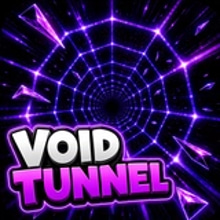
Void Tunnel feels like being fired out of a dream made of neon, static, and bad decisions at 300 km/h. It is fast immediately, then faster, then somehow faster again until your brain starts negotiating with your fingers. The whole experience is built around movement, reflexes, and the wonderful panic of realizing a spinning obstacle is already much closer than it looked half a second ago. This is not the kind of arcade game that asks you to settle in gently. It throws you forward, paints the tunnel in glowing synthwave colors, and quietly dares you to last longer than your own confidence.
That is what makes it so good. The concept is simple: survive inside a never-ending tunnel by rotating left or right to avoid incoming barriers. But simple does not mean soft. Void Tunnel turns one clean mechanic into a brutal test of focus. It keeps the controls minimal and lets the pressure do all the talking. You have three lives, a growing wall of visual chaos, and a speed curve that becomes less of a challenge and more of a lifestyle choice.
On Kiz10, that kind of game is dangerously effective. It starts with “let me try one run” and ends with you arguing internally about whether that last crash was your fault or the tunnel’s. The tunnel, of course, has no comment 😄
𝗦𝗣𝗘𝗘𝗗 𝗜𝗦 𝗧𝗛𝗘 𝗪𝗛𝗢𝗟𝗘 𝗣𝗢𝗜𝗡𝗧 🚀🌀
Void Tunnel understands that a great tunnel runner does not need complicated systems if the speed feels right. And here, the speed absolutely matters. You begin at a pace that gives you a chance to learn the flow, but that mercy does not last long. The farther you go, the quicker the tunnel demands decisions. What starts as reactive driving becomes something sharper, closer to instinct. You stop thinking in full sentences. You think in tiny impulses. Left. Right. Not there. Move now.
That rising speed gives every run a natural arc. Early moments feel almost manageable. Then obstacle frequency increases, patterns tighten, and the game starts testing whether your focus is really as good as you thought. It is a beautiful progression because it never needs to explain itself with heavy systems. Speed is the escalation. Distance is the story.
And when the run is going well, the sensation is amazing. You start flowing with the tunnel. Your movements get cleaner. Your reactions feel automatic. For a few glorious seconds, you become one of those players who looks impossibly calm while chaos rushes directly at them. Then a spinning cross appears and reminds you that pride is temporary.
𝗧𝗛𝗘 𝗢𝗕𝗦𝗧𝗔𝗖𝗟𝗘𝗦 𝗔𝗥𝗘 𝗣𝗨𝗥𝗘 𝗠𝗘𝗔𝗡𝗜𝗡𝗚𝗙𝗨𝗟 𝗘𝗩𝗜𝗟 😵💫🧱
A big reason Void Tunnel stays exciting is the variety of hazards. The tunnel does not rely on one repeated barrier forever. It throws different obstacle types at you, and each one changes the rhythm of survival. Slabs test your reading of open space. Full-diameter poles create hard timing moments. Zigzags force quick corrections. Rings with tiny gaps demand precision. Pulsating doors mess with your timing. Spinning crosses are exactly the kind of thing that makes you say “oh no” out loud before impact.
That variety matters because it keeps your brain from settling into lazy habits. You cannot just react to one familiar shape over and over again. The game is constantly teaching you to adapt. One pattern wants a smooth movement. Another punishes overcorrection. Another appears in a way that makes the tunnel feel suddenly much smaller than it was one second ago.
And the pacing of obstacle introduction is smart. New threats arrive gradually enough to keep the game readable, but frequently enough that the pressure never goes flat. Every extra kilometer feels like the tunnel learning new ways to dislike you. Respectfully. Artistically. Very brightly.
𝗧𝗛𝗘 𝗧𝗥𝗔𝗣𝗦 𝗔𝗥𝗘 𝗚𝗟𝗢𝗪𝗜𝗡𝗚 𝗔𝗡𝗗 𝗬𝗢𝗨 𝗦𝗛𝗢𝗨𝗟𝗗 𝗡𝗢𝗧 𝗧𝗥𝗨𝗦𝗧 𝗧𝗛𝗘𝗠 ✨😈
One of the best touches in Void Tunnel is the fake generosity of the glowing orbs. They look collectible. They look tempting. They look like the sort of things a game might reward you for grabbing. Instead, they hit you with ten seconds of visual sabotage. That is such a wonderfully cruel design choice.
Green wave distortion bends your perception. Pink color inversion scrambles your visual comfort. Yellow digital glitch throws static-style chaos into the mix. These effects are not random decorations. They actively mess with your ability to read the tunnel at the exact moment clarity matters most. So every orb becomes a decision. Do you avoid it and keep your run clean, or do you accept the madness and try to survive through the distortion?
That mechanic gives the game personality. Void Tunnel is not only challenging because of speed and barriers. It also toys with your senses. It turns the screen itself into an unreliable narrator. That is a great fit for the game’s PS1-meets-synthwave identity, because the world already feels unstable in a stylish way. The traps simply push that mood harder, from cool to cruel.
𝗧𝗛𝗘 𝗔𝗘𝗦𝗧𝗛𝗘𝗧𝗜𝗖 𝗜𝗦 𝗔 𝗪𝗛𝗢𝗟𝗘 𝗠𝗢𝗢𝗗 🎨📼
Visually, Void Tunnel has real flavor. The PS1-inspired look gives it a rough, retro texture that makes everything feel a little dreamlike and a little dangerous. Pixels, vignette, curved surfaces, color quantization, and that crunchy old-school visual energy give the tunnel a specific identity instead of just making it another shiny endless runner. It feels digital in a nostalgic way, like a lost arcade machine from a future that never happened.
Then the synthwave side kicks in. Tunnel themes keep changing, cycling through vivid colors like purple, toxic green, lava red, icy blue, vapor pink, and cyber lime. That constant visual shift keeps long runs from feeling stale. The world changes around you, even while the core objective stays brutally simple. It is like sprinting through different moods of the same electronic nightmare.
Even the obstacle colors evolving over distance is a nice touch. At first, they feel readable and almost friendly in their bright orange phase. Later they darken. Later still, everything leans into a rainbow-like chaos. The tunnel becomes more intense visually as the run becomes harder mechanically. That parallel escalation makes the whole experience feel cohesive.
𝗧𝗛𝗥𝗘𝗘 𝗟𝗜𝗩𝗘𝗦 𝗠𝗘𝗔𝗡 𝗬𝗢𝗨 𝗚𝗘𝗧 𝗔 𝗙𝗘𝗪 𝗠𝗜𝗦𝗧𝗔𝗞𝗘𝗦, 𝗡𝗢𝗧 𝗙𝗢𝗥𝗚𝗜𝗩𝗘𝗡𝗘𝗦𝗦 ❤️⚠️
The three-life structure is one of the smartest balancing choices in the game. It gives you a little room to recover without making the run feel cheap. One hit hurts. Two hits feel serious. By the third, your whole body is leaning toward the screen like posture might somehow increase skill. Every remaining life has psychological weight.
That extra room helps the game stay fun instead of instantly punishing. You can survive a bad read or one clumsy moment and still try to rescue the run. But because lives are limited, the pressure never disappears. You are always one error closer to the end. That makes every section tense without making the experience feel unfair.
The revive option adds another layer of arcade drama. Getting one more chance from the exact spot where disaster happened fits the game’s style perfectly. It keeps the momentum alive and gives players a shot at salvaging a great run that nearly collapsed. That matters in a leaderboard-driven game, where distance is everything and one recovery can turn an ordinary attempt into something worth bragging about.
𝗧𝗛𝗘 𝗟𝗘𝗔𝗗𝗘𝗥𝗕𝗢𝗔𝗥𝗗 𝗜𝗦 𝗧𝗛𝗘 𝗥𝗘𝗔𝗟 𝗣𝗥𝗢𝗕𝗟𝗘𝗠 🏆😅
Once the leaderboard enters the picture, Void Tunnel stops being just a stylish reflex game and becomes a personal grudge. Distance is a dangerous motivator. You always feel like the next run can go farther. You always remember one bad turn, one unnecessary orb, one silly hit that could have been avoided. Suddenly you are not simply playing for fun. You are trying to prove that your last failure does not define you.
This is where the game becomes deeply replayable. Great endless runners live on tiny improvements, and Void Tunnel understands that perfectly. You do not need a massive campaign or dozens of upgrades when the central challenge is this sharp. The desire to beat your own distance is enough. The leaderboard just gives that desire a louder voice.
And because the tunnel changes its feel over time, long runs actually feel like journeys rather than simple repetitions. You remember where things got intense. You notice the color shifts. You brace for certain obstacle combinations. That familiarity slowly becomes skill, and that skill becomes obsession.
𝗪𝗛𝗬 𝗩𝗢𝗜𝗗 𝗧𝗨𝗡𝗡𝗘𝗟 𝗜𝗦 𝗦𝗢 𝗛𝗔𝗥𝗗 𝗧𝗢 𝗦𝗧𝗢𝗣 𝗣𝗟𝗔𝗬𝗜𝗡𝗚 🌠🎮
Void Tunnel works because it combines three things extremely well: pure speed, readable but escalating danger, and a visual style strong enough to make every run feel intense even before the mechanics kick in. It is a reflex game, an arcade game, and a neon endurance test all at once. Nothing feels wasted. Nothing feels soft. The whole design is pointed in one direction: survive longer.
If you enjoy tunnel runners, synthwave arcade games, reflex-heavy survival challenges, or anything that turns simple controls into full-body concentration, this is a great fit on Kiz10. It is hypnotic when you are doing well, vicious when you are not, and always one restart away from stealing the next chunk of your time.
Void Tunnel does not ask for much. Just your attention, your reflexes, your remaining lives, and possibly your dignity after that last spinning cross. Small price, really.



 2 (153 votes)
 Share
Share
 Embed
Embed