𝗔 𝗥𝗨𝗡𝗡𝗘𝗥 𝗚𝗔𝗠𝗘 𝗪𝗜𝗧𝗛 𝗔 𝗠𝗔𝗧𝗛 𝗣𝗥𝗢𝗕𝗟𝗘𝗠 𝗔𝗡𝗗 𝗔 𝗩𝗘𝗥𝗬 𝗕𝗔𝗗 𝗔𝗧𝗧𝗜𝗧𝗨𝗗𝗘 🏹
Arrow Count Master takes a very simple idea and turns it into one of those browser loops that quietly steals more time than it should. You start with a modest stream of arrows, move left and right through a lane-based course, and keep making one crucial decision over and over again: which gate gives you the best future? Add more arrows now? Multiply them for a bigger payoff? Dodge the penalty and survive a little longer? It sounds easy when you say it fast. It gets much messier once the track starts filling with bad choices, obstacles, and tempting multipliers.
That is exactly why it works on Kiz10. It combines the instant readability of an endless runner with the satisfying growth of a numbers game. Every correct gate makes your attack stronger. Every bad line ruins potential. Every obstacle feels more painful because you know how much firepower you just lost. The whole run becomes a balance between greed and control, which is always a great recipe for an addictive arcade game.
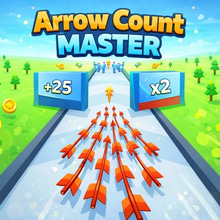
What makes Arrow Count Master especially satisfying is that it gives the player visible momentum. Your decisions are not abstract. You can see the arrow stream grow, split, and become more dangerous in real time. That makes every good gate feel rewarding in a very direct way.
𝗘𝗩𝗘𝗥𝗬 𝗚𝗔𝗧𝗘 𝗜𝗦 𝗔 𝗟𝗜𝗧𝗧𝗟𝗘 𝗔𝗥𝗚𝗨𝗠𝗘𝗡𝗧 𝗔𝗕𝗢𝗨𝗧 𝗚𝗥𝗘𝗘𝗗 ➕✖️
The real heart of Arrow Count Master is choice. Not giant philosophical choice, obviously. More the very urgent arcade kind where your brain goes, “Okay, do I take the safe add gate or risk the multiplier and pray the next section does not punish me for being ambitious?” That is the whole rhythm of the game. You keep moving, keep reading the gates, and keep trying to build the largest arrow count possible before the course or your own bad decisions cut the run down.
This works because the gates feel meaningful right away. Addition gates are comforting. Multipliers feel exciting. Subtraction gates feel like insults. The game gets a lot of mileage out of those simple reactions. You are always calculating, even if only for a second. Which route is worth it? Which gate gives the biggest spike in power? Which option looks good now but leads straight into a bad obstacle setup? These tiny decisions make the runner structure feel much more active than just sliding between lanes mindlessly.
It also means the game rewards attention. Players who actually read ahead and think a step or two in front of the current gate will always do better than players who only react at the last second. That is a good quality in a casual runner. It makes the game feel smarter without becoming complicated.
𝗧𝗛𝗘 𝗔𝗥𝗥𝗢𝗪 𝗦𝗧𝗥𝗘𝗔𝗠 𝗜𝗦 𝗧𝗛𝗘 𝗥𝗘𝗔𝗟 𝗥𝗘𝗪𝗔𝗥𝗗 💥
There is something deeply satisfying about watching a tiny arrow count become a ridiculous storm because you made the right choices in the right order. That visual escalation is one of the game’s biggest strengths. You do not just earn a bigger number in some corner of the screen and politely appreciate it. You feel the increase. The arrows start looking like an actual threat. The run gains weight. The whole experience becomes more confident.
That visible growth matters a lot because it ties progress directly to sensation. A good run should look powerful, and Arrow Count Master understands that. The more efficiently you move through the gates, the more impressive your arrow swarm becomes. It turns decision-making into spectacle. That is exactly the kind of feedback loop arcade games love when they are working properly.
And because the game lets you lose that power just as quickly through penalties or bad movement, every gain feels fragile. That fragility makes success more exciting. You are not just building up. You are trying to protect what you built.
𝗢𝗕𝗦𝗧𝗔𝗖𝗟𝗘𝗦 𝗠𝗔𝗞𝗘 𝗧𝗛𝗘 𝗠𝗔𝗧𝗛 𝗙𝗘𝗘𝗟 𝗠𝗢𝗥𝗘 𝗣𝗘𝗥𝗦𝗢𝗡𝗔𝗟 😵
Without obstacles, Arrow Count Master would still be satisfying, but much flatter. The hazards are what turn the gate system into a real pressure loop. Now you are not only selecting the best math gate. You are also trying not to smash into something that cancels your cleverness. That is where the runner side becomes important. A strong count means nothing if your pathing is sloppy.
This is why the game stays lively instead of becoming a simple number picker. You are always juggling two kinds of thinking at once. One side is strategic: how do I maximize my arrow count? The other side is physical: how do I survive long enough to use it? That split keeps the whole thing active. You cannot drift lazily through the course and expect great results. The game wants clean movement and fast judgment together.
That mix is especially good for short browser sessions because it creates immediate tension. One mistake costs something visible. One great choice creates a visible reward. The loop is clear, sharp, and very easy to replay.
𝗧𝗛𝗘 𝗚𝗔𝗠𝗘 𝗙𝗘𝗘𝗟𝗦 𝗟𝗜𝗚𝗛𝗧, 𝗕𝗨𝗧 𝗜𝗧 𝗤𝗨𝗜𝗘𝗧𝗟𝗬 𝗔𝗦𝗞𝗦 𝗙𝗢𝗥 𝗕𝗘𝗧𝗧𝗘𝗥 𝗣𝗟𝗔𝗡𝗡𝗜𝗡𝗚 🧠
One thing I like about Arrow Count Master is that it looks casual, but it still rewards foresight. The best path is not always the most obvious one if there is a nasty obstacle just beyond it. A multiplier is wonderful until it drags you into a lane you cannot recover from in time. A modest add gate can actually be the better move if it keeps the run cleaner and more stable.
That is where the game starts feeling better than a basic lane-switching runner. You are not just dodging. You are evaluating risk. The course constantly asks whether you are thinking only about the current gate or about the next three things that follow it. Players who learn to read the track as a full chain instead of a series of isolated choices will naturally get more out of it.
That is also why the game becomes more addictive over time. You start seeing mistakes before they happen. Or at least you think you do. Then the track proves it still has a few new ways to embarrass you.
𝗧𝗛𝗘 𝗥𝗨𝗡𝗦 𝗔𝗥𝗘 𝗤𝗨𝗜𝗖𝗞, 𝗪𝗛𝗜𝗖𝗛 𝗜𝗦 𝗘𝗫𝗔𝗖𝗧𝗟𝗬 𝗪𝗛𝗔𝗧 𝗠𝗔𝗞𝗘𝗦 𝗧𝗛𝗘𝗠 𝗗𝗔𝗡𝗚𝗘𝗥𝗢𝗨𝗦 ⏱️
Arrow Count Master benefits a lot from pace. The controls are immediate, the objective is obvious, and each run feeds directly into the next. That means failure rarely feels heavy. It feels annoying in the productive way. You lose a good arrow count, you grumble, and then you instantly want another attempt because the next route could be cleaner, bigger, smarter. That “one more run” energy is where the game gets its real staying power.
Quick restarts are perfect for a title like this. The player does not have to rebuild context every time. You know the goal. You know the gates. You know the feeling of a great arrow stream. You want it back immediately. That kind of fast replay loop is exactly what makes simple runner games stick on Kiz10.
It also works well on both desktop and mobile because the movement idea is so direct. Drag left, drag right, pick the better path, avoid disaster. That simplicity lets the tension stay where it belongs: on your decisions.
𝗪𝗛𝗬 𝗔𝗥𝗥𝗢𝗪 𝗖𝗢𝗨𝗡𝗧 𝗠𝗔𝗦𝗧𝗘𝗥 𝗙𝗜𝗧𝗦 𝗞𝗜𝗭𝟭𝟬 𝗦𝗢 𝗪𝗘𝗟𝗟 🚀
Arrow Count Master is a strong fit for players who enjoy runner games, math-gate progression, lane-switching reflexes, and arcade loops where visible power growth makes every smart decision feel worth it. On kiz10.com, it works because it is simple enough to enter in seconds but satisfying enough to replay far more than intended.
If you like games where route choice matters, where small decisions create huge swings in momentum, and where a tiny stream of arrows can turn into a ridiculous flood if you play cleanly, this one has a lot of charm. It is fast, bright, and built around that wonderfully dangerous feeling that the next gate might double everything.
Arrow Count Master does not need to be complicated. It only needs a few lanes, some brutal choices, and enough arrow chaos to make a good run feel huge. That is exactly what it delivers.



 2.5 (166 votes)
 Share
Share
 Embed
Embed