𝗧𝗛𝗘 𝗣𝗥𝗜𝗡𝗖𝗘𝗦𝗦 𝗜𝗦 𝗗𝗢𝗡𝗘 𝗪𝗔𝗜𝗧𝗜𝗡𝗚 👑🔥
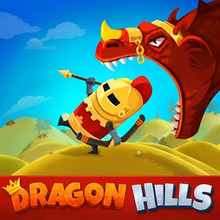
Dragon Hills starts with one of the best mood shifts in arcade gaming. The princess is not trapped in a tower, staring sadly into the distance and hoping somebody dramatic arrives on horseback. She is finished with that whole arrangement. Completely over it. Instead of waiting to be rescued, she grabs control of a furious dragon and turns the entire kingdom into a problem. A very large, very fast, very flammable problem.
That reversal gives Dragon Hills instant personality on Kiz10. It is not just another fantasy action game with knights, castles, and boss fights. It is a destruction game, a momentum game, and a revenge-fueled arcade adventure where the heroine becomes the disaster. The result is wild, fast, and deeply satisfying. You do not slowly walk through levels checking corners for danger. You tear through the ground, explode into the air, smash enemies, dodge traps, and try to keep your movement alive long enough to turn the whole map into broken stone and scattered armor.
It feels amazing almost immediately.
𝗠𝗢𝗠𝗘𝗡𝗧𝗨𝗠 𝗜𝗦 𝗬𝗢𝗨𝗥 𝗥𝗘𝗔𝗟 𝗪𝗘𝗔𝗣𝗢𝗡 🚀🐉
What makes Dragon Hills so addictive is not just that you control a dragon. Plenty of games let you do something cool on paper and then forget to make it fun in motion. Dragon Hills understands that motion is everything. Your dragon does not just run across the surface breathing fire now and then. It dives underground, tunnels through the earth, bursts upward with explosive force, and uses the terrain itself as part of the attack.
That movement system gives the game a rhythm that feels different from ordinary side-scrolling action games. You are constantly managing speed, angle, and timing. Dive too early and you lose momentum. Rise too late and you slam into trouble. Hit the ground at the right curve, though, and suddenly you are surfing destruction like it is the most natural thing in the world. The dragon launches upward, knights scatter, towers collapse, and for a few glorious seconds the whole screen seems to agree that chaos was the correct answer.
This is where the game becomes hard to quit. You are not just reacting to enemies. You are learning how to move through the world with style. Clean runs feel incredible because they are built on flow. Dive, rise, crash, repeat. Once that pattern clicks, Dragon Hills stops feeling like a simple action game and starts feeling like a destructive dance through a kingdom that absolutely had this coming.
𝗞𝗡𝗜𝗚𝗛𝗧𝗦, 𝗖𝗔𝗦𝗧𝗟𝗘𝗦, 𝗔𝗡𝗗 𝗖𝗢𝗟𝗟𝗔𝗣𝗦𝗜𝗡𝗚 𝗣𝗔𝗡𝗜𝗖 ⚔️🏰
A huge part of the fun comes from what the game lets you destroy. Knights charge in, castles loom over the route, enemies try to slow you down, and the terrain itself becomes a playground for demolition. Dragon Hills does not treat the environment like passive scenery. The ground matters. Buildings matter. Every obstacle is also an opportunity if you hit it with enough speed and the right angle.
That destructible terrain is one of the game’s best ideas. It keeps the levels feeling alive. Instead of following a flat path, you are constantly reshaping the route with your movement. The ground breaks under you. The air opens above you. Structures collapse as you pass. This gives every level a lovely sense of violence and freedom at the same time. The world is not fixed. It reacts to you. That reaction makes every attack feel heavier and every successful burst feel more dramatic.
And because the enemies are placed across these destructible spaces, even routine encounters feel exciting. A group of knights is not just something to hit. It is part of a larger chain of damage. You might burst upward under them, rip through a tower, and keep flying straight into the next threat. That chain reaction quality is what gives Dragon Hills its special flavor. It is not merely fast. It is gloriously interconnected.
𝗕𝗢𝗦𝗦 𝗙𝗜𝗚𝗛𝗧𝗦 𝗧𝗛𝗔𝗧 𝗔𝗖𝗧𝗨𝗔𝗟𝗟𝗬 𝗙𝗘𝗘𝗟 𝗟𝗜𝗞𝗘 𝗘𝗩𝗘𝗡𝗧𝗦 👹💥
The boss battles do a lot to keep the adventure from becoming repetitive. Dragon Hills already has a strong loop thanks to its movement and destruction systems, but bosses add those bigger spikes of challenge where reflexes and timing have to sharpen. These are the moments where the game asks more from you than pure enthusiasm. You cannot just fling yourself everywhere and hope the dragon sorts it out.
That extra challenge helps the pacing tremendously. After tearing through regular enemies and wrecking sections of the map, it feels good to hit a wall and have to think harder. A boss changes the rhythm. You start watching attack patterns, reading openings, and using the dragon’s movement more carefully. The same mechanics that made normal levels thrilling now become tools for survival and precision.
That balance is smart. Dragon Hills never loses its arcade spirit, but it still gives the player enough resistance to make progression feel earned. You are not mindlessly smashing through the same trick forever. You are learning how to use that trick against tougher and tougher problems.
𝗨𝗣𝗚𝗥𝗔𝗗𝗘 𝗧𝗛𝗘 𝗠𝗔𝗬𝗛𝗘𝗠 🔧🔥
Another reason the game stays engaging is progression. Rewards earned during the adventure can be used to improve your destructive power, strengthen your abilities, and make the dragon even more dangerous. That upgrade loop adds long-term motivation to the immediate thrill of each run. Even a messy attempt can still feel valuable if it pushes you toward better gear or stronger attacks.
This matters because Dragon Hills is the kind of game that invites repetition in a good way. You want another run because the last one was fun, but you also want another run because your dragon can still become stronger. Stronger attacks, better equipment, improved abilities, all of these reinforce the fantasy that you are turning from dangerous into unstoppable.
And the game handles that fantasy beautifully. It never forgets that the core appeal is destruction. Upgrades are not abstract numbers floating in the background. They feed directly into how powerful, how fast, and how devastating your runs can feel. When progression in an action game changes the emotional texture of the gameplay, not just the stats, it always hits harder.
𝗢𝗡𝗘-𝗧𝗢𝗨𝗖𝗛 𝗖𝗢𝗡𝗧𝗥𝗢𝗟𝗦, 𝗟𝗢𝗧𝗦 𝗢𝗙 𝗦𝗞𝗜𝗟𝗟 🎮⚡
One of the most impressive things about Dragon Hills is how much depth it gets from simple controls. On the surface, the input system is easy to understand. That makes the game instantly accessible, which is perfect for browser play. But the challenge is not in remembering a hundred buttons. It is in mastering rhythm, timing, and control under pressure.
That is the sweet spot for an arcade action game. Easy to start, hard to master. Anyone can jump in and begin smashing knights in minutes. Not everyone will immediately know how to maintain momentum through tougher sections, avoid traps, time aerial attacks, and keep the dragon flowing through dangerous terrain. That learning curve gives the game its staying power. It keeps inviting improvement.
It also makes Dragon Hills feel fantastic on both quick sessions and longer play streaks. You can load it up, cause ten minutes of elegant destruction, and leave satisfied. Or you can stay longer, chase upgrades, battle through tougher stages, and keep refining how you move through the world. Both styles work because the core mechanic is strong enough to carry them.
𝗪𝗛𝗬 𝗗𝗥𝗔𝗚𝗢𝗡 𝗛𝗜𝗟𝗟𝗦 𝗦𝗧𝗔𝗡𝗗𝗦 𝗢𝗨𝗧 𝗢𝗡 𝗞𝗜𝗭𝟭𝟬 🌋🐲
Dragon Hills is easy to recommend because it knows exactly what kind of fun it wants to deliver. It is fast. It is explosive. It is built around a clever movement system and a destruction mechanic that never gets old. It also has enough progression, enough enemy variety, and enough boss pressure to keep the whole thing from feeling like a one-note gimmick.
If you enjoy dragon games, arcade action games, destruction games, fantasy adventures, or side-scrolling games with strong momentum mechanics, this one is a great fit on Kiz10. It takes a familiar fairy-tale setup, flips it upside down, and turns it into something far more entertaining. Not a rescue. Not a rescue mission gone wrong. A revenge ride through castles and armies with a dragon as your answer to everything.
So dive under the earth, launch into the sky, and ruin somebody’s kingdom properly. In Dragon Hills, the princess is not the prize at the end of the level. She is the reason the level no longer exists.



 2.5 (155 votes)
 Share
Share
 Embed
Embed