💣🏰 A polite castle… waiting to become rubble
Castle Kaboom has one job and it does it with a grin: turn proud castles into embarrassed piles of stone. You’re not charging in with a sword like a classic hero. You’re standing back like a demolition artist, staring at a fortress and thinking, alright… where does this whole thing actually “live”? Because the secret isn’t having more explosions. The secret is putting the few you do have in the one place that makes gravity do the rest.
It’s a physics destruction puzzle dressed up as medieval chaos. Towers wobble. Supports matter. One bad placement makes a dramatic puff of smoke and… nothing else. One smart placement makes the entire castle fold like it suddenly remembered it has bills to pay. That contrast is why it’s so addictive on Kiz10: every level is a little “I can do that cleaner” challenge, and the restart urge hits fast because your mistakes are obvious in the funniest way.
🧱🧠 The castle is the puzzle, the bomb is the sentence
At first, the levels feel friendly. You see a few blocks, maybe a tower, maybe a wall holding everything together. You place your explosives, click, boom, done. Then the game starts building castles that look innocent but behave like stubborn puzzles. A big top section might be heavy, but if the base is wide and stable, it won’t fall the way you want. A skinny tower might seem easy to topple, but it can crumple into a safe pile that still counts as “standing enough,” which is deeply annoying when you thought you nailed it.
So you start reading structures like a suspicious engineer. You look for load-bearing points. You look for narrow necks, weak joints, stacked blocks that rely on one or two supports. You stop thinking “explode the middle” and start thinking “remove the reason it can stay up.” That’s when Castle Kaboom turns from silly blasting into satisfying strategy.
🔥🎯 Placement feels tiny… until it decides everything
There’s a special tension in games with limited explosives. If you had infinite bombs, every level would be loud but mindless. Castle Kaboom makes you care because your resources matter. You can’t just carpet-bomb the whole thing and hope. You have to choose.
And choosing is where your brain starts doing its own commentary. You’ll hover your bomb over a corner and think, that’s risky. Then you’ll place it anyway because the corner “feels right.” Then the blast happens and the castle barely flinches and you’ll stare at the screen like it betrayed you personally. 😅
But when you get it right? When you place a bomb exactly where a tower needs it, and the structure collapses in a perfect chain reaction, you get that ridiculously satisfying moment where you feel like you tricked the level. Not by brute force. By understanding.
🪨💥 Chain reactions: the game’s favorite love language
Castle Kaboom shines when you stop trying to break everything directly and start setting up chain reactions. A small explosion that knocks out a key support can cause a whole upper section to slide, twist, and crush the rest. Sometimes the best bomb isn’t the one that hits the biggest area. It’s the one that nudges the tower into making a bad decision.
You’ll watch blocks tumble and think, yes… yes… keep going… and then one single piece gets stuck in a way that holds half the castle up like a miracle beam. The game loves those moments. It’s like it’s reminding you: physics is a comedian, and you are the audience.
The flipside is that you can use that comedy against it. If you can make the castle fall “awkwardly,” it often falls harder. A clean collapse isn’t always the best collapse. Sometimes you want a messy slide, a sideways crunch, a top-heavy tip that turns the whole building into a domino performance. That’s the kind of thinking that makes your clears feel clever instead of lucky.
🐉🛡️ Medieval vibes with modern arcade impatience
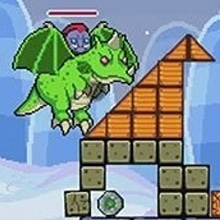
The theme is pure storybook siege: castles, knights, monsters, ridiculous medieval nonsense that makes the destruction feel playful instead of grim. You’re not “defeating” people with violence; you’re solving a goofy demolition problem in a fantasy wrapper. That keeps the tone light, even when you’re replaying a level for the fifth time because one stubborn block refuses to fall.
And it stays quick. Levels don’t drag. You look, you plan, you place, you detonate, you judge the results, you either celebrate or you instantly want a redo. It’s the perfect Kiz10 rhythm: short bursts of thinking, short bursts of chaos, and a constant temptation to perfect the solution.
😵💫🧨 The emotional loop: confidence, greed, instant regret
Castle Kaboom has a very specific cycle. Step one: you see the castle and feel confident. Step two: you place a bomb in the “obvious” spot. Step three: the castle collapses in the wrong direction, like it intentionally avoided your plan. Step four: you become petty and place the next bomb out of spite. Step five: somehow that spite bomb works better than your “smart” bomb. Step six: you laugh, restart, and try to pretend you’re still in control.
That’s why it works. It makes you experiment. It rewards observation, but it also rewards weird ideas. Some levels want precision. Others want chaos. The trick is learning which kind you’re looking at, and the game never says it out loud. It just lets you fail quickly until you figure it out.
🧩🏗️ Little habits that make you blow up castles like you meant it
If you want cleaner clears, start treating every level like a stability puzzle. Look for the single point that connects the “heavy part” to the “standing part.” If you remove that connection, the rest is usually just gravity doing free labor. Also, be careful with bombs placed too high. High blasts can shatter the top but leave the base intact, which feels dramatic but doesn’t always finish the job.
Another small trick: if a castle is wide, try to make it lopsided first. Even a small shift can turn a stable structure into a tipping disaster. Once it starts leaning, it becomes fragile. And fragile castles are the best castles. 😄
Most importantly, don’t rush your second bomb. The first explosion changes the structure. A lot. Sometimes the smartest play is letting the rubble settle in your head for a second and then placing your next explosive based on what’s still supporting what. Castle Kaboom rewards players who react to the new shape, not players who follow a plan that no longer exists.
🏁💣 Why Castle Kaboom is so replayable on Kiz10
Because it turns destruction into a brain game. It gives you a clear objective, a limited toolkit, and a structure that behaves differently depending on tiny choices. Every win feels like you learned something. Every failure feels fixable. And that’s the most dangerous kind of game: one where you can taste the better solution. You can see it. You just didn’t do it yet.
If you like demolition, physics puzzles, castle destruction, and that smug little satisfaction of watching a fortress collapse exactly the way you pictured it, Castle Kaboom is a perfect quick-hit challenge on Kiz10. Plant the bomb. Step back. Let gravity do the dirty work. 💥🏰😄



 4.8 (13 votes)
 Share
Share
 Embed
Embed