🐔🗡️ THE CHICKEN WHO CHOSE VIOLENCE (POLITELY)
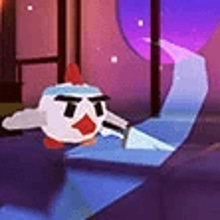
Chicken Sword: Ninja Master opens with a ridiculous idea that somehow makes perfect sense the second you start moving: a chicken becomes a ninja, grabs a sword, and decides the world is now a series of fast, sharp lessons. No long speeches, no epic prophecy, just you, a blade, and a whole lot of “okay… that was my fault” moments. The goal is straightforward but sneaky: dash forward, slice what needs slicing, avoid what wants to delete you, and work your way through mastery challenges that keep getting meaner in that playful, arcade kind of way. There are dozens of trials to clear, and the game leans hard into that “one more attempt” rhythm because every fail feels like it happened one step before success.
⚡🥋 DASH, SLASH, RESET, REPEAT (THE NINJA LOOP)
This is not a slow adventure. It’s a reaction-driven ninja game built around timing and momentum. You’re constantly switching between quick movement and quick decisions. When to dash, when to hold back, when to commit to a jump, when to slice through an obstacle, when to hesitate for half a heartbeat because the next trap is clearly waiting for your confidence to spike. The controls are simple enough to feel immediate, but the level design pushes you into making choices under pressure. And pressure is the real enemy here. Not the traps themselves. Pressure.
The best runs have a specific feeling: you’re not just moving, you’re flowing. You’re threading the needle, sliding through tight gaps, snapping a quick slash at the exact second it matters, and landing in a safe pocket like you planned it, even if you absolutely didn’t. Then a new hazard shows up, your flow collapses, and you do that tiny angry laugh because the game just upgraded without telling you. Classic ninja training. Painful. Educational. Slightly hilarious.
🧠😾 YOUR BRAIN VS YOUR HANDS (THE REAL BOSS FIGHT)
Chicken Sword: Ninja Master is the kind of action skill game that exposes bad habits immediately. If you play on autopilot, it punishes you. If you rush because the early stages feel easy, it punishes you. If you get greedy because you think you’ve “figured it out,” it punishes you with something simple, like a perfectly placed obstacle that you would’ve dodged if you weren’t feeling smug. The chicken doesn’t complain. The chicken just keeps going. That makes it worse, honestly. You feel responsible.
And then you start learning the quiet skills that separate a messy run from a clean one. You start reading the level like a pattern instead of a panic. You notice how certain hazards are placed to trick your timing. You see how the safe route often looks boring, but boring is the point. You stop thinking “go fast” and start thinking “go clean.” Speed happens naturally once you stop fighting the rhythm.
🧱🪚 TRAPS THAT LOOK SIMPLE UNTIL YOU’RE MID-AIR
A big chunk of the game’s tension comes from how traps are presented. They don’t always scream “danger” in neon warnings. Sometimes it’s just a gap. Sometimes it’s an obstacle that you could slash… or could avoid… or could slash too late and immediately regret it. The levels are built to make you commit, and commitment is where mistakes are born. You jump, then realize the landing is worse than the takeoff. You dash, then notice the next hazard was placed specifically to punish dashes. You slice, then discover slicing put you in a bad position.
And the funniest part is that the solution usually isn’t complicated. It’s usually one small adjustment. A slightly earlier jump. A dash that starts half a second later. A slash used as a tool, not a reflex. That’s why the game is addictive: improvement is real, measurable, and mostly your own doing. You don’t need a new weapon. You need a better decision.
🗡️🐣 THE SWORD ISN’T JUST FOR STYLE
The sword doesn’t exist only to make your chicken look cool (though it does, obviously). It’s part of the puzzle of movement. Slashing can be about clearing a path, but it can also be about keeping tempo. In games like this, your actions are like punctuation. A dash is an exclamation point. A jump is a question mark. A slash is a comma that keeps the sentence moving. If you slash at the wrong time, you don’t just miss an obstacle, you break the rhythm. If you slash at the right time, everything stays smooth and you glide forward like you’re editing reality with steel.
That’s also where the “ninja master” idea lands. Mastery isn’t about raw aggression. It’s about controlled aggression. A clean slash is better than a frantic one. A calm approach wins more runs than a desperate approach. The game quietly teaches you to be deliberate, even while it looks like chaos.
🎭🔥 COMEDY, FAILS, AND THE JOY OF QUICK RESTARTS
Let’s be honest: you’re going to fail. A lot. But Chicken Sword: Ninja Master makes failing feel quick and useful rather than frustrating. When you die, you usually know why. It’s not mysterious. It’s not unfair. It’s that you got impatient, or you didn’t respect the timing, or you tried to brute-force a section that clearly demanded finesse. So you restart. Fast. You try again with a tiny change. And suddenly you’re past the part that killed you five times in a row.
That’s the sweet loop on Kiz10: short sessions, clean feedback, rapid retries. It’s perfect for players who love skill games, parkour-style obstacle runs, and action platform challenges that feel like training. You can hop in for a few minutes, or you can blink and realize you’ve been playing long enough to develop a personal rivalry with one specific trap.
🧩🧿 HOW TO PLAY SMART WITHOUT TURNING IT INTO HOMEWORK
If you want to clear more masteries consistently, focus on three things: timing, spacing, and confidence control. Timing is obvious: do actions earlier than you think you need to. Spacing is less obvious: keep yourself positioned so you have options, not just one desperate move. Confidence control is the weird one: when you feel “too good,” slow down a tiny bit, because that’s when you start skipping the read and playing guesses.
Also, don’t treat every obstacle as something you must slash. Sometimes the cleanest path is simply not interacting with the problem. Let the trap exist. Go around it. Jump it. Wait for the right moment. Save your slash for when it actually matters. That small mindset shift turns you from a frantic button masher into an actual ninja chicken commander.
🌙🏁 WHY THIS GAME STICKS IN YOUR HEAD
Chicken Sword: Ninja Master works because it’s simple on the surface and sharp underneath. It feels silly and cool at the same time. It’s a chicken with a sword, yes, but it’s also a legitimate reflex challenge that rewards real improvement. Every cleared stage feels earned, and every failure feels like a clue. That combination is dangerous. It’s the reason you’ll say “last try” and then immediately do another run because you can already see the correct timing in your head.
If you like action games with fast movement, trap dodging, slash timing, and a steady climb from “I’m learning” to “I’m actually good,” this one hits hard on Kiz10. It’s ninja training with feathers, steel, and a surprisingly serious demand for precision. And once you get into that flow state where everything clicks? You’ll feel unstoppable. Until the next mastery humbles you. Which is… honestly… the whole point. 🐔🗡️😅




















 Share
Share
 Embed
Embed


