🐉🌑 Hatchling Energy, Big Predator Problems
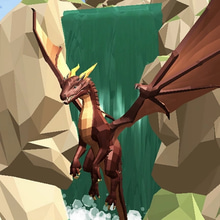
Dragon.io starts the way all good .io survival stories start: you’re small, you’re hungry, and the arena is full of players who already look like they’ve eaten three kingdoms for breakfast. One second you’re a tiny dragon with innocent eyes, the next you’re dodging a massive winged bully who clearly thinks “sportsmanship” is a myth. On Kiz10, the magic is instant. No warm-up, no long intro, just you sliding into a living map where everyone wants to grow, everyone wants to be feared, and everyone is one bad turn away from becoming somebody else’s snack. 😅
The goal is simple on paper: collect, grow, survive, dominate. The reality is spicier. Dragon.io is the kind of multiplayer arena where confidence is useful, but awareness is everything. You can be the fastest hunter in the lobby and still lose because you drifted too close to a bigger dragon’s path for half a second. And yes, you will do that. Probably while thinking “I’m safe.” Classic.
🔥🧲 Feeding Frenzy and the Science of Getting Bigger
Growth in Dragon.io is the heartbeat. You roam the arena looking for whatever the game uses as fuel—targets, drops, tasty bits, that irresistible trail of “free progress” that always seems to be placed suspiciously close to danger. The early minutes are all about being smart, not brave. You take safe gains, you avoid crowded zones, you don’t chase a big prize if it means threading through three giants with attitude. Because in .io games, greed is a villain with perfect timing. 😈
As you level up, the dragon fantasy kicks in harder. You feel heavier, stronger, more capable of pushing your luck. You start thinking about territory. Where can you farm without being cornered? Which routes let you escape if a giant shows up? Where are the fights happening, and can you benefit without being the one who gets deleted? That “third-party” instinct becomes a skill. You hover near conflict, wait for someone to weaken, then swoop in like you planned it all along. Dirty? Maybe. Effective? Absolutely.
🌀🦴 Movement: Smooth Until You Panic
Dragon.io is one of those games where movement looks simple, and then you realize your hands are doing micro-decisions nonstop. You’re steering, adjusting speed, controlling angle, and reading everyone’s body language like you’re at a party where the only conversation is violence. If your dragon has momentum, you learn to respect it. If it turns sharply, you learn not to overcorrect. If there’s a boost or dash mechanic, it becomes your lifeline and your biggest trap, because using it at the wrong moment can launch you into the exact place you were trying to avoid. 🙃
The best players look calm. That’s not a personality trait, it’s strategy. Calm movement keeps your options open. It lets you pivot away from danger without clipping into a bad line. It keeps you from accidentally drifting into someone’s range. Dragon.io rewards the kind of player who can chase without tunneling, who can run without panicking, who can bait an enemy into overcommitting and then slip away at the last second. And when you pull that off, it feels amazing, like you just outsmarted a creature ten times your size using nothing but angles and spite. 🐉✨
⚔️😬 Fights Are Fast, Messy, and Usually Personal
Combat in Dragon.io is rarely a clean duel. It’s more like a street brawl on an open field, where the “rules” are whatever the physics allow. You approach a target, you try to line up an advantage, you commit, and then the map immediately changes because a third dragon enters and suddenly your plan has witnesses. The tension comes from how quickly a fight flips. One second you’re hunting, the next you’re being hunted, and your brain has to switch modes instantly.
There’s also that special .io moment where you win a fight and immediately feel rich… because the reward is right there, shining, tempting you to stop moving. That’s where new players get punished. They linger. They celebrate. They collect too slowly. And then a bigger dragon arrives like a tax collector. If you want to survive longer on Kiz10, you learn to “take the loot while staying alive,” which sounds obvious until you’re actually trying to do it with three predators circling. 😅
🌋👑 Midgame: You’re Big Enough to Be Noticed
Midgame is the dangerous glow-up phase. You’re no longer tiny, which means you’re not invisible anymore. Smaller dragons start avoiding you, which feels great, until you realize bigger dragons start paying attention, which feels… less great. Now you’re worth hunting. Now you’re a meal with value. Now the lobby treats you like a moving bonus.
This is where Dragon.io becomes psychological. You start bluffing. You fake confidence to stop smaller players from poking you. You avoid certain zones because you know a giant patrols them. You choose fights carefully, because taking damage (or losing position) costs you more than it did earlier. You also begin to understand the map like a living thing. Some areas are safe farms. Some are ambush corridors. Some are “don’t go there unless you want drama.” And yes, you’ll go there anyway sometimes, because you saw a big drop and your brain turned off. 😭
🧨🐲 Late Game: The Top of the Board Is a War Zone
When you reach late game size, Dragon.io changes flavor again. You’re powerful, but you’re also a target with a crown painted on your head. People test you constantly. Some will rush you hoping you’re low. Some will lurk and wait for you to fight someone else. Some will act friendly by keeping distance, then dive the second you get distracted. Multiplayer survival games make everyone a little untrustworthy, and Dragon.io fully embraces that vibe.
The best late-game play isn’t nonstop aggression. It’s controlled dominance. You hold space. You pressure enemies into mistakes. You avoid getting surrounded. You keep your exits open, because even the biggest dragon can get deleted if two or three players coordinate their chaos at the right time. And when you’re huge, your mistakes are louder. A sloppy turn costs more. A greedy chase pulls you out of position. A moment of tunnel vision turns into a disaster you can’t rewind. 😬
But when you hold the top? Oh, it feels good. You become the map’s weather. Players move differently because you exist. They avoid your lanes. They scatter when you glide in. And you start enjoying the weird calm that comes with being terrifying. Then you clip one bad angle and everything collapses because the arena never stops punishing overconfidence. Perfect.
🧠⚡ Tiny Habits That Make You Survive Longer
If you want real improvement, the “secret” is boring in the best way. Keep moving even while collecting. Don’t chase to the edge of the map without an exit plan. Don’t commit to a fight if you can’t see the area around it. Watch bigger dragons more than you watch your target. If you have a burst move, save it for escapes more often than attacks, at least until you’re confident. And most importantly, when you get a big win, leave the area before the lobby notices. Because the lobby always notices. 😅
Dragon.io rewards smart rhythm. Farm safely, strike quickly, reset position, repeat. That loop keeps you alive longer than pure aggression. Aggression looks cool, but survival wins leaderboards.
🌟🐉 Why Dragon.io Feels So Good on Kiz10
Dragon.io nails that classic .io addiction: fast sessions, clear progression, high stakes, and constant “one more run” energy. It’s a multiplayer dragon game where the fantasy of becoming a huge fire-breathing menace is real, but the path there is a slippery maze of risk, ambushes, and your own occasional terrible decisions. It’s funny, tense, and surprisingly skill-based once you stop playing like a hungry fool and start playing like a predator with a plan.
If you want a competitive online game on Kiz10 where you can grow, hunt, outmaneuver rivals, and feel your hearts rate spike over something that looks simple at first glance, Dragon.io is exactly that kind of trouble. 🐲🔥
















 4.6 (81 votes)
 Share
Share
 Embed
Embed