𝗚𝗟𝗢𝗪𝗜𝗡𝗚 𝗧𝗜𝗟𝗘𝗦, 𝗤𝗨𝗜𝗘𝗧 𝗣𝗔𝗡𝗜𝗖 ✨🧠
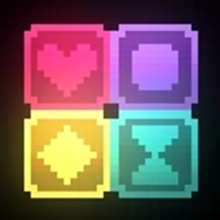
Glowgrid feels like staring into a tiny digital city at night. Everything is bright, clean, almost calming… until you touch one tile and the whole board answers back. That’s the magic of it on Kiz10.com: a minimalist grid puzzle that pretends to be simple, then slowly reveals it’s basically a conversation with your own brain. You’re not moving a character. You’re not fighting enemies. You’re fighting patterns, consequences, and the tiny voice in your head that says, just tap that one, it’ll fix everything. Sometimes it does. Sometimes it turns the grid into a beautiful disaster that you personally authored. 😅
The core loop is deliciously direct. You tap tiles to change states, shift lights, flip colors, trigger a chain, whatever the board’s rule is in that moment. You watch the grid react. You try to steer it toward a solved state where everything looks “right” again. And it’s not about being fast, it’s about being accurate. Glowgrid is the kind of game where a calm player wins and a frantic player creates art by accident. It’s a neon logic puzzle with the energy of a brain teaser and the mood of a late-night screen glow, the kind of thing you play for two minutes and suddenly realize you’ve been negotiating with one corner tile for ten. 🟪😬
𝗧𝗛𝗘 𝗥𝗨𝗟𝗘 𝗜𝗦 𝗦𝗜𝗠𝗣𝗟𝗘, 𝗧𝗛𝗘 𝗥𝗘𝗦𝗨𝗟𝗧 𝗜𝗦 𝗡𝗢𝗧 🧩⚡
What makes Glowgrid addictive is the way one action doesn’t stay small. You don’t just “turn on” a tile and move on. You change the board, and the board keeps that memory. A single tap might affect neighbors, lines, clusters, or a region you weren’t even looking at. That’s where the puzzle feeling blooms. You start realizing you’re not solving tile by tile, you’re solving relationships. If you fix this corner, what does it do to the center? If you brighten this edge, does it ruin the clean line you were building? If you chase one perfect-looking row, are you accidentally making the rest of the grid impossible?
So you begin playing like a planner instead of a clicker. You look at the board and try to “read” it. Where are the problem zones? Which tiles look like they control more than they should? Which areas are already stable and should be left alone like sacred ground? Glowgrid rewards that mindset, because the best solutions aren’t loud. They’re precise. They feel like a soft correction that suddenly makes the whole grid behave.
And when you get it right, it feels amazing in a quiet way. No fireworks required. Just that clean moment where the grid snaps into a solved state and your brain goes, yes. That. That was the line. 😄✨
𝗡𝗘𝗢𝗡 𝗔𝗘𝗦𝗧𝗛𝗘𝗧𝗜𝗖, 𝗧𝗘𝗡𝗦𝗘 𝗕𝗥𝗔𝗜𝗡 🟦🌙
The look matters more than people admit. Glowgrid’s glow isn’t just decoration, it’s part of the experience. A puzzle game with a grid lives and dies by clarity, and the neon style helps you see what’s happening instantly. Bright tiles pop. Dark tiles recede. Transitions feel crisp. It becomes easy to track what you changed, which makes the logic feel fair. You never feel like you lost because you couldn’t see. You lose because you made a decision that had consequences you didn’t predict. That’s a good kind of loss. It teaches.
And because the style is so clean, the game ends up feeling oddly relaxing even when it’s challenging. It’s “cozy logic.” The board glows, your mind focuses, the outside world disappears for a bit. Then you hit a configuration that refuses to cooperate and the coziness turns into a whispery rage where you’re smiling while thinking, okay, the grid hates me today. 😅🟩
𝗧𝗛𝗘 𝗠𝗢𝗦𝗧 𝗗𝗔𝗡𝗚𝗘𝗥𝗢𝗨𝗦 𝗠𝗢𝗩𝗘 𝗜𝗦 𝗧𝗛𝗘 𝗘𝗔𝗦𝗬 𝗠𝗢𝗩𝗘 😈🔷
Glowgrid punishes the “obvious” move more than the “smart” move. The obvious move is reacting to the tile that bothers you the most. You see one wrong light and you fix it instantly. That’s human. That’s also how you create a new wrong shape somewhere else. The smart move is pausing for half a second and asking, what am I actually trying to stabilize? Am I trying to clear the whole board? Am I trying to align regions? Am I trying to reduce the problem into a smaller problem?
This is where the game becomes a real logic puzzle. You start thinking in patterns. You stop chasing single lights and start chasing structures. Maybe you’re building a stable block in one quadrant. Maybe you’re trying to create symmetry so the remaining “bad tiles” are easier to address. Maybe you’re focusing on the edges first because edges usually control the board’s balance. Every player develops their own little method, and that’s the fun. Glowgrid isn’t one solution repeated. It’s a set of rules that lets you invent your own approach.
And yes, sometimes your approach fails dramatically and you have to backtrack in your head. What did I change that ruined it? That’s the delicious part. The grid becomes a timeline. Each tap is a decision. You learn to respect the timeline.
𝗦𝗛𝗢𝗥𝗧 𝗥𝗨𝗡𝗦, 𝗟𝗢𝗡𝗚 𝗢𝗕𝗦𝗘𝗦𝗦𝗜𝗢𝗡 🕰️✨
This is the kind of Kiz10.com game that plays perfectly in short bursts but secretly wants you to stay. One level is quick. Two levels are quick. Then you hit one layout that doesn’t give you the satisfying finish immediately, and suddenly you’re invested. You’re not quitting on a board that’s almost solved. Your brain won’t allow it. You’ll try a new sequence, you’ll test a different corner, you’ll stop doing “random fixes” and start doing intentional moves, and then you’ll get that sudden breakthrough where everything locks into place. That breakthrough feels like winning a tiny argument with the universe.
The best part is that your skill improves fast. At the beginning, you’re just tapping and reacting. After a few rounds, you start seeing the grid like a map. You notice clusters. You spot repeating structures. You learn that certain configurations can be reduced with the same kind of move. The game doesn’t need a long tutorial because the board itself teaches you, and it teaches you in the most satisfying way possible: by letting you feel smarter.
𝗛𝗢𝗪 𝗧𝗢 𝗣𝗟𝗔𝗬 𝗟𝗜𝗞𝗘 𝗔 𝗛𝗨𝗠𝗔𝗡 𝗔𝗡𝗗 𝗡𝗢𝗧 𝗔 𝗣𝗔𝗡𝗜𝗖 𝗠𝗔𝗖𝗛𝗜𝗡𝗘 🧠🫠
If you want to solve more consistently, treat Glowgrid like a strategy puzzle, not a reaction game. Start by stabilizing one area instead of tapping wherever your eyes land. Try to reduce “isolated” wrong tiles by thinking about what affects them, not by whacking them directly. If the game’s rule affects neighbors, remember that every move has a shadow, a little ripple. Use that ripple intentionally. Also, avoid the classic trap of rapid tapping when you’re frustrated. Rapid tapping doesn’t explore new logic, it just scrambles the board and makes you forget what you changed.
A good habit is to commit to a plan for a few moves, then reassess. After three or four taps, stop and read the grid again. Did you simplify it? Did you create a cleaner pattern? If yes, keep going. If no, adjust your plan, not your patience. Glowgrid rewards calm thinking more than “trying harder.”
Glowgrid is a neon logic puzzle with that perfect Kiz10.com vibe: easy to start, hard to master, and endlessly replayable because every board feels like a fresh little fight between your instincts and your strategy. Tap smarts, watch the ripple, and enjoy that final glow when the grid finally admits you were right. ✨🟦😅



 4.6 (7 votes)
 Share
Share
 Embed
Embed


