🌿🕳️ A Tiny Hero, A Loud Cave, And One Very Specific Mission
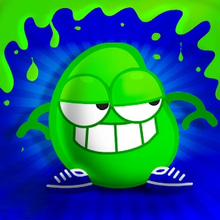
The moment you drop into The Green Mission: Inside a Cave, you can feel the air change. It’s not “scary horror cave” energy, more like “mysterious puzzle tunnel that absolutely wants to outsmart you.” You’re guiding a small green creature through narrow corridors, locked exits, and a world built out of blocks that refuse to stay simple. The goal sounds clean: find what you need, open the door, move on. But the cave has a personality. It’s the kind that watches you confidently hop forward… and then quietly slides a problem under your feet. On Kiz10, it plays like a puzzle platform adventure where thinking is movement, and movement is thinking, and your biggest enemy is that one decision you made ten seconds ago because it seemed smart at the time.
🧩🔑 Doors, Keys, And The Feeling Of “Wait… Where Did I Trap Myself?”
Every level is basically a compact little riddle with an exit at the end, almost teasing you. You’ll often need to grab a special object to unlock the next door, so the cave turns into a scavenger hunt with rules. Not a messy “search everywhere” kind of hunt, more like a deliberate path you have to shape. You step into a room and immediately start reading it like a map drawn by a mischievous engineer. Where’s the objective item? Which blocks can change? Which route looks safe but is secretly a dead end? And the best part is that the game doesn’t just ask you to find the solution, it asks you to not sabotage yourself on the way there. Because you can. You absolutely can. 😅
Sometimes you’ll be one jump away from the exit and realize the only platform you needed is now the wrong color. Or you flipped a set of blocks too early and blocked your return route like you just slammed a door on your own face. The cave doesn’t yell at you. It just sits there like, okay… so what now? And you either get clever or you restart with that classic “I swear I knew that” energy.
🎨🟩 The Color Switch Trick That Looks Simple Until It Isn’t
The signature mechanic is that you can change the color state of blocks, and those colors matter. It’s not just decoration. Color is permission. Color is access. Color is the difference between a safe platform and a useless chunk of stone that watches you fall. At first, switching colors feels like a neat little power. Click, change, move on. Then the game starts combining it with space constraints, timing, and positioning, and suddenly you’re doing mental gymnastics in a cave like you’re solving a Rubik’s Cube in the dark.
You’ll learn to pause before switching. You’ll start asking yourself weird questions like, if I flip this now, what becomes solid, what disappears, and will I still have a way back if I need it? And you will need it. This game loves making the “right path” look obvious until you realize the obvious path requires the blocks to be the opposite color of what you currently have. So now you’re planning the switch like it’s a heist: step here, trigger that, return, then commit. When it works, it feels smooth. When it fails, it feels like the cave personally edited your plan with a red pen. 🖊️😬
🧠🕯️ Cave Navigation: The Quiet Art Of Not Rushing
This is not the kind of platformer where speed is everything. The tension comes from making choices you can live with. The cave is dark, the corridors are tight, and the levels are designed to punish the “just run forward and hope” approach. You need to treat each room like a conversation. The cave shows you some blocks, an obstacle, a tempting route, and you reply with a plan. If your plan is messy, the cave replies with consequences. If your plan is clean, it lets you pass with the polite silence of a puzzle that respects you.
There’s also this satisfying feeling of learning the cave’s language. You start recognizing setups that scream “you’ll need to switch colors twice here.” You notice that one lonely block placed in a strange spot is probably not random. You begin to spot where the level designer is trying to bait you into flipping too soon. And then you do it anyway, because the bait is shiny, and you are human. 😭
🐾🗺️ The Levels Feel Like Little Stories You Have To Write Correctly
Each stage has its own mini-plot. You enter, you discover the object you need, you see the locked door, you realize the path is not straightforward, and then you build your route using color logic. It’s almost cinematic in a quiet way. Not explosions, not loud cutscenes, just that moment where you finally see the solution and everything clicks. You know exactly what to do, but you still have to execute it without messing up. That execution is where the game feels alive.
There are moments where you’ll stand still and just stare at the layout, not because you’re bored, but because your brain is simulating outcomes. If I flip now, I can cross, but then I can’t return. If I don’t flip, I can reach the item, but the exit stays blocked. If I take the long way around, I can set up the switch safely, but I risk locking myself out if I step on the wrong block. It’s strategy disguised as platforming, and it’s weirdly satisfying.
😅💥 The Comedy Of Mistakes: Falling Isn’t The Worst Part
Failing in this game is rarely dramatic. It’s usually funny. You’ll do something that feels brilliant, then watch it fail in the most gentle, humiliating way. Like switching colors and calmly removing the only floor you were standing on. Or jumping into a corridor and realizing the blocks behind you changed state, so now you’re trapped, staring at the exit like it’s mocking you. The cave doesn’t need enemies to create pressure. The pressure is you trying to be smarter than a room full of colored rectangles.
And because the levels are bite-sized, you’re encouraged to experiment. You don’t feel punished for trying weird approaches. You feel invited. Try the risky route. Try switching early. Try setting up a path that looks wrong but might work. The quick loop is part of what makes The Green Mission: Inside a Cave so easy to keep playing on Kiz10. You’re always one good idea away from progress, and one careless click away from comedic failure.
🏁✨ Why It Hooks: Clear Goals, Clean Challenges, Real “Aha!” Moments
The game is addictive because it keeps the objective sharp. Find the item. Unlock the door. Escape the cave. But it keeps the method flexible. You’re not just following arrows, you’re making decisions, adapting, learning, and occasionally improvising when your plan goes sideways. It’s a puzzle platformer that feels fair when you’re patient and ruthless when you’re sloppy, which is exactly the kind of relationship some games love to have with you.
If you enjoy games where you solve problems by changing the environment, where the level feels like a machine and your job is to operate it, this one hits the spot. It’s quiet chaos, clever design, and that very specific satisfaction of stepping through an exit door thinking, okay… I earned that. Then the next level appears and you immediately realize the cave is not done with you. Not even closes. 🌿🕳️😈





 Share
Share
 Embed
Embed


