🧬✨ Micro-Things, Big Decisions
Hexallin feels like the kind of puzzle you could play with one hand while thinking about something else. That’s the lie it tells you in the first ten seconds. You open it on Kiz10, you see a calm board full of hex shapes, and you think, “Okay, connect stuff, easy.” Then you move one piece, the whole situation changes, and your brain quietly sits up straight like it just heard its name.
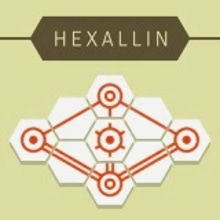
The premise is oddly charming: these little hex organisms have “arms” that need to connect to other arms of the same type to survive. If a Hexallin has all its arms properly linked, it turns red, like it’s finally breathing properly again. It’s simple, it’s clean, and it’s one of those puzzles where you don’t fight the clock… you fight your own impulsive moves. Because every drag has consequences, and the board remembers everything you did five seconds ago. 😅
🔗🧠 The Board Is a Conversation, Not a Grid
What makes Hexallin special is that it doesn’t feel like a typical match game. You’re not swapping candies. You’re not aligning three-in-a-row. You’re negotiating connections. Every piece you slide is basically asking the board a question: “If I place you here, can you shake hands with someone safely?” And the board replies with either a satisfying chain of connections… or a cold silence where nothing fits and you realize you just blocked the only good route.
The arms aren’t generic either. Different connection types mean you can’t just mash everything together. You have to pay attention to what kind of link each arm wants, like a tiny picky plug that refuses to go into the wrong socket. That detail changes everything because it turns the puzzle into a mix of pattern recognition and route planning. You’re not only connecting neighbors, you’re setting up future neighbors. That’s where the “one more level” problem starts.
🌀🖱️ Drag, Drop, Regret, Repeat
The controls are wonderfully direct: pick up a Hexallin, move it, set it down. But the simplicity is exactly what makes it sneaky. Since the movement is so effortless, you’ll be tempted to test ideas quickly, and quick testing often becomes quick mistakes.
Hexallin is the kind of game where the correct solution isn’t always obvious at the start. You’ll build something that seems right, then realize one single arm is stranded with no compatible partner anywhere near it. That’s when you get that classic puzzle feeling: you stare at the board, you tilt your head, you try to see it from a different angle, and you suddenly understand why your earlier move was doomed from the moment you made it. 🙃
It’s not punishing in a loud way. It’s punishing in a quiet, logical way. The game doesn’t yell. It just lets you be wrong until you decide to be smarter.
🔴👁️ The Red Glow Moment
Turning a Hexallin red is ridiculously satisfying. It’s like watching a tiny machine come online. You connect the final arm and the piece visually confirms, “Yes, I’m complete.” And once you get one, you want the rest. But the board doesn’t hand them out evenly. Sometimes you’ll complete several quickly and feel unstoppable. Other times you’ll have one stubborn little creature that refuses to finish because its last connection type is rare, tucked somewhere on the opposite side of the level like a joke at your expense.
That last stubborn piece is where the game becomes personal. You start narrating your own logic. “If I slide this one here, it can connect to that one… but then it blocks the bridge… unless I move the corner piece first…” You basically become the director of a tiny hex ecosystem, trying to keep everyone alive without causing a traffic jam.
🧩🎬 The Levels Feel Like Tiny Puzzle Scenes
Hexallin levels have a nice rhythm. They’re not just “harder = more pieces.” They’re structured so you get introduced to an idea, then the game twists it slightly. A layout that worked before might fail now because spacing is tighter or because the connection types are arranged in a way that forces you to think ahead.
And that’s the cinematic part, weirdly enough. It’s not explosions and drama, it’s that slow reveal where you realize the solution has been sitting in front of you the whole time, but you couldn’t see it because you were trying to solve it the loud way. Hexallin rewards the quiet approach: planning, positioning, letting the board breathe. Then you execute a sequence of moves and everything snaps into place like a scene resolving perfectly at the end of a tense conversation. 😌✨
🧠🪤 Common Traps (And Why You Fall Into Them Anyway)
There are a few classic ways Hexallin tricks you. The biggest one is “early completion greed.” You’ll see an easy connection, you’ll complete a piece fast, and you’ll feel productive… while accidentally using up the only compatible partner another piece needed later. It’s not that completing pieces is bad. It’s that completing pieces without checking the bigger network can be a disaster wearing a smile.
Another trap is over-centering. People naturally want to build in the middle because it feels stable. But sometimes the edges are where the smart connections live, and forcing everything toward the center just creates a crowded mess of half-connected arms. The board is hexagonal for a reason: it wants you to think in angles, not straight lines.
And the sneakiest trap is the “almost solved” illusion. You’ll be one move away from finishing… and that one move is impossible. Not hard. Impossible. So you backtrack mentally, find the mistake, and realize it wasn’t the last move that mattered, it was the first move you made while you were still confident. Ouch. 😭
🎧🌙 The Chill That Still Feels Sharp
Hexallin has this calm vibe that makes it easy to sink into. It’s the kind of puzzle game where you can get into a flow and forget time exists. But it’s not sleepy. It stays sharp because every move matters. You’re constantly scanning for compatible arm types, checking adjacency, imagining how the layout will look after two more moves, not just one.
That balance is why it works so well as a browser puzzle on Kiz10. You can jump in for a few levels when you want a mental reset, or you can commit to longer sessions when you want that stubborn satisfaction of cracking a level that kept laughing at you. And because restarts are quick, you’re never stuck in “loading screen hell.” You’re stuck in “my brain refuses to quit” hell, which is… honestly more fun. 😄
🧬🏁 The “Aha” Ending You Earn
When you finally solve a tricky level, it doesn’t feel like luck. It feels like you earned the right to understand it. You see the network clearly, you place each Hexallin like it belongs there, and the board turns into a neat little system where every arm has a purpose. That final cascade of red pieces is the reward: proof that your plan was real, not just hopeful chaos.
If you like logic puzzles, spatial planning, and games that stay simple on the surface but get deliciously demanding as you go, Hexallin is a perfect pick. Play it on Kiz10, connect the right arms, keep your little hex creatures alive, and try not to fall in love with the feeling of being smarter than you were five minutes ago. 🧠✨



 4.1 (9 votes)
 Share
Share
 Embed
Embed