🟦🟩 Tiny colors, big consequences
Merge Rgby is one of those puzzle games that looks innocent right up until it starts quietly ruining your confidence. At first glance, it seems simple enough: colored blocks, a limited space, a clear objective, and a system that feels almost friendly. Then you make a couple of careless moves, the board tightens, and suddenly you are staring at a cluster of colors like they personally betrayed you. That is the beauty of it. This is not a loud puzzle game. It does not need fireworks or giant dramatic effects every three seconds. It just needs one strong idea and enough level design discipline to keep squeezing your brain in exactly the right places.
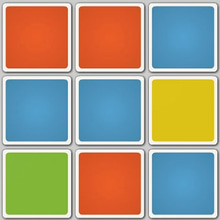
On Kiz10, Merge Rgby plays like a color merge puzzle where the real challenge comes from order, planning, and understanding how each combination changes the board. The core mechanic is wonderfully clean: matching colors transform into new colors, and the goal is to keep merging until everything becomes one final piece. Blue turns into green, green becomes yellow, yellow shifts into red, and from there the whole board starts feeling less like a bunch of blocks and more like a chain reaction waiting to happen.
The smart thing about a game like this is that it gives you a tiny rule set and then asks you to respect it. Deeply. You cannot just click around and hope the puzzle sorts itself out through kindness. It will not. Merge Rgby rewards attention. It wants you to think two or three moves ahead, maybe even four if the level is feeling particularly rude. And because the mechanic is visual and immediate, every success feels neat and every mistake feels embarrassingly educational.
🎨 A puzzle that keeps changing its own language
What makes Merge Rgby more interesting than a basic matching game is the way color progression changes the meaning of each move. In some puzzle games, matching is the end of the action. Here, matching is the beginning of a new problem. You combine one color, and instead of simply clearing space, you create a new block with a new relationship to the rest of the board. That means every merge carries two moods at once. Relief, because something worked. Anxiety, because now you have created a different situation and it might be worse.
That shifting logic gives the game a strong identity. Blue blocks are not just blue blocks. They are future green blocks. Green blocks are future yellow blocks. Yellow blocks are future red blocks. Every color is a step in a chain, and every chain affects the puzzle in ways that can be elegant or absolutely disastrous depending on how much you were paying attention. It is a little like cleaning a room by moving the mess into different shapes. Sometimes it helps. Sometimes it just becomes a more sophisticated disaster.
There is also a nice visual clarity to the whole thing. Because the game is built around colors and transformations, the board stays readable. You can see the relationships. You can feel the potential of the level. That matters in puzzle design. If a game is going to challenge your brain, it should at least let your eyes understand the battlefield.
🧠 The calm before the tiny meltdown
Merge Rgby has that classic puzzle-game rhythm where calm and panic take turns sitting in the same chair. You begin a level slowly, almost comfortably. You study the arrangement. You notice possible merges. You tell yourself there is a clean solution somewhere in the mess. Then, a few moves later, the whole puzzle starts looking different. The tidy little plan you had at the beginning no longer fits. Now one color is stranded, another is blocking the path you needed, and a move that looked harmless ten seconds ago has become the source of all modern suffering.
That transition is fantastic. It is what keeps the game from feeling flat. A good merge puzzle should make the board feel alive, not in the sense that it is moving around on its own, but in the sense that each action changes the emotional weather. One merge can make you feel brilliant. Another can make you stare at the screen in silence like you have just been personally judged by geometry.
And still, the game stays inviting. That is important. It never becomes unreadable chaos. The challenge comes from consequences, not nonsense. When you fail, you usually understand why. Maybe not instantly, because pride gets in the way, but eventually. And that kind of failure is useful. It teaches. It makes the next attempt sharper.
🟥 Why the final merge feels so satisfying
The objective in Merge Rgby is simple in wording and oddly dramatic in practice: combine everything into one. That goal gives the whole game a strong sense of compression. You are not just reducing clutter. You are forcing order onto a board that resists it. Every level becomes a tiny war between fragmentation and unity, which sounds much more philosophical than a color-block game has any right to sound, but here we are.
That is why finishing a level feels so clean. Not flashy. Clean. The board goes from scattered possibility to one final result, and your brain gets that lovely little puzzle reward that says yes, you understood the hidden shape of the problem. Those are some of the best moments in logic games. No giant cutscene. No explosion. Just the deeply satisfying feeling that everything finally clicked into place after spending several moves pretending it never would.
Because the game asks for efficient thinking, it also creates that familiar “I could do that better” energy. Even when you solve a level, part of your brain wonders whether there was a prettier route. A smarter route. A route with fewer awkward detours and less accidental chaos. That kind of afterthought is the sign of a good puzzle. It lingers.
🟨 Small board, strong replay value
Games like Merge Rgby do not need giant worlds to stay interesting. Replay value comes from design density. One compact board can hold plenty of tension if every move matters, and in this game, moves really do matter. The arrangement of colors, the sequence of merges, the order in which you create new pieces… it all stacks into a challenge that feels larger than the screen.
That is one reason puzzle fans tend to love this style of game. It respects the player’s intelligence without becoming needlessly complicated. The rules are approachable. The depth comes from how those rules interact. This makes it ideal for quick play sessions on Kiz10, but also surprisingly good for longer sits when you get trapped in that “just one more level” state. You know the one. You start with a casual test run and forty minutes later you are negotiating with red blocks like they owe you money.
The color theme helps too. It keeps the game bright, readable, and approachable even when the puzzle itself gets tricky. That balance matters. Merge Rgby can be demanding without feeling heavy, and that makes it easy to recommend to players who like logic games but do not want something dry or overcomplicated.
🧩 Why Merge Rgby works so well on Kiz10
Kiz10 is a great fit for Merge Rgby because the game delivers a very clean browser puzzle experience: easy to understand, quick to start, and smart enough to hold attention well beyond the first level. It belongs to that sweet spot where casual players can enjoy the concept immediately, while puzzle players can appreciate the sequencing, planning, and subtle pressure underneath.
If you enjoy color puzzle games, merge games, block logic challenges, and level-based brain teasers that reward patience more than speed, Merge Rgby is a strong pick. It takes a tiny system and builds real tension out of it. No wasted mechanics. No clutter. Just colors, consequences, and the growing suspicion that your last move may have been a terrible idea.
And honestly, that is exactly what a good puzzle game should do. It should look simple, stay readable, and still find a way to make you mutter at the screen when one lonely block refuses to cooperate. Merge Rgby does that with styles. Quietly. Efficiently. A little smugly. Which, for this genre, feels perfect.



 4.8 (11 votes)
 Share
Share
 Embed
Embed


