𝐏𝐢ñ𝐚𝐭𝐚𝐬 𝐃𝐨 𝐍𝐨𝐭 𝐖𝐚𝐢𝐭 🎉
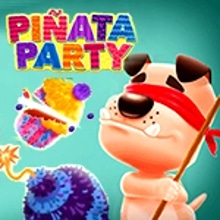
Piñata Party begins with a wonderfully irresponsible idea: what if the room was full of flying piñatas, the clock was already ticking, and your only real plan was to break absolutely everything before the party escaped your hands? That is the whole mood here. It is fast, colorful, a little ridiculous, and exactly the kind of arcade game that turns one casual round into a full score-chasing obsession on Kiz10. The core setup is simple and sharp. Piñatas fly across the screen, time keeps moving, and you have to smash as many as possible before they get away. The more you destroy, the better your score becomes, and the more the whole thing starts feeling less like a party and more like a very cheerful emergency.
That simplicity is the trap. A good arcade game never needs a giant wall of rules. It just needs one clean idea and enough speed to make your brain panic in entertaining ways. Piñata Party understands that perfectly. You are not wandering through a story. You are not learning a giant system full of upgrades and menus and suspiciously serious lore. You are reacting. Clicking, smashing, scanning the screen, trying to keep up while bright paper chaos flies in every direction. It is one of those games where the objective is obvious, but doing it well is another matter entirely.
And that is where the fun starts. Because the first few piñatas feel easy. Too easy, maybe. You settle in, land a few good hits, feel clever for half a second, and then the pace begins to lean forward. Suddenly you are not just playing. You are hunting. Your eyes start darting around the screen. Your hand gets quicker. Your decisions get sloppier. Then somehow, in the middle of all that color and speed, the game reveals what it really is: a reflex challenge wearing a party hat.
𝐂𝐚𝐧𝐝𝐲 𝐂𝐡𝐚𝐨𝐬 𝐖𝐢𝐭𝐡 𝐀 𝐂𝐥𝐨𝐜𝐤 🍬
The pressure in Piñata Party comes from timing more than complexity. The piñatas do not politely line up and wait for your attention. They move, they drift, they vanish if you hesitate, and the time limit turns every second into a small argument between accuracy and panic. Do you aim carefully and risk missing the next target? Or do you go wild and hope enthusiasm counts as strategy? Sometimes it does. Sometimes you end up clicking like a sleep-deprived raccoon attacking a birthday table.
That timer is what gives the game its bite. Without it, this would just be a pleasant little tapping game. With it, every run becomes a race. You are not simply destroying piñatas because it is fun, though it absolutely is. You are destroying them because the game keeps whispering that you could be faster, cleaner, sharper. You could catch one more. You could beat the last score. You could turn this brightly colored mess into an oddly personal victory.
That is the genius of score-driven arcade games. They create drama out of almost nothing. No giant villain needed. No dramatic cutscene. Just a number, a shrinking window of time, and your own refusal to accept that the last attempt was “good enough.” Piñata Party thrives in that space. Each run feels short, but not disposable. Every try leaves behind one annoying thought: I definitely could have done better.
𝐒𝐦𝐚𝐬𝐡 𝐅𝐢𝐫𝐬𝐭, 𝐓𝐡𝐢𝐧𝐤 𝐋𝐚𝐭𝐞𝐫 🪅
Visually, the whole idea is perfect for an arcade game. Piñatas are already built for spectacle. They are bright, silly, festive, and born to explode into reward. So the act of smashing them over and over does not feel repetitive in the boring sense. It feels repetitive in the satisfying arcade sense, where repetition becomes rhythm. Spot target. Hit target. Move instantly to the next one. Build momentum. Stay alive inside the clock.
There is also something very funny about how destructive the whole setup is while still feeling cheerful. Most games ask you to save something, protect something, solve something. Piñata Party asks you to become the problem. You are the force of chaos in the room. The candy economy depends on your speed. The celebration only works if you absolutely ruin the decorations. It is absurd. It is perfect.
And because the game is built around instant visual feedback, every successful hit feels good right away. Arcade design lives on that kind of response. You click, something bursts, the score climbs, and your brain gets the exact reward loop it came for. No delay, no clutter, no wasted motion. Just action and result. That directness is a huge reason games like this work so well on Kiz10. They do not ask for patience. They ask for instinct.
𝐑𝐚𝐧𝐤𝐬, 𝐓𝐢𝐭𝐥𝐞𝐬, 𝐀𝐧𝐝 𝐓𝐡𝐚𝐭 𝐎𝐧𝐞 𝐌𝐨𝐫𝐞 𝐑𝐨𝐮𝐧𝐝 𝐏𝐫𝐨𝐛𝐥𝐞𝐦 🏆
Public descriptions for Piñata Party also mention leveling up and earning new ranks and titles as you play, and that detail matters more than it might seem at first. It means the game is not only about one isolated score. It gives your performance a sense of identity. A sense that the chaos is leading somewhere. Even in a lightweight arcade format, that kind of progression adds fuel. Now the question is not just “how many can I smash?” but “how far can I climb?”
That tiny layer of progression is exactly the sort of thing that turns a good casual game into a sticky one. It gives your improvement a shape. You are not just playing faster; you are advancing. Earning titles. Chasing the next marker. Creating that very dangerous relationship with the restart button where quitting starts to feel emotionally incorrect.
And yes, this is the kind of game that produces immediate rematches. Lose momentum? Restart. Miss an easy cluster? Restart. Finish with a score that feels suspiciously average? Definitely restart. Piñata Party has that bright, harmless look that hides a deeply competitive little heart. It wants you to keep going. Not with giant punishments or heavy difficulty walls, but with something more effective: the feeling that your best run is still one click away.
𝐀𝐫𝐜𝐚𝐝𝐞 𝐉𝐨𝐲, 𝐏𝐮𝐫𝐞 𝐀𝐧𝐝 𝐔𝐧𝐞𝐦𝐛𝐚𝐫𝐫𝐚𝐬𝐬𝐞𝐝 🎈
What makes Piñata Party memorable is not complexity. It is commitment. The game takes one festive, chaotic concept and pushes it exactly where it needs to go. More speed. More targets. More pressure. More points. It never needs to pretend to be anything else. That confidence gives it charm. It is an arcade game, and it knows it. No apology, no detours, no unnecessary drama beyond the very real drama of a piñata escaping your cursor by half a second.
If you enjoy reaction games, score attack games, party-themed browser games, or colorful arcade challenges that throw you straight into the action, Piñata Party is an easy fit on Kiz10. It captures that bright little storm of movements and urgency that makes casual games so replayable. The rounds are quick, the feedback is instant, and the satisfaction comes from getting just a little bit better every time.
And honestly, that is more than enough. Sometimes you do not need a giant quest. Sometimes you just need a room full of flying piñatas, a ticking clock, and the deeply noble goal of leaving absolutely none of them intact. That is Piñata Party. Fast hands, loud colors, candy panic, and one more round that somehow becomes six.





 4 (23 votes)
 Share
Share
 Embed
Embed


