👑🌙 The Castle Test That Starts With a Smile
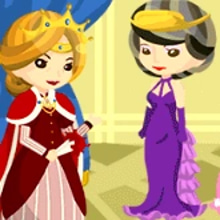
Princess Pea begins with that classic storybook vibe: polite voices, shiny halls, a prince who looks hopeful, and a queen who looks like she invented suspicion. You arrive, you’re welcomed, and everything feels almost… sweet. But the sweetness has teeth. This isn’t a tale where you swing a sword or cast spells. This is the kind of royal trial where you’re judged by the tiniest details, where every room hides something you need, and where “being a princess” apparently means having the patience of a librarian and the instincts of a detective. On Kiz10.com, Princess Pea plays like a cozy fairy tale that quietly turns into a scavenger hunt with pressure sprinkled on top like glitter you can’t remove 😅
The setup is simple: the queen and the prince need specific objects to confirm you’re the right one. Not “maybe” the princess. Not “probably.” The real deal. So you explore the castle, follow instructions, and keep your eyes peeled for items that blend into furniture, curtains, shelves, and every suspicious corner that looks decorative until it suddenly matters. It’s the kind of game that makes you stare at a room and think, okay… what am I missing… and why does the vase feel guilty? 🏺👀
🕵️♀️🧺 Hidden Objects, Royal Edition
At its heart, Princess Pea is a hidden object puzzle game, but it doesn’t feel like a cold checklist. It feels like you’re moving through little scenes in a castle that has lived a thousand tiny stories. You’re searching in rooms that look cozy, cluttered, fancy, sometimes oddly messy for a palace, and you’re trying to spot the exact items the game wants before your attention drifts. The trick is that your brain starts learning the castle’s visual language. You begin scanning edges first. Then shelves. Then the “too neat” areas. Then the shadows. And once you get warmed up, you start catching objects faster, like your eyes finally decided to cooperate. That’s when the game feels delicious: calm on the surface, focused underneath.
You’ll also get that classic hidden object emotion cycle. First you’re confident. Then you can’t find one item and you start getting offended. Then you find it and it was basically waving at you the entire time. Then you laugh at yourself, but only for a second, because now you’re locked in and you want to clear the next task cleanly. It’s gentle chaos, the best kind.
🏰🪞 Rooms That Feel Like Little Stages
What keeps Princess Pea fun is how each area feels like a miniature stage set. You’re not just clicking randomly, you’re moving through spaces that feel like “places” inside the fairy tale. There’s a nice sense of progression as you wander from room to room and complete what the royal duo asks of you. It makes the castle feel like a living puzzle box. Every time you fulfill an order, it’s like the story nudges forward: good, you’re paying attention, now prove it again.
And honestly, the vibe is charming. There’s something playful about a game where the stakes are “royal identity” but the gameplay is “find the missing stuff.” It turns the princess fantasy into a practical problem. A crown doesn’t matter if you can’t locate the object list. A fancy dress won’t help if you’re blind to the obvious. It’s hilarious in a quiet way. Like, yes, welcome to the castle, now please locate the random items scattered around like the staff took the day off. 😭✨
📜👑 Following Orders Without Losing Your Mind
The queen and prince aren’t just background characters. They’re basically your mission control. The tasks come like little royal requests, and you have to keep moving, keep searching, keep delivering. That structure is important because it gives the game momentum. You’re not wandering for no reason. You’re always chasing the next step, the next proof, the next tiny piece of “princess verification.”
But here’s the part that makes it oddly human: you start taking it personally. Not in a dramatic way, more like a playful stubbornness. If you can’t find an item, it feels like the castle is testing you. If you find everything quickly, it feels like you outsmarted the test. You’ll catch yourself thinking, okay queen, I see what you’re doing… and then you’ll keep searching anyway because the satisfaction is real. 👑😤
🧠💫 The Real Challenge Is Your Attention Span
Princess Pea isn’t a reflex game. It’s an attention game. The difficulty comes from the way objects camouflage into the scene, the way your eyes skip what they don’t expect, the way your brain gets tired and starts missing obvious shapes. That’s the hidden object genre’s secret weapon: it turns your own perception into the obstacle.
So the best way to play is to slow down just a little. Not slow like “boring,” slow like “intentional.” Scan in patterns. Sweep left to right. Check the top corners. Check behind big items. Look for silhouettes. And when you feel yourself getting stuck, don’t spam clicks like a desperate woodpecker. Pause. Reset your eyes. Pretend you’re walking into the room for the first time. Suddenly you’ll spot the item you swear wasn’t there. It was there. It was always there. The castle just enjoys watching you suffer politely. 😅🪄
🌿🛌 Fairy Tale Energy With a Tiny Twist of “Prove It”
Because the theme is inspired by classic royal testing, the whole game has this soft “prove you belong here” feeling. It’s not mean, it’s not grim, it’s just… a bit mischievous. Like the queen is smiling while setting the bar slightly higher than necessary. That’s why the game works for casual players: it’s cozy, readable, and still gives your brain something to chew on. You don’t need gamer lightning reflexes. You need curiosity and a bit of persistence.
And there’s a satisfying roleplay element too. You’re not just a random hidden object player. You’re the visitor in the castle. You’re being evaluated. You’re moving through royal spaces and gathering the exact pieces that will convince the court. It adds flavor to every task. Even when you’re doing something simple, it feels like it matters in-story, which makes each completed step feel like a little win. 🏰✅
✨🗝️ Why It’s Addictive on Kiz10.com
Princess Pea is the kind of game you start “just to try,” then you realize you’re fully focused, scanning like a hawk, refusing to stop mid-task because your brain needs closure. It’s quick to get into, it doesn’t require complicated controls, and it scratches that clean satisfaction of completing lists, solving small visual problems, and moving the story forward. It’s also a great palate cleanser between louder games. No explosions, no stress soundtrack, just a castle, a mission, and your eyes trying not to betray you.
If you likes hidden object games, fairy-tale mystery vibes, and that gentle pressure of completing tasks in sequence, Princess Pea is a solid pick on Kiz10.com. It’s cozy, a little chaotic, and surprisingly satisfying when you clear an entire room and feel like, yes… I belong in this castle. Now hand me my crown and stop hiding things behind curtains. 👑😄





 4.4 (28 votes)
 Share
Share
 Embed
Embed


