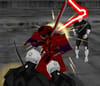
⚔️ Steel first, questions never
Samurai Sword feels like the kind of game that understands one basic truth about sword combat: if the blade is out, the conversation is already over. There is no room for polite hesitation here. No slow-moving build-up where danger waits patiently for you to admire the scenery. A sword game lives or dies by immediacy, and this one absolutely belongs to that world of fast reactions, sharp duels, and the beautiful stupidity of stepping too close at exactly the wrong time.
On Kiz10, games built around samurai action and blade combat always carry a special mood. They are not just fighting games. They are posture games. Timing games. Ego games, honestly. You advance, strike, block, dodge, and keep telling yourself the next exchange will go better than the last one. Sometimes it does. Sometimes the enemy turns your confidence into a cautionary tale in half a second. That is exactly the charm. A samurai game should feel dangerous even when the controls are simple.
Samurai Sword has that energy. It is the sort of sword fighting experience where movement matters just as much as aggression. Anyone can swing wildly. Plenty of players do. The difference is that wild swinging usually ends with someone getting punished, and the game seems built around that delicious little lesson. You are not just attacking. You are committing. Every slash says something. Sometimes it says “I have this under control.” Sometimes it says “I panicked and now I am improvising with honor.” Both are part of the fun.
🩸 Every duel is a tiny disaster waiting for a winner
What makes samurai-style games so satisfying is how personal the combat feels. A gunfight can be chaotic and distant. A sword fight is intimate in a much ruder way. The enemy is close. Their timing becomes your problem immediately. Their attack range matters. Their rhythm matters. Their bad intentions are impossible to misunderstand. Samurai Sword leans into that pressure. It does not feel like background noise. It feels like a challenge that stares directly at you and waits for one mistake.
That’s why these games can be so addictive. You rarely lose in a way that feels abstract. You usually know what happened. You attacked too early. You overcommitted. You hesitated. You moved like a hero and got corrected like an amateur. Great. Perfect. Back into the duel we go.
The samurai theme helps a lot too. There is a natural cinematic quality to katana combat that other weapons struggle to match. Every slash feels cleaner, sharper, more dramatic. Even a small encounter can feel like a duel with consequence. The game does not need giant armies or endless systems to create tension. A blade, an enemy, and one bad read are already enough.
🎴 Precision always looks calmer than it feels
The best part of a sword game is that mastery often looks effortless from the outside. A clean dodge. A controlled strike. A perfect counter. It all appears smooth when it works. But while you are actually playing, it never feels calm. Your brain is scanning spacing, timing, openings, recovery. You are measuring risk constantly, even if it only lasts a split second. Samurai Sword belongs to that kind of pressure. It is not about pressing more buttons than the enemy. It is about pressing the right thing at the right moment and pretending that was obviously your plan.
This is where the game starts digging into your habits. Are you too aggressive? Too passive? Do you swing first and think later? Do you wait too long and let the fight control you? Sword combat reveals players very quickly. It has a way of exposing your worst instincts while also teaching you how to fix them. That’s why improvement feels so satisfying. You can sense when your reactions sharpen. You can feel when your movement gets cleaner. The sword stops feeling like a panic button and starts feeling like an extension of your timing.
And honestly, that shift is one of the best feelings in action gaming. The moment when a duel that once felt messy begins to feel readable. Not easy, never truly easy, but readable. You see the opening. You trust the angle. You strike cleanly. For one brief second, you feel like a legend. Then the next enemy arrives and immediately tests whether you were actually a legend or just briefly lucky 😅
🌑 The atmosphere of blade combat always hits harder
There is something about samurai games that naturally creates atmosphere, even in a browser format. The weapon alone carries weight. Swords suggest discipline, danger, ritual, and violence stripped down to distance and timing. Samurai Sword benefits from all of that. It does not need to overexplain its identity. The very idea of stepping into a sword fight already does half the work.
That atmosphere also changes how the action feels emotionally. Every encounter becomes more intense because the margin for error feels smaller. You are not trading random hits in a loud arcade mess. You are surviving exchanges where a single wrong read can flip the whole fight. That gives the combat a nice edge. It keeps the game from becoming lazy. You stay alert because the blade demands it.
And that alertness is what gives the game replay value. The more you play, the more you want cleaner victories. Better timing. Sharper pressure. Less flailing, more intent. Every rematch becomes a quiet argument with your previous mistakes. Sometimes you win that argument elegantly. Sometimes you lose it in public.
🔥 Why sword games keep pulling players back
A good samurai game never really has to beg for attention. The appeal is built into the fantasy. Fast blade combat, dangerous enemies, and the chance to feel skillful in a way that looks almost theatrical. Samurai Sword taps into that perfectly. It offers that immediate action-game promise that one stronger run is always close, even if the last one ended with your dignity spread across the battlefield.
On Kiz10, that matters. Sword-based action games work best when they respect the player’s time and get straight to the point. You want the fight, the pressure, the satisfaction of a clean finish. Samurai Sword delivers in that spirit. It feels like a game for players who enjoy melee combat with bite, not just empty button mashing dressed up in armor.
If you like samurai games, katana fighting games, and browser action titles where timing matters more than brute chaos, this is the kind of game that lands well. It gives you speed, danger, and that constant push toward better control. More importantly, it makes sword combat feel like it should feel: sharp, risky, and just a little theatrical.
So yes, Samurai Sword sounds simple. Two words. One weapons. But that is enough. Sometimes all a game really needs is a blade, an enemy, and the promise that the next duel might finally be the one where you stop fighting like a nervous maniac and start fighting like a legend. Or at least something close to one. ⚔️🔥



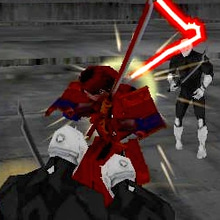
 4.3 (17 votes)
 Share
Share
 Embed
Embed