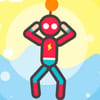
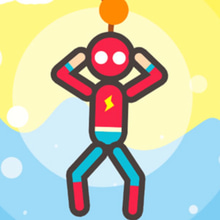
Sparkman 2 starts with the most urgent, oddly funny problem imaginable: a stickman is on fire, and you’re the only “responsible adult” in the room. Not with a fire extinguisher, not with a bucket, not with common sense… but with physics. Your mission is to get him into water, fast. The catch is that Sparkman doesn’t run where you want, doesn’t politely wait for help, and definitely doesn’t care about your neat little plan. He’s burning. He’s panicking. And you’re about to learn that puzzles feel very different when the timer is basically “his head.” 🔥😬
This is the kind of puzzle game that looks simple in screenshots, then immediately turns into a tiny chaos lab once you actually play. You’re not solving with words or numbers. You’re solving with gravity, angles, falling objects, bounces, and the occasional “why did he fly like that?!” moment. It’s a rescue puzzle, sure, but it’s also slapstick. The best solutions feel clever. The worst solutions feel like you accidentally invented new ways to fail. And somehow both are entertaining, which is exactly why Sparkman 2 fits so well on Kiz10.
𝐅𝐈𝐑𝐄 𝐎𝐍 𝐇𝐈𝐒 𝐇𝐄𝐀𝐃, 𝐏𝐔𝐙𝐙𝐋𝐄 𝐈𝐍 𝐘𝐎𝐔𝐑 𝐇𝐀𝐍𝐃𝐒 🔥🧠
The core loop is deliciously direct: get Sparkman into water to extinguish the fire. That’s the win condition, and it never gets confusing. What changes is everything around it. The level layout, the objects you can interact with, the way Sparkman moves when he falls, and the tiny traps that turn a “perfect plan” into a mess.
Sparkman 2 doesn’t demand perfect precision like a hardcore platformer. Instead, it dares you to think like a mischievous engineer. If a platform is in the way, maybe you remove it. If a block can tip, maybe you use it as a ramp. If Sparkman needs to move right, maybe you don’t push him right… maybe you make the left side collapse so the universe does the pushing for you. It’s that kind of game. The solution isn’t always the obvious action. Sometimes the best move is the weird move that looks wrong until it works.
And when it works, it feels like a tiny miracle. Sparkman tumbles, spins, lands, slides, then splashes into water like a dramatic movie scene but with stick-figure energy. You win, you breathe, and you immediately think: okay… next one.
𝐘𝐎𝐔’𝐑𝐄 𝐍𝐎𝐓 𝐒𝐎𝐋𝐕𝐈𝐍𝐆 𝐋𝐄𝐕𝐄𝐋𝐒, 𝐘𝐎𝐔’𝐑𝐄 𝐃𝐈𝐑𝐄𝐂𝐓𝐈𝐍𝐆 𝐀 𝐃𝐈𝐒𝐀𝐒𝐓𝐄𝐑 🎬🪵
Sparkman 2 is basically a little physics theater. You set the stage, then Sparkman performs. Your “input” is often a decision that triggers a chain reaction, and once the chain starts, you’re watching like an anxious director. Will he roll the right way? Will he bounce too hard? Will he miss the water by a pixel and land in the driest, saddest corner of the map? You don’t fully control the outcome, but you do control the conditions that create the outcome.
That creates a fun kind of tension. It’s not stressful like a competitive game. It’s stressful like balancing a spoon on your nose and pretending it’s totally under control. Sparkman is unpredictable enough to be funny, but consistent enough that you can learn. After a few levels, you start reading the geometry like a story. “If this falls first, he’ll slide. If he slides, he’ll hit that edge. If he hits that edge, he’ll bounce into the water.” Then you try it, and the game replies: nice theory, but he bonked a corner and spun into the wrong timeline. 😭
So you adjust. You try again. And the next time, it works, and you feel smarter than you probably deserve.
𝐓𝐇𝐄 𝐒𝐄𝐂𝐑𝐄𝐓 𝐈𝐒 𝐀𝐍𝐆𝐋𝐄𝐒 (𝐀𝐍𝐃 𝐀 𝐋𝐈𝐓𝐓𝐋𝐄 𝐒𝐀𝐑𝐂𝐀𝐒𝐌) 📐😅
In Sparkman 2, the water is usually not far away. The challenge is that “not far” can still be impossible if the angle is wrong. A tiny slope can turn a safe slide into a launch. A flat platform can trap Sparkman like a sad little shelf. A sharp edge can transform a gentle drop into a cartoon flip. So the real puzzle is often about shaping how Sparkman travels, not just moving him.
This is where you stop thinking in straight lines and start thinking in arcs. Not in a fancy math way. In a “please don’t fly into the ceiling again” way. You’ll get used to the idea that falling is a tool. Rolling is a tool. Bouncing is a tool. Sometimes the best solution is to let Sparkman drop from a height because the impact sends him exactly where he needs to go. Other times, height is the enemy because it makes him bounce away from water like he’s allergic to success.
It becomes a rhythm: test, observe, tweak. A good physics puzzle game rewards observation more than overthinking, and Sparkman 2 is very much that. Watch what went wrong, then change one thing. Not ten things. One. That’s how you go from chaos to control.
𝐌𝐈𝐂𝐑𝐎 𝐏𝐀𝐍𝐈𝐂, 𝐌𝐀𝐗 𝐒𝐀𝐓𝐈𝐒𝐅𝐀𝐂𝐓𝐈𝐎𝐍 💧🔥
The funniest part is how dramatic it feels when Sparkman is finally extinguished. It’s not just “level complete.” It’s relief. Like you’ve been holding your breath without noticing. The fire goes out, Sparkman is safe, and you get that quick little burst of pride that only rescue-style puzzle games deliver.
And because the concept is so clear, it’s really easy to get hooked. You’re never lost about what you should do. You’re only lost about how to do it efficiently. That’s a good kind of stuck. The “I can solve this, I just haven’t found the right sequence yet” kind of stuck. The kind that makes you try again immediately instead of quitting.
Also, Sparkman 2 has that perfect browser-game pacing. Levels don’t feel endless. Failures don’t feel punishing. Restarts are quick. It keeps you in motion, which is exactly what a physics puzzle should do. You’re meant to experiment, not suffer.
𝐓𝐇𝐈𝐍𝐊 𝐋𝐈𝐊𝐄 𝐖𝐀𝐓𝐄𝐑, 𝐍𝐎𝐓 𝐋𝐈𝐊𝐄 𝐀 𝐇𝐄𝐑𝐎 🌀💦
A lot of players approach these puzzles with a “save him directly” mindset. Push him toward water. Drop him straight down. Force it. Sparkman 2 often rewards the opposite approach. Don’t force Sparkman. Guide the environment. Let gravity do the heavy lifting. Create a path where he naturally ends up in water because every bad option has been removed.
That’s where the clever solutions come from. You’ll discover that sometimes the shortest route is the worst route. A longer slide can be safer. A controlled tumble beats a direct drop. A small nudge at the right moment beats a big dramatic collapse. It’s surprisingly elegant when you get it right, like a Rube Goldberg machine that’s rude but effective.
And once you start thinking that way, your solutions get cleaner. Less random bouncing. More deliberate movement. More “I meant to do that” energy, even if you absolutely didn’t mean it the first time. 😄
𝐖𝐇𝐘 𝐒𝐏𝐀𝐑𝐊𝐌𝐀𝐍 𝟐 𝐈𝐒 𝐀 𝐆𝐎𝐎𝐃 𝐅𝐈𝐓 𝐅𝐎𝐑 𝐊𝐈𝐙𝟏𝟎 🕹️✨
On Kiz10, Sparkman 2 hits multiple sweet spots: quick puzzle gameplay, simple controls, funny physics, and a clear rescue objective that feels satisfying every single time. It’s the kind of game you can play in short sessions, but it’s also the kind that steals “just one more level” from you because each puzzle feels close to solvable even when you’re failing.
It’s also a great choice if you like brain games that don’t feel slow. Some puzzle games are calm and quiet and thoughtful. Sparkman 2 is thoughtful, but it’s also lively. There’s motion, urgency, and the comedic unpredictability of physics. You’re thinking, but you’re also reacting to what you just created. That mix keeps it fresh.
If you enjoy physics puzzle games, stickman rescue challenges, fire-and-water style logic, or any game where the solution is half planning and half “let’s see what happens,” Sparkman 2 is a solid pick. Save the burning stickman, get him into water, and accept one universal truth: you will accidentally launch him the wrong way at least once, and you will laugh about it even while you pretend you didn’t. 🔥💧😅





 Share
Share
 Embed
Embed