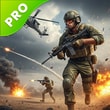
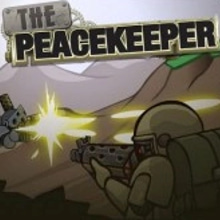
The Peacekeeper throws you into one of those situations where you instantly know you are outnumbered. No squad. No backup arriving in five minutes. Just you in a beaten up trench, a bit of metal and sandbags for cover, and a whole lot of silhouettes running toward you from the horizon. The game barely says hello before it starts sending enemies, and honestly that suits it. This is not about long speeches. It is about how fast you can react when everything in front of you is trying to move you off that line.
The first few seconds are usually messy. You pop out of cover, your crosshair jumps a little too far, you miss a couple of shots, and suddenly bullets are slamming into your barricade. So you duck. You feel that tiny moment of safety when your character crouches behind the wall and the enemy rounds thud against the front instead of your health bar. Then you realise this is the whole rhythm of the game: up, shoot, down, breathe, repeat. If you stay up too long, you get shredded. If you hide too long, the screen fills with enemies and you drown under the pressure.
What makes it addictive is how quickly your brain starts to treat that little strip of ground like home. It is just one position on the map, but you learn its edges, the distance between your cover spots, how far you can slide before a grenade lands. You shuffle left and right along the trench, choosing angles and trying to line enemies up so one burst can hit two or three at once. It becomes a tiny dance floor where every step matters and the wrong one means game over.
There is something strangely satisfying about watching a wave appear in the distance. At first they are dots, then you see shapes, then you can tell which ones are basic grunts and which ones are the bigger problems. Maybe there is a guy with heavier armor, or someone who moves a little differently and you know from experience that he will hurt if you ignore him. In that second you are already planning the order of your shots: small ones first to thin the crowd, or straight for the main threat before he gets close.
The Peacekeeper is simple on paper. You move along your cover and you shoot. But inside that simplicity, you start picking up tiny habits only someone who has been under fire for a while would have. You learn to fire in short bursts instead of holding the trigger down, because wild recoil is how you waste half a magazine into the dirt. You listen to the gaps between enemy shots. When they pause to reload, that is your window to rise, empty a clip into the front line, and drop again before the next volley.
Upgrades are what keep runs from blending together. At the beginning your soldier feels fragile, like a rookie who is just trying not to collapse in the first minute. After a few battles you have enough currency to start tweaking things. Maybe you go straight for more damage, because the idea of dropping enemies in fewer shots makes your life easier. Maybe you buff your armor so you can afford one extra mistake in a bad wave. Maybe you pick a new skill that gives you a panic button: a powerful explosive, a heavier weapon burst, something that can save a run that is going sideways.
Every upgrade changes your attitude a bit. When your weapon hits harder, you feel brave enough to pop up more often and take riskier shots. When your health bar is thicker, you can stay exposed that extra second to finish off a dangerous unit. Nothing turns you into an untouchable superhero; this is not that kind of game. But you feel the progress in your hands. Waves that used to be chaos become manageable. The moments where you used to panic turn into moments where you mutter “okay, I know how to handle this now” and you actually do.
The enemies do not quietly accept your growth. As you survive longer, the game starts mixing in tougher patterns. More bodies on screen. Different firing rhythms. Enemies that force you to move along your trench instead of camping in one favorite spot. You might have a round where everything feels under control, and then suddenly a new combination of units shows up and your safe routine stops working. That is usually when you catch yourself grinning and thinking “all right, I see what you did there” while your heart rate goes up another notch.
One detail that really keeps The Peacekeeper tense is how quickly situations switch from “I’ve got this” to “oh no, oh no, oh no.” You can be mowing enemies down, health still decent, and then you stay up half a second too long. A bullet slips through, then another, and suddenly that comfortable bar is hanging in the red. The instinct is to panic and fire wildly. The trick is to force yourself to duck, breathe for that half second behind the wall, and come back up with a clear idea who needs to die first. Those tiny self-control moments feel surprisingly good when you pull them off.
Because everything is viewed from the side, you always have this wide shot of your little soldier versus an entire field. It looks almost unfair, in a comic-book way: one figure crouched behind a low barricade, whole waves of enemies marching toward him. But when you get into a groove, it flips. Suddenly you are the scary one. The enemies run in and fall just as fast as they appear, and there is a twisted sense of calm in the middle of it all. You are still moving, still dodging bullets, but somewhere in the back of your mind you are thinking, “yeah, this is my line, you are not getting through today.”
The sound and feel of the shooting matters more than you realise. Shots have weight. Impacts are chunky instead of weak little pixels. When you land a clean burst and watch an enemy drop instantly, you feel that decision in your finger. When you hear grenades or heavier weapons, your body reacts before your brain fully processes it, sliding along the trench or ducking just in time. It is the kind of game where a lot of your improvement is invisible. One day you realise you are reacting faster, picking the right targets without consciously thinking through a pros and cons list.
The nice thing is that you do not need a whole evening to get something out of it. The Peacekeeper works in short shots. You can open it on Kiz10, play a few waves, maybe spend some currency on an upgrade or two, and close it again ten minutes later feeling like you squeezed a small action movie into your break. If you do have more time, it is dangerously easy to say “just one more wave” and then find yourself deep into a run you really do not want to lose.
If you like neat military tactics and slow planning, this is not that. This is the dirty, up-close version where plans last as long as the next enemy volley and your best strategy is staying calm under ridiculous pressure. You are not drawing maps, you are trying not to get your head taken off while you line up the shot. That raw focus is part of what makes it so satisfying.
And despite the heavy theme, there is something almost arcade-like about how it all plays. No complicated story branches, no huge open world. The goal never changes: hold the position. The variety comes from how you choose to do it, which upgrades you take and how quickly you adapt when the game throws something nasty at you. When you finally hit a point where waves that felt impossible the first time now fall one after another, you can feel how much sharper your reflexes and your decision-making have become.
By the time you have sunk a bunch of rounds into The Peacekeeper, that little trench starts to feel weirdly familiar. You know exactly where you like to stand when a new wave starts. You know which side you prefer for dodging certain attacks. You know the sound of trouble before you even see it on screen. And when the battlefield finally does overwhelm you and your soldier goes down, there is a good chance your first thought will not be “this game is unfair,” but “all right, let me try that again, but smarter this time.”









 4.6 (98 votes)
 Share
Share
 Embed
Embed


