🏗️ One block, one breath, one terrible decision away from collapse
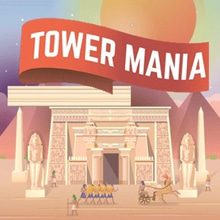
Tower Mania is the kind of game that looks friendly right up until your hands start betraying you. A block drops. You line it up. You think, yes, easy, I understand this, I am calm, I am in control. Then the next piece arrives, and suddenly your confidence becomes a suspiciously fragile structure balancing on one awkward corner. That is the magic of a good tower building game. It turns something visually simple into a quiet little crisis of precision, rhythm, and nerves. On Kiz10, Tower Mania feels exactly like that kind of arcade challenge: fast to understand, annoying to master, and somehow impossible to leave alone after one run.
The basic fantasy is perfect. Build upward. Keep the stack alive. Chase height. Do not let your own impatience ruin everything. It sounds manageable because, technically, it is. No giant war map. No deep lore about magical crystals or cursed robots. Just a tower, a stream of falling pieces, and your ability to place them well enough that the whole thing does not turn into a monument to poor timing. That simplicity is what gives the game its bite. There is nowhere to hide. When the stack goes wrong, it is not because the rules were confusing. It is because you pushed too soon, drifted too far, or trusted yourself at exactly the wrong moment.
And that is oddly beautiful. A tower stacking game should make every drop feel important, and Tower Mania absolutely has that energy. Every piece matters. Every alignment matters. Every tiny misplacement whispers, “this will be a problem later,” and then, usually, it is.
🧱 The tower remembers everything
What makes Tower Mania more interesting than it first appears is that mistakes do not simply disappear. They stay with you. A sloppy placement becomes a future weakness. A slightly off-center block becomes the reason the next move feels harder. Then the one after that gets worse. Then the whole tower starts leaning with the kind of attitude that suggests it has lost faith in your leadership 😅.
That gives the game a very particular tension. You are never only playing the current move. You are playing the history of your own stack. If the base is clean and your rhythm is good, everything feels smooth. Hopeful, even. But if the tower starts getting messy, every new block feels like a negotiation with physics and regret. That is where the fun lives. Not in perfect order, but in trying to recover from imperfect order before it becomes full collapse.
A lot of arcade building games rely on that exact emotional swing. Confidence, pressure, panic, recovery, panic again. Tower Mania thrives in that loop because the feedback is so immediate. You can see the state of your tower at a glance. You know whether things are stable or one breath away from public humiliation. That clarity makes the challenge feel fair, even when your hands are suddenly behaving like they belong to somebody who has never stacked anything in their life.
🎯 Precision turns into obsession very quickly
There is a sneaky little transformation that happens when you play a game like Tower Mania for more than a few minutes. At first, you are just placing blocks. Fine. Then you begin caring about clean placements. Then you start chasing smoother rhythm. Then, before you know it, you are silently offended by anything less than a beautifully centered drop. This is how arcade games get you. They turn tiny improvements into deeply personal goals.
Tower Mania seems built for that kind of obsession. The rules stay simple, but your relationship with them keeps changing. Early on, you just want the tower to survive. Later, survival is not enough. Now you want height. Grace. A cleaner run. Fewer ugly edges. Better momentum. It becomes less about avoiding failure and more about building something that feels satisfying to watch rise. That is a surprisingly strong hook for such a small concept.
And the rhythm matters so much. Good stacking games are almost musical. Not literally, necessarily, but in the way timing settles into your body. Drop, adjust, breathe, drop again. When you are in sync, the tower climbs with this lovely steady confidence. When you are not, everything feels clunky and overthought. The trick is staying calm long enough to let the rhythm work. Which, naturally, becomes much harder the moment the tower gets tall enough to make your palms suspiciously aware of their own existence.
🌆 Height changes the mood of everything
One of the best things about Tower Mania is how the emotional tone changes as the structure grows. Low tower? Relaxed, almost casual. You are still warming up. Medium tower? Now you are paying attention. Tall tower? Suddenly every movement feels louder than it should, and your brain starts narrating the situation like you are defusing a bomb made of rectangles.
That escalating tension is exactly what a vertical skill game needs. Building upward should not only mean bigger score or greater height. It should mean greater pressure. A tower game becomes memorable when the upper levels feel earned, dangerous, and a little bit absurd. By the time you have stacked enough pieces, the whole structure starts carrying emotional weight. It is no longer just a pile. It is your pile. Your unstable, hard-earned, deeply stressful pile.
And because the goal is so easy to grasp, that tension stays universal. You do not need a guide to understand what success looks like. A taller tower is success. A fallen tower is not. That clarity makes every run feel immediate. You are never wondering what the game wants from you. You are wondering whether your nerves will cooperate long enough to give it.
🌀 Why the simplest arcade games are often the meanest
Tower Mania belongs to a very old and very effective school of game design: do one thing, do it well, and let the player ruin it through tiny mistakes. That sounds cruel, perhaps because it is, but it is also why games like this stay alive. They respect your time by getting straight to the point. No warm-up speeches. No slow tutorial swamp. Just a clean challenge with clean consequences.
That is especially strong on Kiz10, where a game often needs to grab attention quickly. Tower Mania does. You can understand it instantly, but understanding it is not the same as controlling it. That gap is where all the replay value lives. You fail, and the reason is obvious enough to sting. You restart, and now the promise of a better run feels tantalizingly close. That “almost” is deadly. In the best way.
There is also a strangely physical satisfaction in stacking games. Even digitally, placement feels tactile. You can almost feel the weight of each piece, the wobble of a bad alignment, the visual relief of a clean landing. That sensation gives the game texture. It stops being abstract score chasing and starts feeling like you are actually constructing something fragile in real time.
🏁 A tower game that understands pressure perfectly
Tower Mania works because it never tries to be more complicated than it needs to be. It trusts height, balance, timing, and your steadily rising anxiety to do the heavy lifting. That is smart. It keeps the challenge sharp, the rhythm addictive, and the feedback immediate. Every run tells its own little story. A strong start. A minor mistake. A brave recovery. A glorious climb. Then, perhaps, one slightly greedy placement and the entire empire of blocks begins to wobble like destiny has finally lost patience.
So expect precision. Expect tension. Expect that one magical run where everything lines up and you feel like an architect touched by the arcade gods, followed by another run where your tower looks cursed by the third block. That is normal. That is the proper Tower Mania experience.
On Kiz10, it feels like a clean, addictive arcade stacking game built around one timeless idea: going higher always sounds easy until you actually have to keep the structure standing. And really, that is the whole charm. Not complexity. Not spectacle. Just you, the next block, and the tiny screaming voice in your heads begging you not to ruin everything now.



 4.1 (6 votes)
 Share
Share
 Embed
Embed


