Blue piece calling your name 🧩🔵
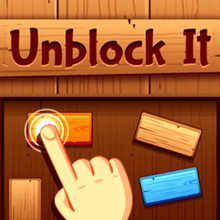
At first glance it looks simple. A tidy tray of wooden blocks a single blue piece asking for daylight and a narrow exit on the edge of the board. You grab a block move it a little and something pleasant clicks in your head. Unblock It Online turns that tiny click into a rhythm that feels both soothing and oddly heroic. There is no timer shouting at you no explosions racing across the screen. It is just you the arrangement and the quiet pride of finding a clean path where five minutes ago you could not see any path at all.
Brain versus grid in slow motion 🧠📐
The goal never changes. Slide pieces to free the blue block and guide it to the exit. What changes is your way of seeing. Early levels warm you up with friendly layouts where any gentle push helps. Soon the grid demands intention. Move a vertical piece and you might open a pocket on the left but close a corridor on the right. The puzzle teaches a useful habit. Before moving imagine the space that will exist after the move. That picture becomes a flashlight for the next choice and the one after that. Kids learn this fast because they experiment with joy. Adults rediscover it and grin because experimentation turns out to be a better teacher than pride.
First missteps and why they help 😅🧱
You will waste moves. Good. Extra moves sketch a map of your thinking and that map is gold. When a level refuses to yield stop and replay your last six actions in your head. Which move actually changed the board Which only shifted clutter and made the same problem look different The moment you recognize a decorative move you get better at avoiding it next time. That is real progress the kind you can feel. A stubborn layout becomes a story about patience and the punch line is the blue block gliding out as if it had always planned to leave.
Pattern hunting and tiny victories 🔎✨
Every family of puzzles hides patterns. You will notice a recurring cage around the blue piece made of two short blocks facing each other. Often the exit opens when you pull one guard away to create a pocket then slide the other sideways into that pocket. Sometimes the board offers a ladder shape that wants to be unfolded from the top down rather than attacked from the middle. Spotting a pattern is a little fireworks show in your brain. It is also a time saver because patterns compress decision making without stealing the pleasure of discovery.
Play like a strategist not a tourist 🧭🧩
Try this flow and watch your move count fall. First clear breathing room near the exit. Next create a parking pocket away from the main lane. Use that pocket as a temporary home for troublemakers while you straighten the corridor. Finally escort the blue piece in one calm sweep. That last sweep feels incredible because the board goes quiet. No more back and forth. No more bumping into the same obstacle twice. Just one glide across a path you built with intention.
Why fewer moves feel so good 🧮💡
The game tracks your move count and you start to care because the number tells a story about clarity. Fewer moves do not mean rushing. They mean you turned chaos into choreography. The best runs look slow and confident. A child might brute force a win with lively tapping and it is still a win. Later that same child will try to beat their own number and accidentally learn about planning and restraint. That is the magic here. Improvement arrives disguised as play.
Calm design for busy minds 🎧🪵
The board is wood the slides are smooth and the sound is a soft little thock that never gets old. There is no visual clutter stealing attention from the logic. You can play with music or in silence. Either way the puzzle becomes a pocket of focus that trims the noise of the day. Parents appreciate that sessions fit a bus ride or a study break. Kids appreciate that progress is always visible. A stuck level eventually becomes a trophy because your eyes learn to see the hidden hinge you kept ignoring.
When difficulty rises and confidence stays 🌡️🔒
Midgame layouts start stacking blocks in tricky columns that look immovable. They are not. Most hard boards fold after one or two key moves create a ripple. Identify the bottleneck piece the one that, if moved once, would unlock five other movements. Chase that one. Do not waste energy juggling the rest until the bottleneck breathes. Then the grid changes character. What looked impossible becomes polite and you feel taller in your chair.
Little techniques that feel like magic 🪄🧠
Look for pairs that move together. If sliding one block always forces another to move in reply treat them as a single long piece. That mental merge cuts decisions in half. Another trick is the rebound. Move a block past where you think you need it then bring it back one space to create a new alignment that was not available before. Finally practice the preview pause. Hover your finger above the next move and imagine the board after it happens. If the imagined board fails to open a new line try a different move before touching anything. This habit sounds small. It is enormous.
Why this puzzle genre never gets old 🧩🌿
Sliding puzzles are timeless because they ask the best kind of effort. You do not need fast reflexes or secret knowledge. You need curiosity and the willingness to try again with a slightly different angle. That is a life skill hiding inside a game. It teaches patience without preachiness and celebrates careful attention without punishing experiments. When the blue block escapes it is not luck. It is you noticing more than you did five minutes ago.
A cozy challenge on Kiz10 🌐✅
In the browser the experience is instant. Click and you are moving pieces within seconds. Restarting a level is painless so failure feels like rehearsal rather than a setback. The controls are responsive on desktop tablet or phone and the game respects light touches as much as long slides. That makes precise play possible which is exactly what you want when chasing a perfect path with a tiny move count.
Moments worth sharing 📸🎉
Everyone who plays long enough finds a level that becomes a little legend. Maybe you solved it in a shockingly low number of moves. Maybe you stared at it for a week then solved it while waiting for tea. Those stories travel well because the rules are universal. Family members try to beat each other’s numbers and laugh when the person who usually rushes turns out to be the new master of patience.
If a level fights back here is what to do 🧘♀️🛠️
Step away for two minutes. Brains love fresh angles. When you return, clear the lane nearest the exit even if it looks premature. Next, build one parking pocket where you can stash a stubborn piece temporarily. Then work from the exit backward as if the blue block already left and you are reconstructing the steps in reverse. This reverse logic often reveals the single block that must move first. Once you nudge that keystone the rest of the grid behaves.
A last glide and a small celebration 🎊🔵
When the path is set the blue block slides with a satisfaction that feels bigger than the screen. You took a crowded room and reorganized it into sense. That is a feeling worth collecting. Unblock It Online gives you a drawer full of such moments to open whenever the day needs a clean, quiet win. Move with care. Think with kindness toward your own mistakes. Then watch the exit welcome the piece that always wanted to leave.





 Share
Share
 Embed
Embed


