⏰ Tiny hero, huge problem, and way too many Z’s
Wake Up has one of those concepts that sounds silly for about three seconds and then suddenly feels brilliant. Public listings describe it as a game about Alcky, an enthusiastic alarm clock whose mission is to wake people up by getting rid of at least three floating Z’s before 6 AM. That is such a wonderfully strange setup for a browser game because it immediately gives the whole thing personality. You are not a knight, not a soldier, not some anonymous square jumping through empty danger. You are an alarm clock with a deadline, and sleep itself is the enemy. That changes the whole mood right away. The game stops feeling like a generic platform challenge and starts feeling like a tiny nocturnal emergency full of urgency, weird charm, and the sort of absurd commitment only older browser games knew how to deliver properly.
🌙 Nighttime platforming feels different when the mission is this weird
The beauty of Wake Up is that its premise is funny, but the mechanics still ask for real timing. According to the public description, you move with the arrow keys, jump with the spacebar, and swing a bat with Ctrl, which already tells you this is not just a passive puzzle or a simple runner. It is an action platform game with a clear goal and a small but important moveset. You move through the night, hunt the sleeping Z’s, and try to clear the objective before the clock runs out. That time pressure matters. A lot. It gives the game a sharper edge than the cute concept might suggest. Suddenly every jump is not only about surviving the level. It is about surviving efficiently. Every missed hit matters more. Every hesitation becomes expensive. That is where the fun starts feeling properly tense.
🪓 Smashing sleep should not be this satisfying
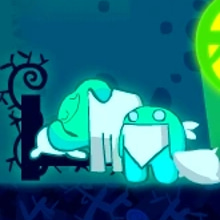
The bat mechanic is probably where Wake Up really comes alive. Movement alone would make it a neat little platformer, but giving the alarm clock a direct way to attack the Z’s changes the rhythm completely. Now you are not just navigating space. You are actively clearing it. That is always satisfying in small action games because it makes the level feel less like a track and more like a problem you can physically solve. There is something very funny and very effective about the image too: a determined little alarm clock running around at night, literally beating sleep into submission before the deadline arrives. Ridiculous, yes. Memorable, absolutely. That kind of tone is hard to fake. Wake Up seems to hit it naturally because the idea is already halfway to comedy before the first jump even happens.
🏃 The deadline gives every second a pulse
Games that use a hard time condition often feel more alive because they do not let the player drift. Wake Up sounds built exactly that way. You have to hit at least three Z’s before 6 AM, which means the action is not just about surviving the stage. It is about doing enough, quickly enough, before the clock decides your whole run was a failure. That ticking structure is great for browser gameplay because it makes the loop instantly understandable. You know what success looks like. You know what the pressure is. And because the goal is small and direct, restarts probably feel immediate instead of punishing. That is the kind of game rhythm that traps players beautifully. One more try. One cleaner route. One faster run. Suddenly you are optimizing alarm-clock violence like this was always your destiny.
🎮 Small controls, big personality
One of the best things about Wake Up is that it does not need a huge system to stand out. It has a strong hook, a clear objective, and controls that sound direct enough to keep the focus on execution rather than confusion. Arrow keys for movement, space to jump, Ctrl to swing. That is clean. That is readable. That is exactly what a small action platformer needs. The more direct the control scheme is, the more visible your mistakes become, which is a good thing in games like this. If you miss a jump or waste time on a bad swing, you know it instantly. But that same clarity also makes improvement feel satisfying. Better routes, cleaner hits, less panic, more rhythm. A game with a weird premise becomes much stronger when the mechanical side is honest, and Wake Up seems to land in that space.
😅 Why funny games can become surprisingly intense
There is a very specific charm in games that look lighthearted but still make your hands tense up. Wake Up feels like one of those. The premise is playful, almost cartoonish, but the deadline and the movement demands make the challenge real. That contrast helps a lot. It keeps the game entertaining even when you fail, because a bad run does not feel heavy. It feels like a tiny disaster in a silly universe. You were outplayed by bedtime. You lost to floating letters and a clock. Somehow that is much funnier than losing to a serious boss monster. Browser games always did well when they embraced this kind of shameless weirdness. Wake Up feels like it belongs to that tradition. A little odd, a little frantic, and very comfortable turning a bizarre idea into a real score-and-timing problem.
🧠 The goal is simple, so the game can stay sharp
Wake Up benefits from having one clean mission. Get rid of at least three Z’s before 6 AM. That is enough. It gives the game direction without burying it under noise. Players do not need a long explanation. They start, understand, and immediately begin trying to play better. That clarity is what makes so many small platform-action games stick in memory. Not giant content, just one good problem presented clearly. Wake Up has that kind of shape. It sounds like the sort of game where one bad attempt only makes the next one more tempting, because the fix feels close. Faster movement. Better jump timing. Cleaner bat use. Less panic. Maybe. Probably not less panic, actually. But definitely a better run is always right there in your head after a failure.
🌅 Final alarm before the night ends
Wake Up on Kiz10 feels like a weird little action platform game built around urgency, movement, and the wonderfully absurd mission of helping a living alarm clock destroy sleep before dawn. For players who enjoy quirky platformers, retro-style browser action, and games with a playful concept hiding a real timing challenge underneath, it has exactly the right kind of personality. It is fasts, odd, readable, and memorable in a way that only games with truly strange ideas can be. The night is ticking away, the Z’s are floating, and your tiny metal hero has work to do.



 4.8 (13 votes)
 Share
Share
 Embed
Embed