🧡🌌 Two little hearts, one very unfriendly world
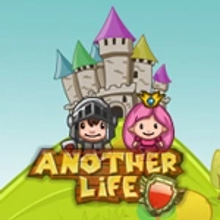
Another Life throws you into a fantasy world that looks calm for about one second, then immediately proves it’s full of traps, monsters, and “oh no” moments. The story vibe is simple and oddly sweet: two fluffies in love just want to be together, but the world keeps separating them and putting obstacles in the way. On Kiz10, it plays like a cooperative puzzle platform adventure where teamwork is not a bonus feature, it’s the whole survival plan. You’re not just moving through levels. You’re negotiating every room, clearing danger, collecting keys, and finding a path that lets both characters reach the exit alive.
It’s the kind of game that feels cute on the surface, then quietly becomes intense because you realize how often you need to coordinate. One character can’t always do everything alone. Sometimes you need the other to trigger a switch, hold a position, bait a threat, or simply exist in the right place so the puzzle stops being impossible. And that creates the best kind of challenge: not complicated controls, but complicated decisions.
🗝️🧩 Every level is a small escape room with legs
Another Life doesn’t feel like a long open world. It feels like a chain of compact rooms, each with its own logic. You’re usually hunting keys and figuring out how to open the way forward, but the path is never “walk there and take it.” It’s more like: you can see the key, you can almost touch it, and yet the room is built to punish the first plan your brain suggests.
You start learning to read the space the way you read a puzzle box. Where are the safe tiles. Where do enemies patrol. Which switch changes the layout. What happens if you move too early. What happens if you wait. The game becomes a loop of observe, try, adjust. When you fail, you generally know why, which is important. It doesn’t feel random. It feels like the room has rules and you’re slowly learning them.
And yes, you will have the classic moment where you solve 90% of the level, feel confident, then mess up the final step because you got impatient. Another Life loves that human weakness. It feeds on it. 😅
🐾🤝 Co-op energy: teamwork or tragedy
The soul of Another Life is the two-character dynamic. Whether you’re playing with a friend or controlling both yourself, the game constantly nudges you into thinking as a pair. Sometimes you’ll need one character to move first to make the path safe. Sometimes you’ll need to split up briefly, each handling a different side of the room, then reunite at a checkpoint like you’re repairing a relationship in real time.
It’s surprisingly emotional in a silly way. When you finally get both fluffies to the same spot after a messy section, it feels like a win beyond the mechanics. Not a huge cinematic cutscene win, more like a small, satisfying “okay, we’re safe again” breath. And that emotional rhythm is what makes the game stick. The objective is simple, but the feeling is strong: protect both, move together, don’t leave anyone behind.
😈👾 Monsters that don’t need deep AI to ruin your day
Another Life doesn’t need a massive boss system to create pressure. The monsters are dangerous because of placement and timing. A threat near a narrow corridor is suddenly a real problem. An enemy near the key turns “grab and go” into “plan a route and commit.” The game likes to place danger in the exact spot you want to stand, which forces you to think in timing windows and safe pauses.
That’s where the co-op logic shines. You can create space by moving one character first, drawing attention, or waiting for a patrol pattern to open up a gap. You’ll start acting less like a runner and more like someone solving a moving puzzle. It’s not only about dodging. It’s about positioning.
And the funniest part is how quickly you start blaming yourselves. Not the game. Yourselves. “Why did I move there?” “Why did I go first?” “Why did I panic?” The game is basically a mirror for your decision-making under pressure, but wrapped in a cute love-story skin.
🌀⏱️ Timing is the real weapon
If you treat Another Life like a normal platformer and just keep moving forward, you’ll get punished. The game rewards short pauses. Watching patterns. Letting hazards cycle. Moving when the room is ready, not when your impatience is ready. That might sound slow, but it actually makes you faster because you stop restarting.
A lot of sections are about moving on the safe beat. Not late, not early. Just right. When you hit that rhythm, the game feels smooth, almost effortless. When you don’t, it becomes chaos quickly, and chaos in a two-character puzzle game spreads like fire. One mistake becomes two mistakes, then you’re trying to recover with both characters out of position, and suddenly you’re improvising in a room that punishes improvisation.
🧠🧡 The best moments feel like a tiny plan finally working
Another Life is at its best when you build a plan and execute it cleanly. You position one fluffy, then the other. You trigger the switch at the right moment. You move through a gap that looked impossible at first. You collect the key without taking a hit. You reunite at the exit and the room finally stops being a problem.
Those wins feel great because they’re earned through understanding. Not grinding. Not luck. You didn’t “get stronger,” you got smarter. And the game encourages that kind of improvement because the levels are compact enough that you can retry without losing your mind. You always feel like the solution is close.
It also creates that classic Kiz10 loop: you fail, you immediately know what you did wrong, and you want the clean version. Not later. Now. One more try. One more attempt. One more run where you don’t make the same mistake. Then you make a different mistake, which is somehow impressive. 😅
🌙🎭 The vibe: sweet romance in a world that’s rude
There’s a charming contrast in Another Life. The premise is soft and romantic, like a little fantasy Romeo and Juliet story with fluffies. But the world they’re stuck in is absolutely not romantic. It’s full of barriers and threats and rooms that feel designed to keep them apart. That contrast gives the game personality. It’s not just “solve puzzles.” It’s “solve puzzles to protect something.”
And that’s why it’s easy to stay invested even when you repeat a tricky room. You’re not just chasing a score. You’re chasing a reunion. It’s a small emotional hook, but it works.
🧩🛡️ Small tips that actually make the game easier
If you’re stuck, don’t spam movement. Stop and watch the room like it’s a machine. Identify what changes and what doesn’t. If there’s a monster pattern, let it cycle once so you can see the safe beat. If there’s a switch, test what it affects before you commit your characters to a risky route. If you keep dying at the same spot, the mistake usually starts earlier than you think, often in positioning. Fix the setup, not the final panic.
And for co-op play, talk or plan. Even a simple “you go first” and “wait there” changes everything. Another Life punishes silent confusion, but rewards simple coordination.
🏁🧡 Why Another Life is worth playing on Kiz10
Another Life is a compact co-op puzzle adventure that blends timing, keys, monsters, and teamwork into a series of satisfying little escape rooms. It’s cute, but it doesn’t play weak. It’s simple to understand, but it stays interesting because the rooms demand real thought and clean execution. If you like two-player puzzle platform games, love-themed adventures, and the tense fun of guiding two characters through dangers without messing up the sequence, this is a strong pick on Kiz10. Get the keys, dodge the threats, reunite the fluffies, and try not to turn a romantic rescue into a chaos documentary. 🧡🗝️





 3.8 (132 votes)
 Share
Share
 Embed
Embed


