🦸♂️🖊️ Panels, capes, and a blank page that dares you
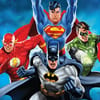
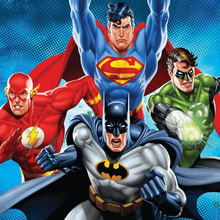
The page opens like a city at dawn—quiet gutters, clean grids, a whisper of possibility. DC Justice League Comic Creator hands you the keys to the Watchtower’s story room and says: go make something loud. No dice rolls, no “maybe later.” You drag a panel frame, drop Superman into the skyline, tilt Batman’s cowl for that brooding angle, and suddenly Metropolis hums under your cursor. The magic isn’t buried in menus. It’s right there in the click, the flick, the snap of a word balloon locking onto a heroic pose, the glow of a sound effect that lands like thunder. You are the writer, the director, the letterer, the gaffer, and yes—the fan who finally gets to decide what “Meanwhile…” really means.
💥🗯️ Sound effects that feel like punchlines
A good comic speaks in onomatopoeia. Slide a BOOM across the panel and it owns the space like a drum. Nudge a ZZZZT into the corner of a Cyborg blast and the energy reads before a single line of dialogue lands. Even the tiny clacks—tap tap tap of keys in the Daily Planet—can become a visual rhythm when you stitch them under Lois’s grin. SFX here are stickers with attitude: rotate them a degree, stretch the tail toward a collapsing robot, layer them behind smoke so the letters peek through like they’re part of the explosion. Suddenly your page isn’t quiet ink; it’s a soundtrack in bright ink.
🦇🔍 Angles, close-ups, and the art of “look again”
Comics live and die in framing. Pull a close-up on Wonder Woman’s bracers mid-deflect; the reader hears the ping even in silence. Set a low angle on Aquaman leaping from a storm-wet pier and your panel smells like sea spray. Offset Flash with a smear of speed lines that cut through two panels at once and time itself gets excited. DC Justice League Comic Creator gives you poses with personality, then lets you dial the drama: flip a figure, scale it up, tuck it under a foreground gargoyle so the city becomes an accomplice. Every choice is a tiny director’s note that makes your page read faster, cleaner, louder.
🟩🟦 Layouts that talk back
Not every page needs a tidy 3×3 grid. Try a tall opener that eats the left third, then three stacked action beats on the right like a drumroll. Or go quiet: a single wide panel of Gotham rain, three whisper-small reaction panels nestled inside the puddle’s reflection, and a final cut-in to a batarang poised like punctuation. The panel tools snap when you ask for order and stay out of your way when you chase chaos. That’s the joy—your story sets the pattern, not the template.
📝🗨️ Lettering that carries plot and punch
Word balloons aren’t just speech—they’re staging. Place Clark’s dialogue high and left so the eye flows into Kara’s answer without a speed bump. Give Batman a spiky whisper balloon for that growled aside; give Green Lantern a square, tech-neat caption when he’s narrating ring logic. Add a thick caption box that says “Later…” and your scene flips locations with a wink. Tails aim like arrows. Layering keeps balloons from smothering art. Font size is a volume knob—turn it down for a secret, crank it when Lobo kicks the door.
🌆🎨 Backgrounds with their own heartbeat
Metropolis is sunshine and reflections; Gotham is rumor and rain. Coast City hums like circuitry; Themyscira glows like history. Swap backgrounds to swing mood in seconds. A sterile laboratory turns Flash’s grin into mischief; a ruined warehouse turns it into defiance. Stack two backgrounds—city skyline behind a moonlit rooftop—and let a silhouette carve the horizon into myth. The assets belong to DC’s worlds; the point of view belongs to you.
⚖️🎭 Heroes, villains, foils, friends
Pair-ups are the spice. Superman and Batman in a quiet panel say more with posture than with paragraphs; then drop Harley into the corner with confetti and suddenly the page can’t sit still. Wonder Woman and Mera shoulder to shoulder against a tidal brute? The vibe writes itself. Cyborg and Green Lantern trading quips while mapping a battle grid across the city? That’s strategy with sparkle. Your casting choices create chemistry; the toolset makes it easy to stage like you meant it.
🚀⏱️ Pacing you can feel with your thumb
Fast pages move like traffic: big shapes, loud diagonals, balloons that leap panel borders, action lines that cheat time. Slow pages breathe: symmetrical frames, eye-level compositions, smaller type, longer captions. The editor here lets you board the rhythm like a metronome. Add a half-page splash for the reveal; follow with three tiny beats where characters process. End with a turn—the last panel a silent stare or a single word that dares the reader to flip. Pacing isn’t theory; it’s where your cursor rests between decisions.
🧠🔧 Tips from the Watchtower whiteboard
One: guide the eye. Top-left to bottom-right is default; use diagonal action and balloon tails to keep the river flowing. Two: stack meaning. If Flash’s line is a joke, echo it with a background sign gag; if Batman’s line is a warning, dim the palette and let a shadow cross his mouth. Three: kill clutter. Great pages are bold, not busy. If a sticker fights a face, shrink the sticker or move the face; your reader will thank you. Four: don’t be afraid of white space. A clean gutter is a breath. A silent panel is respect for what you just landed.
📱🖱️ Touch, click, create—no friction
On mobile, your finger is the pencil. Drag a character, pinch to scale, flick to rotate by a hair. Taps pop open color-swap and layering without burying you in submenus. On desktop, the mouse feels like a ruler and a brush at once—precise placement, quick nudge, snap align, done. The interface trusts that you’re here to make, not to wrestle. If it feels invisible, that’s the point.
🧒🎓 From first page to portfolio piece
New creators get wins in minutes: a two-panel gag with Flash stealing the last slice of pizza from the Watchtower fridge and Batman’s caption promising vengeance. Veterans can chase sequences: a three-page Metropolis rescue that escalates from fallen crane to Lex drone swarm to rooftop reckoning, dialogue bending across panels like a spotlight. The same toolbox scales with you. You can stay playful or go meticulous; either way, the page respects your ambition.
🔁✨ Iteration is the secret superpower
Version one is loud. Version two moves the balloons. Version three drops the background saturation so Diana’s lasso pops like sunrise. Version four cuts a panel because the beat works better in your head than it did on paper. That loop—try, test, tweak—feels like rehearsal for an encore. Save often, compare variants, keep the one that sings. Kiz10 makes the jump-in, jump-out cadence easy: five minutes for a gag, twenty for a fight, an hour for a cliff-hanger that earns the word “To be continued…”
🏁🗞️ Your splash page moment
Imagine it: A single towering panel. Superman in the foreground, cape carving a red river. Batman half in shadow, grapnel line slicing through rain like a signature. Wonder Woman’s lasso arcs across both, tying composition to theme. Below, Flash threads neon between car headlights, Aquaman’s trident flares against the harbor, Green Lantern paints a light-bridge that frames the entire skyline. One caption, small and proud: “Justice isn’t a place. It’s a promise.” You lean back. It reads. It feels like a comic you meant to find years ago. You didn’t wait for it. You made it.
💙 Why this belongs on Kiz10
Because creation should be playful, fast, and sharable. DC Justice League Comic Creator loads quick, feels crisp, and rewards every drag-and-drop with a page that looks like it slipped out of a Wednesday pull list. Whether you’re a kid discovering layouts or a seasoned fan storyboarding a what-if, Kiz10 gives you the frictionless studio your ideas deserve.











 Share
Share
 Embed
Embed