WELCOME TO THE FOG, DON’T EXPECT A MAP 🌫️🗺️
Escape from Silent Hill throws you into a hostile place that feels like it was built from unfinished nightmares: broken streets, uneasy silence, and visibility that disappears the moment you start trusting it. You are not “touring” a scary town. You are trying to get out, and the town keeps testing how easily you panic. On Kiz10, it plays like a survival horror escape experience where careful movement matters, quick decisions matter even more, and the danger isn’t only the creatures… it’s the way the environment makes you doubt yourself.
At first, it’s almost calm. You move forward, you watch the fog swallow the distance, and your brain starts filling in details your eyes can’t confirm. That’s the trick. Horror doesn’t always scream. Sometimes it just whispers, “Keep walking,” and waits for you to walk into the wrong thing. Then the zombies arrive, and the calm becomes a countdown. It’s not a game that wants you to feel powerful. It wants you to feel hunted, even when nothing is currently touching you.
STREET SURVIVAL, NOT HERO FANTASY 🧟♂️🔦
The core loop is simple in a way that becomes stressful fast: navigate, survive, and make the right choices to stay alive long enough to escape. The enemies aren’t there to be “farmed.” They are there to block routes, pressure your timing, and punish sloppy movement. Sometimes the smartest play is to hold your ground. Sometimes the smartest play is to back off, reposition, and stop pretending bravery is a strategy. You’ll learn that quickly, usually right after you do something brave and immediately regret it.
A good survival horror game lives on spacing, and Escape from Silent Hill understands that. When creatures can close distance quickly, your decisions become tiny and urgent. Do you push forward through a narrow lane, or do you take the wider route even if it feels longer? Do you run and risk pulling trouble into you, or move carefully and accept that “careful” still feels terrifying? The game keeps you in that uncomfortable middle where you’re always thinking, always scanning, always hearing danger before you clearly see it.
THE FOG IS A CHARACTER AND IT HATES YOU 🌫️👁️
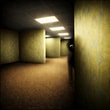
Fog in horror games can be decoration, but here it’s basically a mechanic. It steals information. It turns corners into question marks. It makes you second-guess whether that shape ahead is a harmless object or a threat waiting for you to commit. You’ll catch yourself leaning toward the screen, like leaning in will magically reveal the answer. It won’t. The fog is doing its job.
And that changes how you move. You stop sprinting everywhere. You start approaching intersections like they’re negotiations. You angle your camera and body carefully, trying to create safe sightlines. You start listening for cues, because listening is sometimes more reliable than seeing. It’s weirdly immersive. One minute you’re playing a browser game, the next minute you’re moving like you’re actually in a place where the air itself is suspicious.
ZOMBIES THAT TURN YOUR TIMING INTO A MISTAKE FACTORY 🧟♂️⏱️
The undead are the obvious threat, but the real danger is what they do to your rhythm. They force you to move when you’d rather pause. They force you to pause when you’d rather move. They turn “simple navigation” into a series of micro-decisions with consequences. When zombies push into your path, you can’t just keep walking and pretend it’s fine. You have to respond, and response costs time, space, and attention.
That attention is expensive. The moment you focus too hard on one enemy, you risk missing what’s happening around you. The moment you focus too hard on the environment, an enemy can slip closer than you expected. The best runs happen when you maintain a calm, repeatable loop: move with intent, check angles, react quickly, then immediately reset your awareness. The worst runs happen when you start reacting emotionally. Panic makes you commit to bad routes. Panic makes you run into tighter spaces. Panic makes you choose speed over safety. And the town loves panic. It feeds on it.
CHOICES THAT FEEL SMALL UNTIL THEY AREN’T 🚪🧠
Escape games are often about keys and doors, but this one is more about direction and judgment. “Always make the right decision” sounds simple until you realize how many decisions you’re making per minute. Left or right. Forward now or wait. Run or walk. Engage or avoid. Commit to a path or turn back. In a bright, friendly game, those choices are casual. In a foggy survival horror setting, every choice feels like you’re signing something you didn’t fully read.
You’ll also notice how the atmosphere changes the way you interpret risk. A street that looks empty might still feel dangerous because it’s too empty. A corridor might feel safe because it’s enclosed, then become a trap because it’s enclosed. The game constantly flips the meaning of space. Wide areas give you room to maneuver but expose you. Tight areas protect your sides but steal your escape routes. That push and pull is what makes the tension stick.
THE “I’M FINE” MOMENT IS ALWAYS A LIE 😬🩸
There’s a specific horror rhythm this game nails: brief relief followed by sudden pressure. You clear a path, you breathe, you think you’ve stabilized… then something shifts and you realize you only stabilized for that exact second. Maybe the next street is worse. Maybe the next turn funnels you. Maybe the game simply waits until you relax and then presents a threat at a distance where your options are limited.
That’s why it feels so effective as a short-session horror game. You don’t need a long build-up to feel uneasy. The unease is baked into how you move through the fog. Even when you’re not actively fighting, you’re bracing for it. And when you do fight, it’s rarely “clean.” It’s tense, messy, and fueled by the desire to create space. The goal isn’t dominance. It’s survival.
HOW TO PLAY SMART WITHOUT TURNING IT INTO HOMEWORK 🔦😅
If you want to improve without killing the mood, focus on two habits: keep your exits in mind, and stop rushing “just because.” When you enter an area, mentally note where you can retreat. In horror survival, retreat is not failure, it’s positioning. Second, don’t treat speed as courage. Running feels like control, but it often removes your ability to react. Move carefully when visibility is low, then move decisively when you’ve chosen a route. The switch between careful and decisive is where good players live.
Also, trust repetition. Horror games punish improvisation under stress, but they reward learned patterns. When you find a path that works, don’t immediately abandon it for a flashy shortcut. Save the risky routes for when you actually need them. The town is already trying to trick you. You don’t need to help it.
WHY IT BELONGS ON KIZ10 🕹️🌫️
Escape from Silent Hill is built for players who want fear without fuss. You load it, you’re in the fog, and the tension begins instantly. The setting does heavy lifting, the hostile environment keeps you alert, and the enemies make every wrong turn feel expensive. It’s the kind of survival horror escape game that stays in your head because it’s not only about what you see, it’s about what you can’t see. And if you like that feeling, the one where the screen is quiet but your brain is loud, this is exactly your kind of run.













 Share
Share
 Embed
Embed