🏁🌍 The world turns into a speed test
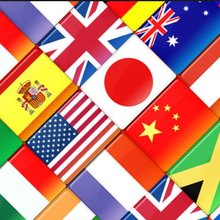
Flags Quiz Multiplayer takes something that sounds calm—recognizing flags—and turns it into a real-time competition that makes your mouse hand act like it’s under pressure from a ticking bomb. You join a match, the first flag pops up, and instantly your brain starts doing that frantic shuffle: colors, stripes, symbols, “I KNOW THIS ONE,” click. On Kiz10, it feels like a fast multiplayer geography duel where you don’t just want the right answer… you want it before everyone else gets it. And that tiny difference—being right versus being right first—changes the whole vibe. 😅
The game is simple on the surface, but it’s not gentle. It’s the kind of quiz where confidence is useful until it becomes dangerous. You’ll have rounds where you’re snapping answers like you’ve got an atlas wired into your nervous system, then one “almost identical” flag appears and your certainty evaporates. That’s when you learn the game’s real skill: staying calm while your score is basically a heartbeat monitor.
⚡🧠 Recognition beats memory, and panic is expensive
This isn’t school. You’re not being graded, but your performance still feels public. The multiplayer aspect creates pressure even if nobody says a word. You can feel the pace in how quickly the next prompt arrives, you can sense other players moving, and you can practically hear the scoreboard quietly judging you. The best players don’t rely on slow recall; they rely on pattern recognition. The exact shade of blue. The order of stripes. The placement of stars. Tiny details that your brain starts treating like cheat codes.
And what’s funny is how quickly you adapt. After a few matches, you stop thinking, “What country is this?” and you start thinking, “Okay, this is the one with the off-center emblem, the weird stripe ratio, the star cluster in that corner…” Your eyes get faster. Your clicks get cleaner. And then you make one rushed mistake and it feels like you spilled coffee on a fresh white shirt. 😬
🎮👥 Multiplayer makes trivia feel like a fight
In a single-player quiz, you can pause and pretend you’re being thoughtful. Here, hesitation is a luxury you pay for with points. That’s where the tension comes from: speed versus certainty. You can play aggressively, clicking fast and trusting instincts, or you can play carefully, verifying details and losing time. The sweet spot is learning when to do each. Easy flags? Snap them instantly and build momentum. Tricky look-alikes? Slow down half a beat, confirm the tell, then commit.
The game becomes a small psychological battle. Players who tilt—who get angry after one wrong answer—start making more mistakes. Players who stay neutral recover quickly. If you can keep your rhythm, you win more. Not because you know every flag on Earth, but because you don’t let one miss wreck your hands for the next ten questions.
🌐🧭 Flags turn into a language you learn without trying
The sneaky part is that you actually get better at geography over time. Not in a boring, textbook way. In a gamer way. You learn through repetition, through embarrassment, through that moment where you mix two flags up once and then never do it again for the rest of your life. You begin noticing regional patterns and design habits. You stop guessing randomly and start making educated reads. And when you pull off a correct answer on a tough one while other players hesitate? It feels like landing a headshot in a shooter, except your weapon is knowledge and your ammo is confidence. 😄
This is why it’s addictive on Kiz10. Matches are quick, re-queue is easy, and improvement feels immediate. You lose by a tiny margin and your brain goes, “Nope. Run it back.” And you do.
🔥📈 Streaks, momentum, and the fragile ego of a quiz player
Streak systems are dangerous because they create emotional attachment. You get five correct answers in a row and suddenly you’re protecting that streak like it’s a rare item. Then the game throws you a tricky one and you feel the internal debate: trust the first instinct, or double-check? Double-checking costs time. Trusting can cost the streak. That tension is the entire game in a nutshell.
When you’re playing well, everything flows. Your eyes lock onto details, your hand clicks with confidence, and you feel in control. When you’re playing badly, you start second-guessing even the easy ones and it becomes a spiral. The trick is to treat each flag as its own event. One mistake isn’t a disaster, it’s data. Shake it off, focus on the next one, keep moving. The game rewards that mindset more than it rewards raw knowledge.
😂🌪️ The funniest fails are always the “I swear I knew that” ones
You will miss something obvious at least once. Everyone does. That’s part of the charm. One round you’ll confuse two similar flags and stare at the screen like it betrayed you. Another round you’ll nail a tough flag instantly and feel unstoppable. The emotional swing is fast, and that’s why it stays fun. The game doesn’t punish you with long downtime. It lets you jump back in and prove yourself again immediately.
If you enjoy quiz games with competitive energy, fast recognition challenges, and a clean multiplayer loop, Flags Quiz Multiplayer is a perfect pick on Kiz10. It’s quick, tenses, and strangely satisfying, like speedrunning an atlas.





 Share
Share
 Embed
Embed