🎪📦 Pop goes the panic
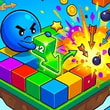
Jack In The Box is one of those platform games that looks cute for exactly one heartbeat, then immediately starts acting like it’s testing your reflexes for a secret agency. You’re not controlling a hero with armor and dignity. You’re controlling a springy little box that launches itself upward like it has opinions. Every jump feels like a tiny explosion of commitment: you tap, you pop, you fly, and for a split second you’re weightless… then the level reminds you gravity is petty and timing is everything. On Kiz10, it plays like a fast, mischievous arcade platformer where the real enemy isn’t just spikes or enemies or moving platforms. It’s your own impatience. It’s that urge to pop again too soon because you “totally have it,” right before you slam into something sharp with the confidence of a cartoon stuntman.
🧠⚡ One button, a thousand bad decisions
The beauty of Jack In The Box is how it makes simple controls feel intense. You’re basically doing one main thing: launching. But the way you launch, when you launch, and where you land becomes this constant micro-drama. A safe jump is rarely the best jump. The best jump is usually the risky one that slips between hazards, catches a narrow ledge, and keeps your momentum alive. And the moment you start feeling comfortable, the stage layout changes its attitude. Platforms get tighter. Hazards get busier. The timing windows stop being generous and start being… sarcastic.
You’ll quickly learn the difference between a confident pop and a desperate pop. A confident pop is planned. You see the next ledge, you feel the rhythm, you commit with calm. A desperate pop is the one you do because you hesitated, started falling, and then tried to save it at the last second. Desperate pops are exciting, sure, but they also create that special chain reaction where one mistake forces two more mistakes, and suddenly you’re bouncing like a pinball that forgot what “control” means. 😅
🎭🕹️ The levels feel like prank machines
This game loves traps that look obvious… until they aren’t. You’ll see a safe-looking platform and assume it’s a rest point. Then a hazard slides in, or a gap appears, or the next jump demands a tighter angle than your brain was ready for. It feels like the world is built out of toy-box logic: bright, playful shapes that behave like they’re secretly trying to humiliate you.
And weirdly, that’s what makes it fun. Jack In The Box doesn’t feel like a heavy, serious platform adventure. It feels like a carnival test of nerve. You’re trying to climb, survive, and keep your streak alive while everything around you is wiggling, moving, and tempting you into overconfidence. You’ll catch yourself muttering things like, “Okay, slow down,” while your finger does the opposite. Classic.
🧨🧩 Timing becomes muscle memory, then it becomes art
At first you’ll play it like a normal reflex platformer: react, react, react. That works for a bit, until you hit sections where reacting is too late. Then the game shifts into something more interesting: prediction. You start reading the level like a rhythm chart. You watch how hazards cycle. You notice how much hang-time your pop gives you. You learn how long it takes to recover after landing. You stop thinking “jump now” and start thinking “jump so I land there at the safe moment.” That sounds small, but it changes everything.
Suddenly you’re not fighting the stage, you’re dancing with it. A moving platform stops being scary; it becomes a metronome. A spike strip stops being a wall; it becomes a timing gate. Even gaps feel different because you’re not just clearing distance, you’re managing arc and pacing. And when it all clicks, you get that delicious platformer high: your pops are clean, your landings are confident, and you’re cruising through danger like you meant to do it all along. 😎✨
😈🍬 Greed shows up in sneaky ways
Even if the main goal is “reach the top” or “clear the stage,” games like this always find ways to bait you. Maybe it’s a collectible, a bonus route, a tighter shortcut, or a tempting ledge that looks faster. Jack In The Box thrives on that exact temptation: the path that looks cooler but is clearly riskier.
And you will take it. Not always, but often enough. Because once you’ve survived a few tricky pops, your confidence inflates like a balloon in a hot room. You start thinking you’re the boss. Then the game reminds you the boss is actually a tiny ledge with a cruel angle. You miss it by a pixel, and suddenly you’re watching your progress evaporate. The emotional swing is ridiculous: pride, panic, reset, determination. It’s the loop. It’s why you keep playing.
🌙🎬 The vibe: toy-box horror without the horror
There’s something slightly eerie, slightly playful about a jack-in-the-box theme. It’s a classic object that’s supposed to be fun, but also kind of unsettling if you think about it too long. The game uses that energy well. You’re a spring-loaded surprise trying to survive a world that feels like a giant prank. It’s not scary in the “horror game” sense, but it has that tension where you’re always bracing for the next sudden problem.
And because it’s arcade-fast, your brain stays switched on. You’re not wandering. You’re reacting, planning, adjusting. You’re watching the next platform like it owes you money. You’re trying to keep your cool while the level quietly pressures you to speed up. It’s cinematic in a scrappy way: short scenes, sharp stakes, instant consequences.
🏁🔥 Why Jack In The Box works so well on Kiz10
On Kiz10, this kind of platform skill game is perfect because it’s immediate and replayable. No long tutorial, no slow build-up. Just you, your timing, and a springy little box that lives or dies based on your decisions. It’s the kind of game you open for “a quick try” and then you realize you’ve restarted twenty times because each failure feels fixable. Not random, not hopeless. Fixable.
You’ll improve without noticing. Your pops get calmer. Your timing gets cleaner. You stop mashing and start measuring. And then you hit a new tricky section and the game humbles you again, which is honestly part of the charm. If you enjoy platform games, reflex challenges, arcade precision, and that chaotic feeling of barely surviving a perfect jump sequence, Jack In The Box is exactly the kind of trouble you want. Load it on Kiz10, pop carefully, and remember: the moment you rush is the moment the box bites back. 🎪📦💥




 4.8 (11 votes)
 Share
Share
 Embed
Embed