📦🐛 A Bug, A Box, And One Tiny Decision That Ruins Everything
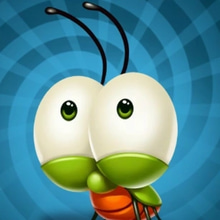
Jump Out! The Box has that classic “this looks harmless” energy, like a small toy left on the floor… until you step on it at 3 a.m. The premise is simple enough to lull you into confidence: you’re guiding a cute little bug that wants to jump out, bounce around, collect stars, and make it back to its cozy spot. No monsters, no epic war, no dramatic voiceover. Just you, some platforms, a few hazards, and physics that does not care about your feelings. And yes, it plays wonderfully on Kiz10, because the whole experience is built around quick attempts, quick laughs, and quick “okay okay ONE MORE” energy.
The core mechanic is aiming your jump. That’s it. That’s the entire weapon system. Your bug doesn’t carry a sword. It doesn’t shoot lasers. It launches itself like a tiny, brave rubber toy, and your job is to choose direction and power so it lands where it should. And the moment you realize landing is the real boss fight, the game becomes oddly intense.
🎯✨ Aim, Launch, Regret, Repeat
At first, it feels like a relaxing puzzle platformer. You line up a jump, you fly through the air, you land, you smile. Then the levels start asking uncomfortable questions. What if the platform is slightly tilted? What if there’s a wall that bounces you at a weird angle? What if the “safe” landing spot is surrounded by spikes that look like they were designed by someone who hates joy?
That’s when Jump Out! The Box becomes less about jumping and more about predicting. You’re not reacting fast like in an arcade runner. You’re planning a trajectory, imagining how the bounce will behave, and trying to control momentum like you’re doing tiny physics homework while a cartoon bug waits impatiently. Sometimes you’ll make a perfect shot and feel like a genius. Other times you’ll overshoot, ricochet twice, clip a corner, and watch the bug tumble into trouble like it just slipped on a banana peel. It’s frustrating for half a second… and then it’s funny. That balance matters.
⭐🧠 The Stars Are Not Decoration, They’re Temptation
The stars are where the game gets sneaky. Reaching the exit is one thing. Grabbing every star is another. The level will often place a star in a spot that whispers, “You can totally get me on the way.” And your brain goes, “Sure, easy.” That star is lying to you. Or maybe it’s telling the truth, but only if you jump with the precision of a surgeon and the patience of someone assembling furniture without swearing.
Going for full star collection turns each stage into a little puzzle route. You start thinking in sequences. First jump to the safe ledge, second jump to clip the star, third jump to return without bouncing into the hazard you conveniently forgot existed. And when it works, it feels clean, like you solved the level the way it was meant to be solved. When it doesn’t work, you start bargaining with yourself. “Do I really need that last star?” Yes. You do. You’ll come back for it. You know you will. 😅
🌀🪵 Bounces, Angles, And That One Platform That Always Betrays You
A big part of the charm is how the environments shape your decisions. Some levels are open and forgiving, giving you room to correct your angle and try again. Others are tight, boxy, and full of surfaces that bounce you in unpredictable ways. You’ll find yourself studying edges, looking at slopes, noticing how a slight incline changes everything. It’s wild how a tiny change in angle can turn a safe hop into a chaotic pinball moment.
And then there are those levels where you’re basically threading a needle. You need just enough power to clear an obstacle, but not so much that you slam into the far wall. You need to land softly, but softly is hard when gravity is pulling and the level is shaped like a prank. The game becomes a mix of careful aim and small courage. “Okay… if I go a little higher… no, that’s too high… maybe a tiny bit less… okay, NOW.” Launch. Pray. Laugh.
🎮😈 Why It Feels So Addictive on Kiz10
Jump Out! The Box fits the Kiz10 style perfectly because it rewards short sessions and fast retries. You’re never stuck in long loading or heavy menus. You fail, you try again, you adjust, you succeed. It’s the kind of physics puzzle game where improvement is visible. You start noticing your own growth: you’re calmer, more precise, better at predicting bounces, less likely to panic-launch yourself into spikes like a moth attacking a lamp.
It also has that “light chaos” tone. Even when things go wrong, the game doesn’t feel punishing in a brutal way. It feels playful, like it’s inviting you to experiment. What happens if you bounce off that wall first? What if you aim lower and let the slope carry you? What if you purposely hit the corner to redirect? Some of the best solutions come from trying something that feels slightly stupid. And then it works, and you sit there like, “I am an engineer now.” 🧠✨
🏁🏡 The Sweet Moment When You Finally Land Home
The goal of getting the bug back to its home spot gives every level a satisfying finish. It’s not just “reach the end,” it’s “return safely,” which feels oddly cozy. You’ve been bouncing around this boxy world collecting stars and dodging hazards, and now you’re aiming for that final landing like you’re docking a spaceship. When you land cleanly, there’s a tiny sense of closure. When you land badly and bounce out again, you get the funniest kind of failure: the level is basically saying, “Nice try, you almost had peace.”
Jump Out! The Box is a small game with a big “one more attempt” pull. It’s a physics platform puzzle that turns simple jumps into clever little problems, and it keeps the mood light even when the challenge gets sharp. If you like games where aiming matters, momentum matters, and stars are basically shiny little traps for your perfectionism, this one belongs in your Kiz10 rotation. Just don’t blame the bug when you miss the landing by one pixel. That was you. Absolutely you. 🐛⭐



 4.4 (14 votes)
 Share
Share
 Embed
Embed