🔥⚫ THE BALL IS ALIVE AND HELL WANTS IT BACK
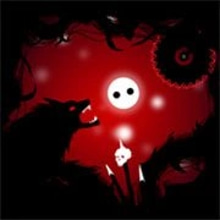
Monster Ball Hell Run drops you into a place that doesn’t feel like a “level,” it feels like a verdict. You’re a cursed little sphere with too much momentum and not enough mercy, rolling through an underworld that’s basically a marathon built by someone who hates ankles, patience, and hope. It’s a ball runner game on Kiz10, and it has that special kind of arcade cruelty where the rules are simple but the timing is not. You move, you jump, you try not to touch the wrong thing, and you keep going because stopping is the only real failure. The world is dark, hot, and smug about it, like it knows you’ll mess up eventually. And you will. Then you’ll restart with the confidence of someone who has learned absolutely nothing, which is kind of beautiful.
There’s a rhythm to this game that sneaks into your hands fast. At first you’re reacting. You see a gap, you panic, you jump late, you fall, you blink, you restart. Then the switch flips and you begin predicting. The traps have patterns. The platforms have spacing. The hazards have that nasty habit of showing up when you’re already mid-jump and committed to a decision you can’t take back. The more you play, the more it stops feeling random and starts feeling like a grim dance. Left, right, jump, land, breathe, don’t celebrate, don’t celebrate, okay you celebrated, now you’re dead. 😭🔥
🧠⚡ MOMENTUM IS YOUR BEST FRIEND AND YOUR WORST ENEMY
In a normal platform game, you can slow down and think. In Monster Ball Hell Run, slowing down feels like asking the underworld politely for permission. It doesn’t work. Momentum is the personality here. Your ball wants to roll. The game wants you to keep rolling. The only time you get to “think” is during the micro-second between seeing a trap and realizing you already chose wrong.
That’s what makes it addictive. Because when you do it right, it feels clean. You hit a jump at the perfect moment, you clear a nasty gap, you land with control, and suddenly the next section feels possible instead of impossible. It’s not a huge victory screen or a long celebration. It’s just flow. A smooth chain of decisions where your ball looks like it belongs there, like it’s not terrified, like it’s not being chased by the concept of punishment. 😅⚫
And the moment you get that flow, your brain becomes greedy. You start aiming for perfect runs. You start thinking in sequences. If I clear this spike strip, I need to land slightly earlier so I can jump again instantly. If I land late, I’ll clip the edge and bounce weird. If I bounce weird, I’ll drift into the hazard like a moth into a flamethrower. So you start landing with intention. You stop being a passenger and become a driver.
😈🔥 TRAPS THAT FEEL LIKE THEY’RE LAUGHING AT YOU
The underworld theme isn’t just decoration. The level design acts like it has a sense of humor, and the joke is always you. Spikes, swinging hazards, collapsing platforms, sudden gaps, awkward ledges that look safe until they aren’t… the game keeps throwing “simple” obstacles at you, then combining them until your timing gets messy. One trap is fine. Two traps back-to-back is fine. Three traps plus a gap plus a weird landing angle and suddenly you’re doing advanced geometry with your thumbs.
The best part is how quickly your confidence changes. You’ll go from “I’m never beating this section” to “wait, I can do this” to “I am unstoppable” to “why did I jump like that” in about twelve seconds. That emotional whiplash is basically the whole experience. It’s a runner, but it’s also a test of ego. The underworld doesn’t need to kill you. It just needs to let you think you won first.
🌋🕳️ NINE DIFFERENT FLAVORS OF “NOPE”
The game’s vibe is that you’re escaping deeper and deeper zones, like you’re rolling through different layers of punishment. Everything gets more intense as you push forward, not necessarily because the game suddenly becomes unfair, but because the spacing gets tighter and your margin for error evaporates. Early sections teach you movement. Later sections test whether you actually learned it or you just got lucky.
You’ll notice it most in how the jumps feel. Early jumps are forgiving. Later jumps are precise, the kind where you can’t land sloppy and hope to recover. A bad landing turns into a bad bounce. A bad bounce turns into a missed timing window. A missed timing window turns into a dramatic fall you saw coming but couldn’t prevent because you already committed. That’s the core tension: commitment. Every jump is a contract signed in mid-air.
🏃⚫ THE RUNNER MINDSET: SMALL WINS, BIG SURVIVAL
To play Monster Ball Hell Run well, you stop thinking about “beating the game” and start thinking about surviving the next five seconds. That’s a runner mindset. You break the problem into tiny chunks: clear this gap, then deal with that hazard, then line up for the next jump, then stabilize. When you try to think too far ahead, you over-jump or under-jump because your hands are ahead of your eyes.
It sounds dramatic, but it’s true: this game rewards calm aggression. You need speed, but you can’t be reckless. You need confidence, but you can’t get cocky. The best runs feel like controlled chaos, like you’re one step ahead of disaster. And when you’re not, when you’re half a step behind, the game doesn’t pause to comfort you. It simply reminds you that gravity is loyal to nobody.
🧩🔥 WHY IT FEELS LIKE A PUZZLE WITH TEETH
Even though it’s an action runner, it has puzzle energy. Every section is basically a question: what is the cleanest line through this mess? Sometimes the answer is “jump earlier.” Sometimes it’s “jump later.” Sometimes it’s “don’t jump at all, just roll and trust the spacing.” That last one is the scariest because it requires faith, and faith is rare in hell-themed obstacle courses.
The more you replay, the more you develop a personal strategy. You begin recognizing danger shapes. You begin anticipating fake-safe platforms. You start landing in the same spots on purpose. You create your own route, your own timing, your own rhythm. That’s when the game goes from frustrating to satisfying, because you can feel improvement in your hands. Not in a menu. Not in a skill tree. In your timing. In your instincts.
🎮🔥 THE REPLAY LOOP THAT EATS YOUR TIME
Monster Ball Hell Run is built around fast restarts and quick learning. When you fail, you don’t get a long punishment screen. You get a fresh chance. That matters because the game is hard in short bursts, not exhausting in long ones. It’s the kind of Kiz10 game you open for “a quick try,” and then you realize your brain is locked onto one section like it’s a personal rivalry. You weren’t even angry at first. Now you’re negotiating with the universe. Just let me clear this one part cleanly, then I’ll stop. Sure. Totally. 😅⏳
And the funniest part is how the game makes you feel brave again after every failure. You die and instantly you see the correct move in your mind. You can almost feel your fingers doing it better next time. That promise is powerful. It keeps you playing because the solution always feels close. Not guaranteed, but close. One better jump. One cleaner landing. One less panic decision.
⚫🏁 ESCAPE FEELS EARNED, NOT GIVEN
When you finally push farther than your last run, it doesn’t feel like luck. It feels like you earned it. You handled the timing. You kept your line. You didn’t let the underworld bully you into rushing. You moved like you belonged there, which is a ridiculous thing to say about a cursed ball sprinting through hell, but that’s exactly why it’s fun. It’s intense without being complicated, cinematic without needing cutscenes, and it turns pure movement into a story your hands are telling.
If you want a fast ball runner packed with traps, dark atmosphere, and that constant “one more attempt” pull, Monster Ball Hell Run on Kiz10 is a clean hit of arcade survival. Roll. Jump. Don’t blink. And please, for your own dignity, don’t celebrate early. 🔥⚫😈





 Share
Share
 Embed
Embed