🎵🧱 The Moment You Realize the Balls Are Your Band
Musical sandbox-clicker: Sounds of Note Blocks starts in a surprisingly calm way. You’re not thrown into a boss fight, you’re not dodging lasers, you’re not being timed. Instead, you’re handed this weirdly peaceful promise: click for diamonds, unlock tools, then build a musical machine that literally plays itself. And the first time a ball hits a note block path and makes a clean tone, your brain does that little “oh” sound. Because it’s not a gimmick. It actually feels like you’re composing, just in a slightly chaotic, physics powered way. 😌🎶
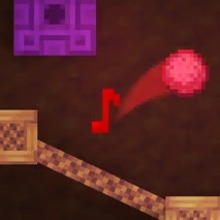
This is a sandbox creativity game with clicker progression, but the magic is in the collision. You place launchers, you draw note block sequences, you choose instruments, and then you watch tiny bouncing balls become your orchestra. It’s equal parts relaxing and oddly hypnotic. Like building a marble run, but instead of marbles collecting points, they’re making music. 🎵🌀
On Kiz10.com, this kind of game is perfect when you want something creative that still gives you goals. You can experiment, you can mess around, you can chase upgrades, and you can lose time in a way that feels… productive. Even if your “song” sounds like a happy accident at first. 😅
💎🖱️ Clicker Mode: The Quiet Work Before the Fun
The clicker part is your resource engine. Diamonds are the fuel that lets you unlock new instruments and dispensers, and the game doesn’t rush you. You click, you gather, you build a little stash, and it feels almost meditative. The loop is simple enough that your mind can relax while your fingers do the work.
But the important thing is what diamonds represent. They’re not just currency. They’re permission. Every upgrade you unlock opens a new creative option. A new way to launch balls, a new instrument voice, a new interaction you can build around. So even when you’re in clicker mode, you’re not just grinding. You’re preparing your next experiment. 💎✨
You’ll also start making tiny plans. “Okay, one more dispenser unlock, then I’m building a rhythm.” “Okay, I want a higher pitched loop, so I need more tools.” The clicker phase becomes this calm prelude before the soundtrack starts.
🧰🎛️ Dispensers, Instruments, and the Chest That Starts Everything
Once you’ve got diamonds, you step out of clicker mode and hit the chest icon to access dispenser settings. That moment is like opening a toy box. Suddenly the game becomes a creative sandbox, and your job shifts from collector to builder.
Dispensers are essentially your musicians. Each one releases balls in its own way, with settings that change how it behaves. You place them, drag them around, experiment with angles, and you begin to understand that this is not only about sound, it’s about motion. Because the motion is the music. 🧠🎵
Choosing instruments is where personality enters. One setup might sound soft and clean, another might feel bright and playful, another could sound sharp and rhythmic. The game lets you swap voices and reshape the entire mood without changing the basic machine. It’s like changing the genre of your song just by changing what “instrument” the collisions represent. 🎺🎹✨
🎶⬆️ Height Is Pitch, So the Screen Becomes a Musical Staff
This is the feature that makes the whole thing feel clever. The note you hear depends on where the ball hits the path. Higher impact means higher pitch. Lower impact means lower pitch. That means your screen is basically a giant vertical instrument. Your paths are not just tracks, they’re melodies mapped in space.
Once you realize this, you start designing differently. You don’t just draw a line. You draw a tune. You create stair steps for ascending notes. You create dips for bassy hits. You create repeating heights for a steady beat. And because it’s physics driven, the ball sometimes lands slightly differently, adding tiny variations that can make your patterns feel alive instead of robotic. 😌🎶
You’ll catch yourself doing weird creative math. If I want a simple melody, I need consistent hit points. If I want chaos, I’ll make the path bounce the ball unpredictably. If I want a rhythmic pulse, I’ll set up repeating collisions at the same height. It becomes a visual form of music composition.
🌀🎵 Building Beats Out of Physics
The most satisfying part is making something that loops. A ball hits a path, bounces into another, returns, repeats. Suddenly you’ve made a rhythm engine. Then you add another dispenser, and now you’ve got a counter rhythm. Then you add a third, and now your brain starts hearing patterns. The machine becomes a song, even if it’s simple.
It’s also the kind of game where “mistakes” become ideas. You place something wrong, the ball ricochets unexpectedly, and the sound it produces is actually kind of cool. You adjust a bit, and now you’ve created a quirky accent note you didn’t plan. That’s the fun of sonic experimentation. It’s not about perfection, it’s about discovery. 😅✨
And because you can unlock more instruments, the same physical pattern can evolve. You can keep the geometry but change the sound, turning the same layout into completely different vibes.
😌🧠 Relaxation That Still Feels Like Progress
Some sandbox games feel aimless. Some clickers feel empty. This one blends the two in a way that makes both sides feel meaningful. The clicker gives you progression and goals. The sandbox gives you creative control and personal expression. Together they create a loop that’s relaxing but still rewarding.
You can play it gently, slowly building a neat little tune. Or you can go full chaos scientist, stacking dispensers, creating wild bounces, and letting the screen become a musical storm. Either way, the game lets you set the pace. It doesn’t punish you for experimenting. It encourages it. 🎵🌀
🎮🖱️ Controls That Make Creativity Feel Easy
Dragging dispensers and drawing paths is intuitive. You move things with the left mouse button or touch input, and the interface stays friendly. That matters because the creative part should feel smooth. You want your ideas to go from brain to screen without friction. And here, you can try something, adjust it, and hear the result quickly.
Quick feedback is everything in music games. You place something, you hear it. You move something, you hear the change. It becomes a constant conversation between your hands and your ears. 🎧✨
🌟 Why You’ll Keep Coming Back on Kiz10
Musical sandbox-clicker: Sounds of Note Blocks is one of those games that can be whatever you need it to be. A relaxing clicker where you gather diamonds and slowly unlock new tools. A creative sandbox where you build music machines out of physics. A puzzle-like rhythm experiment where you try to craft patterns that sound good and loop smoothly.
If you love music games, creative sandbox builders, or relaxing puzzle experiences that still give you progression, this is a perfect fit. Play it on Kiz10.com, unlock more instruments, and keep tweaking your note block paths until your bouncing ball orchestra finally sounds like something you’d actually put on repeat. 🎵🧱💎








 Share
Share
 Embed
Embed


