🐇⚡ Cute ears, terrible odds
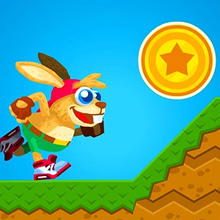
Such Bunny Run sounds adorable, and that is exactly why a game with this kind of title works so well. It lures you in with bunny energy, soft expectations, maybe a vague promise of a cheerful little run through a colorful world… and then suddenly you are locked into a fast platforming scramble where every jump matters and the road ahead has all the kindness of a trap wearing pastel colors.
That contrast is the good stuff. Bunny games always get an advantage from presentation alone. A rabbit is naturally quick, nervous, and built for movement, so the second you put one into a run-and-jump adventure, the fantasy already makes sense. The character should feel light, reactive, a little panicked, and capable of turning a simple stretch of ground into a tiny drama. Such Bunny Run sounds exactly like the kind of game that lives on that energy. Not a slow exploration piece. Not a calm animal sim. A run. Fast enough to keep you focused, messy enough to keep you retrying, and cute enough to make the danger feel weirdly charming.
The best thing about bunny platformers is that they can switch moods instantly. One moment it is all bright color, hopping motion, maybe a collectible or two floating in the air like encouragement. The next moment the level starts asking uncomfortable questions. Is that gap wider than it looks? Is that obstacle placed there because the game hates me personally? Why does every safe platform suddenly feel suspicious? That shift from “aww” to “oh no” is a very strong foundation for a browser game.
And when it is done well, the bunny itself becomes part of the tension. A rabbit should not move like a tank. It should feel springy and quick, which means every jump has more personality. Good jumps feel graceful. Bad jumps feel humiliating. Near misses feel heroic in the dumbest, best possible way. That is exactly the sort of rhythm a title like Such Bunny Run suggests.
🌿🥕 The road should always feel one mistake away from trouble
A run game lives or dies on momentum. If the movement feels flat, the whole thing collapses. But when the momentum is right, even very simple level design can start feeling dramatic. That is especially true with animal runners. A bunny sprinting forward has built-in urgency. It naturally looks like a creature that believes danger is nearby even when nothing is happening yet. That gives the entire game a pulse.
So the most likely strength of Such Bunny Run is not complexity for its own sake. It is pressure. Clean, immediate, browser-game pressure. Jump here. Dodge that. Stay alive. Maybe grab carrots or pickups on the way. Maybe outrun a hazard. Maybe simply survive longer than your last attempt. The exact level design can vary, but the emotional shape stays the same: movement first, safety second, dignity somewhere far behind.
That makes every obstacle more important than it seems. A stump is not just scenery if it arrives while you are already lining up the next jump. A pit is not merely empty space if the whole game has taught you that hesitation is fatal. A platform is not really “safe” if landing on it badly destroys your rhythm. These games become addictive because the challenge is always visible. You can see what went wrong. You jumped early. You jumped late. You trusted the arc. The arc betrayed you. Very clear. Very rude. Very replayable.
There is also something satisfying about how rabbit games frame speed. A heavy hero bulldozing through obstacles is one kind of fun. A bunny surviving through timing and agility is another. It creates a softer fantasy on the surface, but underneath it can be just as demanding. Maybe more, because agility-based platform games have nowhere to hide. If the jump is off, everyone knows it.
🧠💥 Platforming looks simple until the level starts arguing back
That is the real trick of games like Such Bunny Run. They are easy to explain and harder to play cleanly. At first, you think you understand the whole thing. Move, jump, survive. Fine. But once the pace increases or the obstacle spacing tightens, the game becomes more about rhythm than reaction. That is when the interesting part starts.
Now you are no longer solving one jump at a time. You are reading the level as a flowing sequence. This jump must set up the next landing. That landing must leave room for the obstacle after it. Your eyes stop staring at the bunny and start looking slightly ahead, because in fast platformers the future matters more than the present. If you only react to what is under your feet, you are already late.
And that is where players get hooked. You start to feel yourself improving. The same section that looked unfair ten minutes ago suddenly makes sense. The spacing becomes readable. Your jumps get calmer. The bunny stops looking like a victim and starts looking like it belongs in motion. Then, naturally, the next section appears and humbles you again. Excellent. That rise and fall is exactly what keeps arcade runners alive.
It also helps that bunny-themed platformers tend to feel visually inviting even when they are mean. That matters. Repetition is easier to enjoy when the world has some charm to it. A hostile industrial maze can make failure feel grim. A colorful rabbit run makes failure feel more like the game is teasing you than punishing you. Same difficulty, different emotional texture. Very smart.
🌈🏃 Why the “one more try” loop works so well here
Games built around short runs and obvious mistakes are naturally dangerous. Dangerous for your time, I mean. You fail, but the failure feels fixable. That is the critical ingredient. If a game defeats you and leaves you confused, you stop caring. If it defeats you and makes you think “no, no, I had that,” then it owns the next ten minutes of your life.
Such Bunny Run sounds built exactly for that kind of loop. The title alone suggests an immediate-action format, and rabbit runners on Kiz10 already show how well that lane works on the site. For example, Kiz10 currently has a live page for Run Rabbit Run, which it describes as a fast endless runner where you guide a bunny through hazards, time jumps, and chase a high score. There is also a live Kiz10 page for Incredible rabbit’s day, a rabbit platform adventure with traps and carrots, which reinforces that bunny-platform gameplay definitely has a home there.
That broader context matters, because even though I could not verify a dedicated live Kiz10 page for Such Bunny Run itself in current search results, the game concept fits the site extremely well. Kiz10 clearly supports rabbit-centered runners and platformers, from endless-run structures to more traditional hop-and-dodge adventures.
So the appeal is easy to understand. You launch a quick run, think you will test it for a minute, then lose near a clean section and immediately restart because your pride is now involved. The bunny deserves better. You deserve better. The next run will definitely be cleaner. This is how the trap closes.
🏆🐾 Why bunny games stay memorable
A lot of platformers blur together because they rely on generic movement and generic danger. Bunny games have an advantage because the character fantasy is so naturally tied to jump-based gameplay. A rabbit should bounce. A rabbit should dart. A rabbit should survive by speed and timing rather than brute force. That makes the whole thing feel coherent before the first obstacle even appears.
And that coherence helps even more when the challenge gets sharp. You are not just playing “another runner.” You are guiding a creature that feels built for the exact kind of movement the game demands. Every clean hop feels right. Every close call feels funny. Every wipeout feels like a tiny insult delivered by a world that really should have been nicer to rabbits.
So what is Such Bunny Run, really? It is a bunny platformer built on rhythm, movement, and the timeless browser-game promise that one more attempt will fix everything. It is cute on the outside, stricter underneath, and exactly the kinds of game where a cheerful animal ends up dragging you into a serious argument with your own jump timing. Which, honestly, is usually a sign the game is doing something right.





 Share
Share
 Embed
Embed