🏀 Ink, gravity, swish
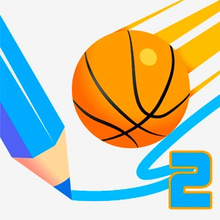
The whistle doesn’t blow; the canvas just waits. A ball hangs there with that smug little bounce, a hoop blinks like a dare, and empty space invites your best idea. Super Dunk Line 2 on Kiz10 is basketball with a pencil, a physics toy box disguised as an arcade puzzle, the kind of game where your wrist invents a playbook and every swoosh feels like you outsmarted gravity in front of an audience you can’t see but can absolutely feel. No joystick drives the ball. Your line does. Draw once, draw twice, erase regret, try again, and suddenly you’ve designed a highlight reel out of thin air and confidence.
✍️ The pen is your point guard
You don’t move the ball—you move the world it travels through. A single stroke becomes a ramp, a backboard, a parachute, or a slick little funnel that kisses the rim and turns anxiety into applause. Curves slow the drop, sharp angles add punch, tiny lips at the rim cancel that heartbreaking rim-out. Learning the grammar of lines is half the fun. Draw uphill to stall. Draw a gentle U to hold the ball until a swinging obstacle gives you safe passage. Draw a micro-bumper near the cup to erase the dreaded clink. Every stage asks you for architecture, not luck, and when the design works the ball doesn’t just go in—it arrives like it had a plan.
🧠 Levels that teach with mischief
Early courts are generous. The hoop stands still, the ball falls clean, and your only job is to prove you can draw a ramp without tripping over your own bravado. Then the arena gets cheeky. Moving hoops wander like cats. Wind fans stir the air, turning straight drops into slow dances. Spinning blades don’t cut the ball—relax—but they will smash your line art and laugh politely about it. Springs launch like caffeinated snakes. Trampolines pretend to be your friend and then fling momentum sideways at the exact moment you forgot to prepare a landing. Each new wrinkle is readable and fair; fail once, see the joke, redraw with intent, grin on the replay.
🎯 One stroke or a thousand: your call
Economy matters. Minimal lines pay out big if you still secure the basket, and that sweet, stingy approach teaches efficiency. But there’s theater in complexity too. Nothing wrong with a Rube Goldberg doodle if it works: a slow drop into a tilt ramp into a soft bounce into a cheeky drop-in that would make any announcer stand up. Precision or panache? Super Dunk Line 2 says yes. The scoring loves both styles as long as the ball kisses net and the confetti gets its cue.
⚡ Physics that feels honest
Drop speed makes sense. Angles translate like geometry class finally admitted it wanted to be fun. The ball picks up hum when you overbuild a slope; it loses pep when your line wiggles with uncertainty. Friction is Goldilocks: enough to grip, never sticky. You’ll start drawing micro-textures—tiny teeth on a hill to slow the roll, a glassy chute to preserve speed—like you always knew how. The best moments are quiet little “ah-ha”s when a two-pixel bump becomes the difference between clank and swish.
🎨 Tools that turn scribbles into swagger
Your brush is nimble. Tap-drag to paint, tap-undo to admit humility, long-press to anchor curves that feel carved rather than drawn. Later you’ll unlock chalky strokes that add soft grip, ink tips that speed runs like waxed hardwood, and a dotted brush that breathes gaps into the line so swinging obstacles pass through without shredding your masterpiece. Skins for the ball range from classic orange to galaxy swirl to neon comet; none change physics, all change screenshots.
🏆 Challenges that tempt perfection
Each stage hides extra medals because bragging needs structure. A time star for quick solves. A minimal-ink star for restraint. A trick-shot star for dunking after hitting a bonus target, ringing a bell, or bouncing off a wall you only noticed when the camera winked that way. Some courts carry optional collectibles—floating stars, cheeky coins—that sit just off the sensible path, baiting you into style lines that feel illegal and taste delicious.
🧪 Tiny pro moves you’ll pretend you invented
Feather a micro-ramp just under the rim to convert side-entry chaos into a gentle swish. Draw a hairline “brake” bump atop a long slope to bleed speed before a tight gap. If a fan pushes right, draw a left-leaning shelf so the ball parks in the wind until the moving hoop returns—free timing window, no panic. For seesaw platforms, sketch a counterweight nub on the far end so the tilt stabilizes as the ball crosses. When the basket travels upward, draw a vertical lane with small “checkpoints” inside; the ball will stair-step upward and catch the hoop like an elevator with personality. And my favorite: build a soft V under the hoop—missed shots rebound into a friendly funnel instead of rolling into therapy.
🎵 Sound of a good idea landing
Each swipe whispers a chalky scritch. The ball’s patter changes on angle and speed—a soft rattle on shallow ramps, a cheerful thud when it nails a backboard you meant to be there. The rim answers with the only vocabulary that matters: clank, ring, swish. Hit a perfect and the audio grins—net flutter plus a tiny crowd pop that makes you sit up straighter. Later stages layer in environmental noise: fan hum, spring twang, a low whoosh when portals grab the ball and spit it into a new lane. Headphones help; speakers still sell the vibe.
📱 Plays beautifully in a coffee line
Mouse or finger, the draw feels silky. Undo is merciful, resets are instant, and the camera frames the puzzle without drama. You can start cautious and get bolder as a train pulls into a station in the real world; the game respects snippets of time. On Kiz10, it eats zero setup—load, draw, dunk, repeat—and the difficulty curve asks gently, then insists firmly, then smiles when you fix it.
🌈 Clean look, honest read
Backgrounds wear pastel gradients that never fight your lines. Obstacles pop with outlines you can read at a glance. The ball’s shadow grounds depth, the hoop’s glow marks its travel, and coins sparkle in a way that whispers “only if you’re feeling spicy.” There’s flourish—confetti, spark trails, celebratory text—but it fades fast so your next attempt isn’t drowning in yesterday’s victory.
🧭 Mindset: draw with intent, edit without ego
Sketch the first idea fast to learn the joke. On the second go, remove half of it. On the third, add exactly one thing you’re sure you need. Resist temptation to over-engineer unless you’re specifically here for chaos (valid). Let misses teach you where energy dies. Celebrate near-misses; they’re annotated blueprints. And when frustration taps your shoulder, chase a time star instead of a coin, or vice versa—the switch flips your brain and the solution often arrives pretending it was obvious.
🎬 The shot you’ll remember
The hoop drifts left under a fan, a blade swings like a pendulum, and a cruel little gap waits right before the rim. You draw a long, lazy arc, add a two-pixel brake at the crest, then scribble a dotted tunnel that lets the blade pass while your ball rests between breaths. The fan nudges, your lane catches, and the ball slides toward the cup with the kind of calm that makes your smile feel earned. A soft V below rescues an almost-miss, the ball kisses iron like it’s saying sorry, and the net sighs a swish you want to autograph. Replay. Save. Brag.
⭐ Why it swishes its way into your routine
Because it makes you feel clever in thirty seconds and brilliant in ninety. Because the physics tell the truth, the tools respect your time, and each court folds a new idea into your drawing vocabulary. Because success can be elegant or ridiculous and both count. Super Dunk Line 2 on Kiz10 is a perfect coffee-break puzzle with deep “one more level” energy—a clean, creative, strangely meditative ride where every line you draw is a chance to design joy.








 Share
Share
 Embed
Embed