🍣🔪 The first slice is always “easy”
Sushi Slicer starts with that confident little lie every slicing game tells you. One piece of sushi floats up like it’s politely asking to be cut. You swipe, it splits cleanly, and your brain goes, okay, I understand this. Then the game smiles. A second piece appears. Then three. Then a weird cluster that comes from different angles like the sushi is auditioning for a stunt show. Suddenly you’re not “learning,” you’re reacting. That’s the hook on Kiz10: quick, satisfying cuts, instant feedback, and a rising tempo that turns calm slicing into controlled panic in the best way.
The goal feels simple on the surface: slice as much sushi as you can and rack up points. But Sushi Slicer isn’t about mindless swiping. It’s about clean movement. It’s about timing your slash so you hit multiple targets in one smooth line. It’s about keeping your cursor or finger steady when the screen gets busy and your instincts start yelling, faster, faster, FASTER. 😅
🌊🎌 A tiny arcade storm, served fresh
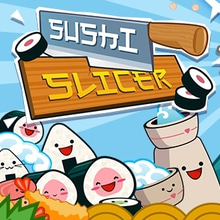
The “sushi” theme gives the whole thing a playful vibe. Bright pieces, neat shapes, that satisfying visual split when you land a perfect cut. It’s tasty chaos. And the pacing is what makes it addictive: the game keeps feeding you targets just fast enough that you feel challenged, but not so fast that you feel helpless. You’ll have moments where you’re in a perfect rhythm, slicing two pieces at once, then catching the next one with a quick flick, then landing a third cut that feels like pure instinct. When that happens, your score climbs and your brain starts believing you’re unstoppable.
Then the game introduces pressure. Maybe it’s dangerous items you need to avoid. Maybe it’s the way the targets spread out so you can’t cover everything with one swipe. Maybe it’s a sudden burst where sushi spawns in a messy cloud and you have to choose: go for the big combo or play safe and take clean singles. That decision-making is where Sushi Slicer stops being “cute” and becomes a real skill game.
🍱⚡ Combo hunger and the greed trap
Combos are the real obsession. The moment you realize one swipe can slice multiple pieces, you stop thinking like a player and start thinking like a chef-ninja with something to prove. You begin positioning your blade to catch two or three at once. You start waiting half a beat for pieces to line up. You start doing that thing where you ignore a safe cut because you want a better one. And yes, the game absolutely punishes that kind of greed at least once per session, because greed makes your movement messy.
A clean combo feels amazing. It’s not just points, it’s control. It’s the feeling that you read the screen correctly, predicted the path, and executed the cut like it was planned. A messy combo attempt feels like swinging a sword in a crowded kitchen. It might work, but it’s also how you hit the thing you were supposed to avoid. That’s the balance Sushi Slicer plays with: it rewards ambition, but only if your hand stays disciplined.
🧠👀 The real challenge is attention, not speed
If you’ve ever played slicing games, you know speed is tempting. It feels heroic to swipe like a tornado. But Sushi Slicer is one of those games where speed without control becomes self-sabotage. When the screen fills up, you can’t treat every target the same. Some pieces are worth a quick cut. Others should be grouped for a combo. Some should be ignored for a second so you don’t drift into danger. The best players don’t just move fast, they move intentionally.
And the funny thing is how quickly your brain adapts. At the start, you’re staring at each sushi piece like it’s a separate task. After a few runs, you start seeing “patterns” instead: a diagonal lane you can slice through, a cluster that will align in a moment, a gap where you can breathe. You stop chasing every piece and start managing the whole screen. That’s when you begin scoring higher without feeling like you’re working harder.
🗡️🍣 The blade feels like a rhythm instrument
There’s a rhythm to good slicing. Short swipes, quick resets, and a smooth arc when you’re going for multiple targets. Sushi Slicer feels best when you play like you’re drawing shapes, not scribbling. A confident line across two pieces, then a quick tap-slice on a single that’s slipping away, then a longer sweep that clears a cluster. It becomes weirdly musical. Your hand follows the beat of spawns, and the screen rewards you with crisp cuts.
Then you miss. And the miss is loud. Not literally loud, but emotionally loud. You watch a piece escape or you clip something you shouldn’t, and your perfect rhythm shatters. That’s when the game becomes a mental challenge: can you recover your calm instantly, or do you spiral into frantic swipes trying to “make up” for the mistake? The correct answer is calm. The fun answer is spiral. Most of us choose fun at least once. 😭
🌟🥢 The satisfying part isn’t winning, it’s improving
Sushi Slicer is one of those Kiz10 arcade games where you don’t really “finish” it the first time. You chase a better run. A cleaner combo. A higher score. A moment where everything lines up and you feel like a slicing machine. That’s why it fits so well as a quick-play game. You can jump in for one attempt, but the game keeps you there because you’ll always feel like you were one good swipe away from something impressive.
It’s also a great game for those tiny personal challenges. Beat your last score. Avoid risky swipes for a whole run. Focus on combo slicing only. Focus on safe slicing only. The game supports different styles, and that variety keeps it from feeling repetitive even though the concept is simple.
🧊🔥 How to slice smarter without ruining the vibe
If you want higher scores, treat your blade like a scalpel, not a broom. Make smaller, cleaner swipes when the screen is crowded. Save longer sweeps for moments when targets align naturally. Don’t chase every single piece. Chasing is how your hand drifts into danger and your accuracy collapses.
Also, watch your own impatience. When you get excited, your swipes get wider. Wider swipes look cool, but they’re harder to control. The best runs usually look almost calm: precise lines, quick resets, steady rhythm. It’s a weird lesson, but it’s true. In slicing games, control is speed.
🍣🏆 The vibe in one sentence
Sushi Slicer on Kiz10 is fast, simple, and dangerously replayable: slice sushi, chase combos, avoid mistakes, and feel your skill improve run by run until you start slicing like you meant it all along. 😄
















 4.2 (11 votes)
 Share
Share
 Embed
Embed