🚀🆘 The countdown isn’t for show, it’s a threat
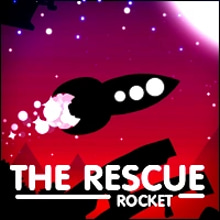
The Rescue Rocket starts with that sweet, dramatic feeling you only get in a good rocket game: a tiny craft, a big mission, and a universe that absolutely does not care about your stress level 😅. On Kiz10, this one plays like an arcade rescue mission where you’re not just flying for fun, you’re flying because someone out there is stuck, drifting, waiting, maybe waving a little pixel hand like “hello??” while your fuel gauge quietly judges you. You launch, you steer, you manage momentum, and you realize fast that the real enemy isn’t space… it’s panic. The rocket doesn’t forgive sloppy angles. It doesn’t forgive late corrections. And it definitely doesn’t forgive that one decision you make when you think, “I can squeeze through that gap.” You cannot. But you will try anyway. 🚀💥
🧭🌌 Flying feels easy until gravity and speed start arguing
At first you’ll think it’s a simple flight. Point the rocket, move where you want, pick up the rescue target, done. Then you start feeling the weight of movement, the way your rocket carries momentum like a mood. You tilt, it drifts. You correct, it keeps sliding. You accelerate, then suddenly you’re too fast and everything is happening in one loud second 😭. The Rescue Rocket lives in that balance: tiny adjustments, constant attention, and that very real moment where your brain says “slow down” while your hands are already committed. A good run feels smooth, almost cinematic, like you’re threading a needle through the sky. A bad run feels like you’re trying to park a shopping cart on ice while the universe throws obstacles at you for entertainment.
🧯🆘 The rescue part is simple on paper, brutal in motion
Rescue missions sound friendly, right? Fly to the target, pick them up, bring them back. The game laughs at that innocence. Because the target is rarely placed in a comfortable spot. It’s usually floating where you’ll have to approach carefully, brake without crashing, and line up your rocket like you’re docking with your dignity on the line 😅. You’ll overshoot. You’ll come in too steep. You’ll drift past the pickup point by a pixel and feel personally attacked. Then you’ll learn the best trick: approach slower than you think you need to. Build a clean line. Give yourself room. The Rescue Rocket rewards controlled pilots, not chaotic heroes who try to win by vibes alone.
⛽😬 Fuel turns every decision into a tiny negotiation
Fuel is the quiet villain in rocket games. It doesn’t scream, it just sits there shrinking while you do your best. And The Rescue Rocket uses it perfectly. Every detour costs something. Every correction costs something. Every moment you hover and hesitate costs something. You start bargaining with yourself in real time. “I’ll just adjust a little.” “I’ll just loop back once.” “Okay I can still make it.” Then you look at the gauge and suddenly the mission feels like a thriller 😭🔥. Fuel pressure makes the gameplay feel alive. You’re not only solving navigation, you’re solving urgency. When you succeed with low fuel, it feels like a miracle you built with your own hands.
🪐🧱 Obstacles don’t block you, they mess with your timing
A great rescue rocket game doesn’t need a thousand mechanics. It needs good pressure. The Rescue Rocket creates that pressure with hazards and awkward spaces that force you to fly smarter. You’ll have moments where the route looks open… until you realize the safe path is narrow and your rocket is moving like it drank three coffees ☕🚀. Sometimes the danger is obvious, big shapes that say “don’t hit me.” Sometimes it’s the subtle danger: a tight approach angle, a bad landing zone, a forced correction that burns extra fuel. The game becomes this loop of reading the environment, planning a line, then executing it while everything tries to distract you.
🛬✨ Landing is where heroes are born and careers are ended
Let’s talk about landing. Landing in The Rescue Rocket is not a formality. It’s a full event. You can be a genius in the air and still ruin everything at the last second by touching down like a falling brick 😅. A clean landing feels amazing because it’s calm, deliberate, controlled. You slow down, you line up, you settle onto the zone like you meant it. And when you do that after a tense rescue pickup, it feels like finishing a movie scene where the music swells and you pretend you weren’t sweating. But if you land too fast or at a weird angle, the game reminds you that gravity is undefeated. The funniest part is you’ll start respecting landings more than the rescue itself. Because you can always pick someone up again. But your pride? Your pride takes damage. 😭
🧠🎮 The “pilot brain” kicks in and suddenly you’re a professional
The Rescue Rocket has that lovely arc where you begin as a clumsy tourist and slowly turn into a real pilot. Not because you unlocked something magical, but because your brain adapts. You start thinking ahead. You stop yanking the controls like you’re fighting the rocket. You start guiding it. Small changes, softer turns, better approach angles, fewer wasted loops. You’ll notice you’re making decisions before danger happens, not after. That’s the point where the game gets addictive. Because improvement is visible. You feel it. You go from “I barely survived” to “I planned that” and it’s a different flavor of satisfaction entirely 😌🚀.
🔧💎 Upgrades and progression feel like building your own rescue machine
If the game gives you upgrades, this is where the strategy becomes delicious. More fuel means more freedom. Better control means less panic drift. Stronger thrust means you can save yourself from bad angles, but it can also make you overconfident, which is the oldest trap in the book 😅. The best upgrade choices are the ones that match how you actually play. If you’re always running out of fuel, invest in fuel. If you’re always crashing on approach, invest in control. If you’re always late to the target, invest in speed… but only if you can handle it. Progression in a rescue mission game should feel like your rocket is becoming an extension of your skill, not replacing it. When upgrades and skill work together, the game feels smooth and fair. When you upgrade without learning, you just crash faster. Which is hilarious. And painful.
🎬🌠 Why The Rescue Rocket fits so well on Kiz10
This is the kind of arcade rocket rescue game that works because it’s instantly readable but quietly demanding. Anyone can launch. Anyone can fly for a few seconds. But staying clean under pressure, managing fuel, docking with precisions, and pulling off rescue missions consistently? That’s the real challenge. The game gives you that perfect loop of “one more try” because every failure feels fixable. You don’t lose because the game is impossible, you lose because you approached too hot, hesitated too long, or tried to be a hero with no fuel left 😭🔥.
If you like space rescue, rocket piloting, physics-y movement, tight landings, and that dramatic feeling of saving the day with seconds to spare, The Rescue Rocket on Kiz10 is basically built to keep you hooked. One clean run turns into two. Two turns into “just one more rescue.” And suddenly you’re a full-time rocket pilot with no salary and a lot of pride. 🚀🆘✨



 4 (177 votes)
 Share
Share
 Embed
Embed