🧩💀 THE QUEST THAT STARTS WITH A BAD IDEA AND ENDS WITH YOU NODDING LIKE “YEAH… FAIR”
Total Party Kill looks innocent for about three seconds. A little party. A little dungeon. A little “let’s go rescue something.” Then the first trap snaps shut and you realize the game isn’t asking if you can win… it’s asking who you’re willing to lose. On Kiz10, it hits that sweet spot between clever puzzle platforming and dark comedy, because the core mechanic is basically a moral prank: you can switch between your characters, but the real solution to many rooms is to use one of them as a tool. A living tool. A disposable tool. A “sorry buddy, you’re the bridge now” tool. And once you accept that, the game becomes weirdly satisfying, like solving crossword clues with a tiny bit of guilt stuck to your fingers.
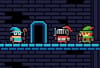
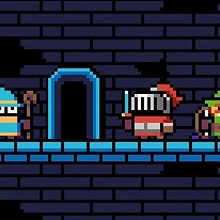
You control a small party of adventurers, each with simple movement, and the dungeon is built as a sequence of compact rooms full of spikes, pits, switches, arrows, and doors that refuse to open unless you do something smart… or something brutal. The smartest move is often the meanest move. That’s the trick. The game teaches you to stop thinking like a hero and start thinking like a level designer with a wicked grin.
🕹️🩸 SWITCHING HEROES, SHARING PAIN, AND DISCOVERING YOUR INNER VILLAIN
At first, you’ll play politely. You’ll try to keep everyone alive. You’ll approach traps slowly, testing timing, jumping carefully, looking for the “real” solution that doesn’t involve sacrifice. And the game will patiently wait for you to give up on that fantasy. Because Total Party Kill is designed so sacrifice isn’t an accident, it’s a strategy. One character steps on a pressure plate and holds it down. Another runs through the opened door. Sometimes that’s enough. Sometimes it isn’t. Sometimes the only way across a gap is to leave a body behind as a platform. Sometimes the only way to block arrows is to place someone directly in the line of fire like a sad little shield with legs.
The wild part is how quickly your brain adapts. The first time you do it, you hesitate. The second time, you rationalize. The third time, you’re lining it up with confidence like “Okay, you go here, you die here, and then we all move on.” It’s not that you become heartless. It’s that the puzzle language changes. Death becomes a button you press. A piece you place. A resource you spend. And that’s exactly why it’s memorable. It turns a standard dungeon puzzle into something sharper, stranger, and funnier.
🧠⚙️ ROOMS THAT FEEL LIKE LITTLE TRICKS, NOT BIG MAZES
Total Party Kill doesn’t overwhelm you with huge maps. It keeps things tight. Each room is like a short joke with a cruel punchline, and the punchline is usually your mistake… or your solution. The level design is all about making you notice cause and effect. Spikes tell you where you can’t land. Arrows tell you what you need to block. Switches tease you with “easy” progress, then punish you for assuming the obvious route is safe.
And because rooms are compact, you get into a fast rhythm: enter, read the danger, test one idea, fail, laugh, reset, solve. On Kiz10 that loop feels perfect because the game doesn’t waste time between attempts. You’re never stuck walking back through empty hallways just to retry. The game respects your puzzle brain, even while it laughs at your conscience.
🎭😅 THE LAUGH IS PART OF THE MECHANIC
Let’s be real: a lot of the fun is how absurd the sacrifices look. You’re not watching a tragic cutscene. You’re watching a tiny hero flop into spikes because you needed a door open for half a second. It’s cartoonish enough to be funny, but still meaningful enough to feel clever. That balance is hard to get right. Total Party Kill nails it by making death both useful and slightly ridiculous.
You’ll have those moments where you solve a room and instantly think, “That was elegant.” Then you remember your elegant solution involved turning a teammate into a human sandbag. The game creates these weird emotional whiplashes: pride, guilt, laughter, pride again. It keeps you engaged because it never feels like a dry logic puzzle. It feels like a mischievous adventure that just happens to require questionable ethics.
🪤🏹 TRAPS, TIMING, AND THE SECOND YOU STOP PANICKING
Some rooms look like they demand speed, but the game rewards calm planning more than frantic movement. If arrows are firing, you don’t always need to sprint through. You might need to set up a safe block first. If spikes cover a floor, you might need to create a temporary stepping pattern using your party. If a door is timed, you might need to “spend” a character to keep it open long enough. The good solutions usually come from thinking one move ahead, not from perfect reflexes.
There’s also a subtle satisfaction in how the game teaches you. Early puzzles show you what’s possible. Mid puzzles force you to combine ideas. Later puzzles ask you to commit faster, with less hesitation, because now you understand the rules… so the game stops being gentle about them. It’s like a teacher who starts kind and ends with “Alright, you know this. Prove it.”
🧩🫀 THE STRANGEST PART: IT FEELS LIKE TEAMWORK, EVEN WHEN IT’S NOT NICE
Here’s the paradox that makes Total Party Kill oddly charming: it’s still a team game in spirit. You’re not controlling one lone hero. You’re coordinating a group. You’re planning positions. You’re solving with multiple bodies in mind. It’s just that the teamwork sometimes looks like betrayal. But it’s still coordination. And when a room clicks, it feels like you orchestrated something. One character holds a plate. Another takes the risky jump. Someone blocks a trap. Someone opens the exit. Everyone (well… the survivors) benefits from the plan.
That “plan feeling” is the heart of the experience. It’s why the game doesn’t feel cheap even when the solution is brutal. You earned it with logic. You didn’t brute force it. You didn’t guess blindly. You understood the room, and you used the tools you had. The dungeon provided the problem, your party provided the pieces, and your conscience quietly left the room for a while.
🔥🧠 TINY STRATEGIES THAT MAKE YOU FEEL LIKE A GENIUS INSTEAD OF A PANICKING GOBLIN
If you want smoother progress, start each room by identifying what must happen. Does a door need to stay open? Does an arrow trap need a permanent block? Is there a gap that requires an extra “step”? Once you spot the non-negotiable, the solution becomes less overwhelming. Also, stop treating death as failure. In this game, a “good death” is just placement. The difference between losing and winning is whether the sacrifice creates a stable advantage or just wastes a character.
And yes, sometimes you will sacrifice the wrong person in the wrong place and trap yourself. That’s part of the fun too. The game loves to teach through consequences. You’ll learn quickly that where a body lands matters. A body placed slightly off can ruin the whole plan. It’s grim… but also kind of hilarious when you realize you made a corpse-shaped mistake.
🏁✨ WHY TOTAL PARTY KILL IS A PERFECT Kiz10 PUZZLE HIT
Total Party Kill works so well on Kiz10 because it’s compact, clever, and instantly replayable. Each room is a bite-sized puzzle with a strong identity, and the game keeps surprising you with new ways to use the same simple rules. It’s easy to understand, but it never feels lazy. It’s a puzzle platformer that uses sacrifice as a mechanic, turning every victory into a small story you’ll actually remember. Not “I jumped over spikes.” More like “I used my teammate as a doorstop and it was brilliant.” That’s the kind of sentence only this game can produce, and that’s exactly why you’ll keep playing.














 Share
Share
 Embed
Embed