🧟♂️🌲 The forest is quiet… until it starts breathing
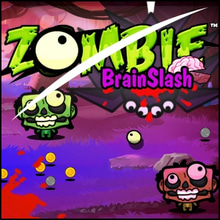
Zombie Brainslash doesn’t ease you in with a polite handshake. You load it on Kiz10 and the woods immediately feel wrong, like the trees are watching and the shadows are giggling. Then the first zombies shuffle in and you get the idea fast: this is a swipe-to-kill survival sprint where your finger is basically the blade. Slide across the screen, slice the threat, keep moving mentally even if your character barely does. It’s quick, it’s sharp, it’s oddly satisfying in that “one more wave” way, and it has that arcade energy where the game keeps asking you to react faster than your brain would prefer.
At the start, it feels almost playful. Zombies show up, you swipe, they drop, you feel powerful for exactly five seconds. Then the tempo shifts. More enemies. More angles. The kind of messy screen pressure where you start swiping a little wider, a little faster, like you’re trying to erase the problem instead of solve it. That’s when Zombie Brainslash gets fun, because it’s not really about mindless swiping. It’s about controlled swiping under pressure, which sounds dramatic… but your hands will understand what that means the moment a tougher zombie survives your lazy cut and you go “oh.” 😅
⚔️🖐️ Swipe combat that feels like drawing lightning
The combat is simple: slide to attack. But the sensation is what makes it work. When you swipe cleanly, it feels like you drew a line of pure “nope” through the screen. You’re not pressing buttons and waiting for animations to finish. You’re acting instantly. The game turns your finger into a weapon, and that means your mistakes are also instant. A sloppy swipe doesn’t just look sloppy, it costs you time. A late swipe becomes damage. A panic swipe becomes the wrong target. And when you nail a sequence of perfect cuts, it feels like you’re conducting chaos, not surviving it.
There’s a sneaky little skill in how you aim your swipes. Wide arcs clear groups, but can leave you exposed to a fast approach. Tight swipes are precise, but demand focus. And that balance becomes the heartbeat of every wave: be clean enough to survive, fast enough to keep the screen from filling, and smart enough to not waste effort on the wrong threat at the wrong time.
🧠⏳ The real enemy is not the zombies, it’s the spiral
Here’s the classic trap: you get hit once, you get annoyed, you start swiping harder and faster, and suddenly you’re making worse decisions. That’s the spiral. Zombie Brainslash loves the spiral. It wants you frantic. Because frantic players stop prioritizing. They swipe whatever is closest, even if it isn’t the real danger. They chase one zombie while two others sneak in. They forget the environment, forget the timing, forget the one simple truth of arcade survival: if you stay calm, you win longer.
When you play well, it feels almost smooth. Your swipes have rhythm. You’re clearing lanes before they become problems. You’re making little micro-pauses like “okay, that one next,” without actually pausing. When you play badly, the screen feels crowded, your swipes get messy, and everything starts happening at once. The difference between those two states is not luck. It’s composure. Which is hilarious, because you’re practicing composure in a zombie slicing game in a forest. But it’s real. 😅🧟♂️
👥🚫 The civilians are the twist that makes you pay attention
One of the smartest pressure elements here is that not everything moving on screen should be hit. You have to avoid harming innocent people. That changes the vibe immediately. Without civilians, you’d just slash everything that appears and call it a day. With civilians, you have to actually look. You have to identify targets. You have to control your swipe path, not just fling it. And that turns the game into a sharper reflex challenge, because now your fastest swipe can also be your worst mistake.
This is where the best players start looking “slower” but perform better. They wait a fraction longer to confirm the target. They choose a safer angle. They slice the zombie without clipping the wrong thing. It’s a tiny decision, but it’s the difference between a clean run and a messy one. And the moment you save a situation by making a precise cut that avoids a civilian by a hair, you feel like a superhero with a very questionable job title. 🦸♂️⚔️
💰🧪 Coins, upgrades, and the sweet feeling of getting stronger
The other loop that keeps Zombie Brainslash sticky is progression. You earn money while you fight, and that money becomes upgrades and power-ups. That’s where the game shifts from “I’m surviving” to “I’m building momentum.” Early on, you’re scraping by, buying improvements that make a real difference. A bit more power. Better tools. Stronger effects. Anything that helps you keep the forest from becoming a nightmare buffet.
And yes, the upgrades tempt you into confidence. You buy power, you feel stronger, you swing wider, you get cocky… then a more powerful zombie shows up and reminds you that the game is still the boss. That push and pull is healthy. It keeps the gameplay from feeling flat. You’re always improving, but the challenge is improving too, which means you stay engaged instead of just steamrolling forever.
🔥✨ Ultra-kills and power moments that feel like a mini movie
When you grab a power-up and the game goes into that “now you’re dangerous” mode, it’s pure joy. Those moments feel like the forest briefly becomes your stage. Zombies pile up, you slice through them, bonuses fly, and you get that arcade rush of clearing a screen that would have ended you seconds ago. It’s dramatic, fast, and a little ridiculous in the best way. You’re not calmly gardening. You’re painting victory across the screen with your finger while the undead politely explode into rewards. 💥😈
The trick is not wasting those power moments. It’s easy to pop a strong bonus on a quiet wave and feel like you did something cool… but the real satisfaction is using it when everything is collapsing. When the wave is thick, the pressure is high, civilians are in danger, and your next mistake would end the run. That’s when an ultra-kill power-up feels like a rescue helicopter landing on your roof. 🚁🔥
🧟♀️🧟♂️ When tougher zombies show up, your habits get tested
As the game escalates, you’ll meet enemies that don’t fall instantly. That’s where lazy swipes stop working. You’ll need follow-ups, better timing, and smarter target selection. You may have to deal with the thickest zombie first because it’s the one that will stay on screen and clutter everything. Or you may need to clear the faster ones so you stop taking random hits. Different waves ask different questions, and your answer is always some version of: can you keep the screen under control?
That’s why Zombie Brainslash stays fun. It’s not a one-note “swipe forever” toy. It becomes a reactive challenge where each wave can feel slightly different depending on where enemies spawn, where civilians appear, and what power-ups you can grab. You start noticing patterns. You start predicting where danger will build. And when your prediction is right, you feel weirdly proud of yourself for being good at forests zombie geometry. 🌲🧠
🏁🌙 Why it works as a quick obsession on Kiz10
Zombie Brainslash is perfect for those sessions where you want action now, not later. It’s quick to understand, satisfying instantly, and deep enough to reward better play. You’ll replay because your last run ended by one mistake. You’ll replay because you want a cleaner ultra-kill moment. You’ll replay because you know you can protect civilians better next time. And the best part is the game respects your time: it throws you into the action, lets you fail fast, and invites you to try again with sharper hands and calmer nerves.
If you like zombie games that are more about reflexes than wandering, and you want a swipe action challenge with upgrades, power-ups, and that constant “don’t mess up” energy, Zombie Brainslash on Kiz10 is a nasty little gem. Slice fast, think faster, and don’t let the forest decide your ending. 🧟♂️⚔️🌲





 5 (69 votes)
 Share
Share
 Embed
Embed


