🚀🧍♂️ Welcome to the Station Where You Are the Tool
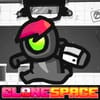
Clonespace has the kind of premise that sounds harmless until you actually play it. You wake up in a cold, metallic place that hums like it’s alive. Doors are locked. Lasers are doing that lazy “I’m not moving but I will ruin you” thing. Buttons sit on walls like smug little secrets. And then the game hands you the one power that turns every normal platformer rule into a weird science experiment: you can create clones of yourself. Not as a cute cosmetic. Not as background NPCs. As real puzzle pieces that you have to use, sacrifice, stack, time, and occasionally apologize to. 😅
On Kiz10, Clonespace feels like one of those games that starts clean and simple and then slowly reveals a mean sense of humor. At first you’re learning the basics: jump, move, reach the exit. Then you realize the exit is behind a barrier. The barrier needs a switch. The switch is across a hazard. The hazard can’t be crossed alone. And suddenly you’re looking at your own clone like, buddy, I need you to stand right there and do not move, okay? And the clone stands there, silently, like a loyal idiot… until you mess up the timing and everything collapses into panic.
🧩🧠 The Puzzle Isn’t the Room, It’s Your Plan
Clonespace doesn’t feel like a game that wants you to be fast. It wants you to be clever, then it wants you to be brave about your cleverness. The rooms are built like compact logic traps. A platform is just out of reach. A pressure plate needs weight. A door only opens while a switch is held. A laser corridor demands a distraction. None of these problems are complicated on their own, but the moment you add clones into the mix, every tiny obstacle becomes a planning problem.
Because now you’re not only moving one character. You’re orchestrating a little team made of… you. One you runs to the switch. Another you becomes the stepping stone. Another you might be used as bait. Another you might exist just long enough to block a moving hazard at the perfect moment. It’s strange, it’s funny, and it’s surprisingly satisfying when you pull it off without chaos.
There’s also that tiny mental shift that makes the game addictive. You stop thinking “how do I jump this?” and start thinking “how do I set up a situation where jumping becomes possible?” That’s the good stuff. That’s when the game turns into a brainy space escape fantasy with a hint of comedy.
🧍♂️🧍♂️🧍♂️ Clones Are Friends… Until They’re Furniture
Let’s be honest: the clone mechanic is hilarious because it’s both empowering and morally suspicious. You’re essentially printing extra versions of yourself to solve problems, and the game encourages you to treat them like objects. Need a body on a button? Clone. Need a platform to reach a ledge? Clone. Need to keep a door open while you run through? Clone. Need to test if a laser will zap something? Uh… clone. 😬
But it never feels cruel in a heavy way. It feels like playful sci-fi logic. Like you’re a clever escape artist using the tools available. And the best part is the improvisation. Sometimes you’ll solve a room “the intended way” and feel smart. Other times you’ll solve it with an ugly, chaotic method involving too many clones and a last-second jump, and you’ll still feel smart, just in a more feral, I made it work kind of way.
The game rewards experimentation. If you have an idea, you can try it quickly. If it fails, you restart with new information. That loop is what makes Clonespace feel like a real puzzle platformer rather than a slow brain teaser. You’re thinking, but you’re also moving, reacting, and occasionally yelling at your own timing.
🛰️⚡ Timing Is the Real Enemy
Some rooms are about placement. Others are about timing, and those are the ones that make your palms a little sweaty. Doors that open briefly. Hazards that cycle. Platforms that move just enough to mess with your confidence. In those moments, clones become less about “where” and more about “when.” You’ll set up a clone to hold a switch, sprint with your main character, then realize you hesitated one beat too long and now the door is closing like it’s tired of you.
That’s where Clonespace becomes cinematic in a weird way. You’ll have these little escape scenes where everything is in motion. A clone is standing on a plate, a barrier is down, you’re sprinting, you’re jumping, you’re praying, and the exit is right there. And if you make it, you feel like you just performed a tiny heist. If you don’t make it, you stare at the screen with that quiet rage that only puzzle games can create. Then you try again immediately, because your ego is now involved.
🌌🧰 Space Station Vibes, Minimal Noise, Maximum Tension
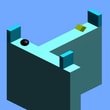
The atmosphere matters. Even if the visuals are simple, the setting feels like a sci-fi maze: steel corridors, sterile rooms, clean shapes, dangerous tech. It’s the kind of environment where every button looks important and every glowing beam looks like a threat. The station feels abandoned but not dead, like something is still running the place, watching. That mood makes the cloning mechanic feel more believable. You’re not a knight in a castle. You’re a trapped subject in a facility built to test systems, and you’re using the system against itself.
And because the mood is controlled, the gameplay reads clearly. You can focus on the puzzle without drowning in clutter. When you fail, you know why. When you succeed, you know what worked. That clarity is a big reason Clonespace fits Kiz10 so well: quick access, quick understanding, but the challenge can still bite.
😵💫🧩 The Classic Mistakes You Will Absolutely Make
You’ll place a clone in the wrong spot and realize too late that you needed it one pixel closer. You’ll create a clone, run away, and forget you needed to keep a door open. You’ll jump too early because you’re excited and then pretend the physics were “weird.” You’ll stack clones and feel like a genius… and then your main character will slip off the edge because your angle was slightly wrong. You’ll also do the thing where you solve 90% of a room, see the exit, and suddenly start rushing like the game is going to explode, even though nobody told you it would. That rush is how puzzle platformers win. They make you betray your own plan at the finish line.
But the good news is the game teaches you through these mistakes. You get sharper. You stop rushing. You start scanning rooms before acting. You begin to build a mental checklist: where is the exit, what is blocking it, what needs to be held, what needs to be crossed, where can a clone safely stand, where will a clone get destroyed, and what is my cleanest path out?
When that thinking becomes natural, Clonespace stops feeling hard and starts feeling delicious. Like you’re solving problems in your own style. Like the station is throwing logic at you and you’re throwing it right back.
🏁🚀 Why You’ll Keep Playing
Clonespace hits a sweet combination: it’s a puzzle platform game that doesn’t drown you in text, but it still makes you feel clever. It’s sci-fi without being slow. It’s challenging without being unfair. It’s also funny in that quiet way, because you’re literally manufacturing your own solutions by cloning yourself, and sometimes the solution is elegantly simple, and sometimes it’s a ridiculous pile of clones that somehow works anyway. Both feel good.
If you like games where you must think under pressure, use clones to solve traps, and escape room-by-room like you’re starring in a low-budget space thriller with a high IQ, Clonespace on Kiz10 is a great time. You’ll enter a room with a plan, watch the plan fail, create a better plan, then finally slip through the exit with one last jump and a grin like, okay… that was clean. And then the next room shows up and immediately proves you’re not as smart as you thought. 😄🚀



 4.2 (19 votes)
 Share
Share
 Embed
Embed