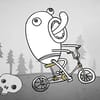
𝗔 𝗵𝗶𝗹𝗹, 𝗮 𝗯𝗶𝗸𝗲, 𝗮𝗻𝗱 𝗮 𝘁𝗲𝗿𝗿𝗶𝗯𝗹𝗲 𝗶𝗱𝗲𝗮 💨
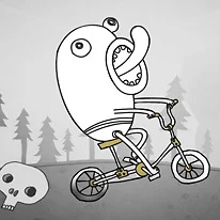
Doofus Drop is built on the kind of logic that only arcade games can make feel completely reasonable. Take a clumsy guy, stick him on a bike, point him toward a brutal downhill mess full of rocks, trash, bumps, and cliffs, then somehow expect greatness. Not clean greatness. Not elegant greatness. Chaotic greatness. The kind that involves rolling uncontrollably, bouncing off the earth, collecting beans in midair, and using fart power as a legitimate strategy. A masterpiece, really.
What makes the game click so fast is that it does not waste time pretending to be normal. From the first run, you understand exactly what kind of ride this is going to be. You launch, you build momentum, you hit the slope, and everything becomes a loud argument between physics and stupidity. Sometimes you soar beautifully. Sometimes you slam into the ground like the world itself got tired of your confidence. Either way, you will almost always want another try.
On Kiz10, Doofus Drop feels like a perfect distance game because it understands how to turn failure into comedy and progress into obsession. Every attempt ends in disaster eventually, but the space between launch and disaster is where the fun lives.
𝗧𝗵𝗲 𝗴𝗼𝗮𝗹 𝗶𝘀 𝘀𝗶𝗺𝗽𝗹𝗲: 𝗴𝗼 𝗳𝗮𝗿𝘁𝗵𝗲𝗿. 𝗧𝗵𝗲 𝗺𝗲𝘁𝗵𝗼𝗱 𝗶𝘀 𝗻𝗼𝘁 🛞
At its core, Doofus Drop is a distance-launch game. You are trying to go as far as possible on each run, using the terrain, your launch speed, your upgrades, and your bizarre gas-based rescue system to squeeze out every extra meter. That kind of structure is always dangerous in the best way because it turns tiny improvements into personal missions. A better angle matters. A cleaner bounce matters. A better-timed fart matters more than polite society would prefer, but here we are.
The hook is that the game makes movement feel half-earned and half-accidental. You can absolutely improve and play better, but there is always a little wild unpredictability in how a run unfolds. You hit a slope at a weird angle and suddenly gain distance you did not expect. You clip an obstacle and somehow keep going. You stop completely, panic, trigger your special boost, and steal a few extra meters that turn a mediocre run into a new record. That constant swing between disaster and recovery gives every attempt personality.
And because the goal is so clear, the game becomes very easy to lock into. You are never confused about what you want. More distance. Always more distance. The only question is how absurd the journey is going to be this time.
𝗠𝗼𝗺𝗲𝗻𝘁𝘂𝗺 𝗶𝘀 𝗲𝘃𝗲𝗿𝘆𝘁𝗵𝗶𝗻𝗴, 𝘂𝗻𝘁𝗶𝗹 𝗶𝘁 𝘃𝗲𝗿𝘆 𝘀𝘂𝗱𝗱𝗲𝗻𝗹𝘆 𝗶𝘀𝗻’𝘁 🌪️
The real star of Doofus Drop is momentum. That first big push downhill decides so much. If you build speed well, the whole run opens up. The bike starts carrying you harder, the terrain begins working in your favor, and every bump becomes a chance to stretch the run instead of kill it. But if you lose that speed too early, things get ugly fast. Suddenly the character is wobbling, tumbling, scraping along the slope with the dignity of a dropped sock.
That delicate relationship with momentum is what gives the game its weird skill curve. You start to notice which parts of the hill are useful and which ones are traps. You learn that not every bounce is good, not every lift is worth trusting, and not every obstacle should be challenged just because you were feeling bold. Doofus Drop slowly teaches you how to read the descent, even while making the whole experience look gloriously stupid.
That balance is important. If the game were fully random, it would get old. If it were too controlled, it would lose the chaotic charm. Instead, it sits in that sweet middle space where better decisions clearly help, but weird nonsense is always waiting nearby.
𝗕𝗲𝗮𝗻𝘀 𝗮𝗿𝗲 𝗻𝗼𝘄 𝗳𝘂𝗲𝗹, 𝗮𝗻𝗱 𝘄𝗲 𝗺𝘂𝘀𝘁 𝗮𝗰𝗰𝗲𝗽𝘁 𝘁𝗵𝗮𝘁 🫘
One of the funniest and smartest parts of Doofus Drop is the bean system. In the air, you collect stars, sure, but beans are the real treasure. Beans feed your special ability, which means every one you grab becomes potential distance later. That is a brilliant bit of design because it makes midair collection feel important without overcomplicating the run.
It also adds a second layer to every launch. You are not only trying to stay moving. You are trying to set yourself up for the moment movement stops. Because it will stop. Eventually the hill gets flatter, the character loses speed, gravity starts acting smug, and that is when your most ridiculous tool becomes your most valuable one. A well-timed fart boost can rescue a run, reconnect momentum, or drag out just enough distance to matter. It is absurd, yes, but the absurdity is exactly what makes it memorable.
The great thing is that the mechanic does not feel random. You learn when to use it. Too early, and you waste precious energy. Too late, and the run is already dead. The game turns something silly into a real timing skill, which is honestly impressive.
𝗧𝗵𝗲 𝗼𝗯𝘀𝘁𝗮𝗰𝗹𝗲𝘀 𝗮𝗿𝗲 𝗿𝘂𝗱𝗲, 𝗯𝘂𝘁 𝗻𝗲𝗰𝗲𝘀𝘀𝗮𝗿𝘆 🪨
A downhill arcade game would be boring without hazards, and Doofus Drop understands that perfectly. Rocks, trash, steep drops, awkward terrain, and all sorts of run-killing interruptions are placed exactly where they can do the most emotional damage. Good. That is their job. They are there to make you respect the hill and to make every clean stretch feel more valuable.
These obstacles also stop the game from becoming passive. You cannot simply lean back and enjoy the ride. You have to pay attention. Even in a game this ridiculous, awareness matters. A bad hit can kill your speed, throw off your bounce, or dump you into a section that feels like punishment delivered by landscaping. That danger keeps the run alive.
And when you do get through a rough patch cleanly, it feels great. There is a sharp satisfaction in surviving chaos with just enough control to keep going. Doofus Drop is full of those moments, where it looks like the run is about to collapse and somehow does not. For a few seconds, you feel like a genius. Then you hit a rock and remember what game you are playing.
𝗨𝗽𝗴𝗿𝗮𝗱𝗲𝘀 𝘁𝘂𝗿𝗻 𝗶𝗱𝗶𝗼𝘁𝗶𝗰 𝗲𝗻𝗲𝗿𝗴𝘆 𝗶𝗻𝘁𝗼 𝗿𝗲𝗮𝗹 𝗽𝗿𝗼𝗴𝗿𝗲𝘀𝘀 🚀
This kind of game lives or dies on how rewarding it feels to improve, and Doofus Drop absolutely understands the assignment. Rocket pants, fart power-ups, weird items, launch helpers, extra momentum tools, all of it feeds the same beautiful loop: run, crash, earn, upgrade, run again, go farther. Suddenly that messy disaster from ten minutes ago becomes the foundation of a much better attempt.
Upgrades matter because they give your failures value. Even a bad run can still move you toward something useful. That is what keeps the game addictive instead of frustrating. You are always one purchase away from a stronger launch or a funnier recovery. The game keeps dangling possibility in front of you, and because the next run happens quickly, it is very easy to say yes.
There is also something satisfying about watching a character who began as a complete disaster slowly turn into a more dangerous version of the same disaster. That is the tone Doofus Drop gets right. The upgrades help, but the game never becomes clean or serious. It just becomes bigger, wilder, and more capable of absurd distance.
𝗥𝗲𝗰𝗼𝗿𝗱 𝗰𝗵𝗮𝘀𝗶𝗻𝗴 𝗶𝘀 𝘄𝗵𝗲𝗿𝗲 𝘁𝗵𝗲 𝗴𝗮𝗺𝗲 𝘀𝗶𝗻𝗸𝘀 𝗶𝘁𝘀 𝗵𝗼𝗼𝗸 🏁
The beauty of a distance game is that it gives you a personal enemy: your last best attempt. That is enough. Doofus Drop keeps pushing you into that battle. Every run becomes a chance to top your own number. Maybe by a little. Maybe by a lot. Maybe by one humiliating extra meter that still somehow feels incredible. It does not matter. A record is a record.
That structure gives the game staying power. There is always a reason to return. Better launch. Better bean collection. Better fart timing. Better bounce control. Better use of upgrades. The hill stays the same kind of cruel, but you start approaching it with more knowledge and more tools. That progress feels tangible. You are not just hoping harder. You are actually learning.
On kiz10.com, Doofus Drop is an easy recommendation for players who enjoy launch games, downhill physics chaos, distance challenges, upgrade loops, and comedy-driven arcade action. It is silly, yes, but not shallow. Under all the fart jokes and crash-landings, there is a very well-built momentum game that knows exactly how to keep players chasing one more attempt.
Doofus Drop is loud, dumb in the smartest possible way, and dangerously good at turning disaster into motivation. If you like arcade games where momentum is king, upgrades matter, and every bean feels like a ridiculous step toward greatness, this one is hard to resist. Fall badly. Fly farther. Repeat.













 2.5 (162 votes)
 Share
Share
 Embed
Embed