Emoji Squeeze is the kind of browser game that looks silly for about three seconds, then immediately turns into a full reflex test with tiny faces depending on your decisions. Kiz10’s page describes it very clearly: you eliminate the emojis, avoid killing the angry red emoticons, and do not let any yellow emoji escape. That is the whole setup, and honestly, it is a very good one. It is simple enough to understand instantly, but sharp enough to become dangerously addictive the moment your hands realize the game is moving faster than your dignity can keep up with.
What makes Emoji Squeeze work so well is how brutally clean the objective feels. You are not learning a giant ruleset. You are reacting. Watching. Choosing. One emoji is safe to destroy. Another one absolutely is not. One little mistake and the whole run can collapse into bright, stupid chaos. That kind of design is perfect for Kiz10 because it gets straight to the point. No wasted time, no heavy setup, just immediate arcade pressure wrapped in a funny visual style.
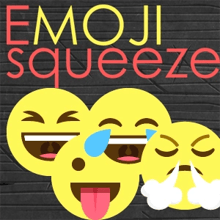
And that funny style matters more than it sounds. Emoji games live on readability. You can tell what is dangerous, what is safe, and what the mood of the challenge is at a glance. Here, the contrast between normal yellow emoji and angry red emoji gives the gameplay a strong instant identity. It is not just about squeezing things quickly. It is about squeezing the right things while your brain is being pulled in two directions by speed and color and tiny little faces with far too much emotional importance. That is good arcade design. Ridiculous, but good.
The best part of Emoji Squeeze is probably the way it weaponizes hesitation. A lot of reflex games punish slowness. This one sounds like it punishes the wrong kind of confidence too. Kiz10’s description says not to let any yellow emoji escape, which means speed matters. But the same page also warns you not to kill the angry red emoticons, which means reckless speed is just as dangerous as being too slow. That balance is where the real fun starts. You cannot just mash through the screen like a panic machine. You need enough control to stay accurate while the level keeps asking for more urgency.
That is what makes games like this so sticky. Every mistake feels fixable. You know exactly what went wrong. You clicked too fast. You hesitated too long. You let the wrong face slip by. The game is never mysterious about failure, and that is a huge strength. Clean failures are the most replayable ones. They make the player think, no, no, that was not the real run, let me do that properly. Dangerous sentence. Very effective. Arcade games survive on that sentence.
There is also something weirdly satisfying about the squeeze mechanic itself. It is physical in a cartoony way. A game becomes much more fun when the main action feels direct and immediate, and “squeezing” emoji is exactly the sort of silly tactile hook that works in a browser session. You are not issuing commands from a distance. You are crushing tiny mood-icons before they ruin the screen. It is fast, visual, and just absurd enough to feel memorable. That kind of physicality matters in simple games because it turns a plain click into a tiny burst of payoff.
And because the concept is so small, the pressure scales beautifully. Early moments probably feel easy. Then the screen gets busier. The mix of safe and unsafe faces starts demanding more from your eyes. Your reactions get pulled between “faster” and “smarter,” and suddenly the whole game becomes a little battle between instinct and discipline. Those are often the best browser titles, the ones that make a tiny rule feel bigger than it should.
Kiz10’s page calls it an online game where you have fun eliminating emoticons while protecting yourself from those enraged red faces, which fits perfectly with the overall mood of the game. It sounds playful, but not passive. Cute, but not relaxing for long. That combination is what keeps reflex games alive. A game does not need huge depth when it can produce real tension in a few seconds and keep doing it every time you restart.
Emoji Squeeze also fits neatly into Kiz10’s lighter arcade and skill-game space because it asks for almost nothing at the start and then quietly demands full attention once the pace ramps up. That kind of accessibility is powerful. Anyone can understand the goal immediately. The hard part is executing it cleanly once the screens starts getting crowded. That is exactly where arcade games earn their replay value.
If you enjoy fast reaction games, simple rules with sharp consequences, and browser titles that turn a silly visual theme into a real hand-eye challenge, Emoji Squeeze is a very easy fit. It takes a bunch of expressive little faces and turns them into a clean, funny, slightly stressful arcade test where every click matters more than it should. You start by squashing yellow emoji. A little later, you are fully invested in not letting one escape while also trying not to ruin everything by hitting the wrong angry red face. Which, honestly, is exactly the kind of nonsense that makes Kiz10 games memorable.



 4.2 (25 votes)
 Share
Share
 Embed
Embed


