🧩🏗️ The Tower Starts Innocent, Then It Gets Personal
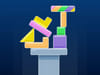
Geometry Tower looks friendly for about three seconds. Bright shapes, clean edges, that calm little platform sitting there like it’s saying “take your time.” And then you drop the first piece and instantly realize what the game really is: a timing challenge disguised as a cute stacking puzzle. The concept is simple in the way a tightrope is simple. You’ve got a platform, you’ve got objects falling from above, and you need to build upward. Easy, right? Until you notice the pieces aren’t polite squares that sit neatly. They’re chunky, uneven, oddly shaped, and sometimes they look like they were designed by someone who enjoys watching players whisper “no no no no” while trying to land a wobbling block on a tiny edge.
On Kiz10, Geometry Tower becomes that perfect browser-game obsession because it’s fast to understand and cruelly satisfying to master. You drop. You stack. You aim for height. But behind that, the real gameplay is reading motion, trusting your eyes, and controlling your impulses. Because the biggest enemy in this game isn’t the tower. It’s you getting excited and dropping too early.
🎯🕹️ One Tap, One Drop, One Tiny Mistake That Ruins Everything
The controls feel clean, almost minimal. You wait for the object to swing into the right position, then you release. That’s it. No complicated combos, no inventory, no nonsense. Just timing and placement. And that minimalism is exactly why it works. When something goes wrong, there’s no doubt why it happened. You released too soon. You got greedy. You tried to “save it” with hope. Hope is not a mechanic here.
Each drop is a small decision with a surprisingly big emotional weight. You’re not just placing an object, you’re placing confidence. You’ll have moments where you line it up perfectly and the piece lands so cleanly it feels like the universe gave you a high five. Then you’ll have another moment where you’re 95% sure it’s aligned, you drop it, and it slides off in slow motion like it’s embarrassed to be associated with your tower. 😭
That’s the rhythm of Geometry Tower. Calm focus, quick action, instant feedback. It keeps your brain engaged because every second matters, and every drop is a tiny “final answer” moment.
🧱🍔🐻 Shapes With Attitude, And A Tower That Becomes a Story
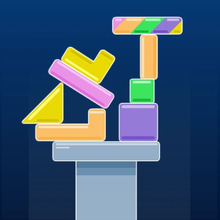
One of the funniest parts is how playful the objects can feel. It’s not just generic blocks. The vibe leans into quirky stacking, like you’re building a ridiculous monument out of random stuff. Some pieces look stable until you realize their base is narrower than your patience. Some look impossible until you rotate your thinking and land them in a way that feels weirdly clever. You start learning shape personalities. This one likes center alignment. That one punishes even slight offset. This one is secretly friendly if you land it flat.
And the tower itself becomes a little story of your decisions. The bottom layers are usually clean because you’re relaxed. The middle layers start getting chaotic as you push your luck. The top layers are either a masterpiece of control or a wobbly confession that you should have stopped five drops ago. 😅
What makes it addicting is that you can look at your tower and instantly remember what happened. That awkward gap? Panic drop. That perfect layer? Clean timing. That crooked piece holding the whole thing together like it’s praying? Pure luck and a tiny miracle.
⏳🧠 The Real Challenge Is Managing Your Own Brain
Geometry Tower is a puzzle game, but the puzzle is mostly mental. Your hands want to move fast. Your eyes want to chase perfection. Your brain wants to overthink. The game rewards a calmer approach. Watch the swing. Commit when it’s right. Don’t “force” a drop just because you’re tired of waiting. That impatience is exactly how you lose.
There’s a special kind of tension when you’re deep into a level and the tower is already tall. At that point, every new placement feels heavier, even if the physics are simple. You start worrying about the height goal. You start imagining the failure. And that imagination sneaks into your timing. Suddenly you drop too early because you wanted it over with. The game laughs quietly and your piece falls.
The best players don’t rush. They build a rhythm. They treat each object like a small puzzle. Where does it land best? How much margin do I have? Is it safer to center it and keep stability, or should I risk a slightly off-center placement to create a flatter surface for the next weird shape? Those tiny choices add up.
🌈🏁 Levels That Feel Like “Just One More Try” Traps
The level progression in a stacking tower game like this usually works because difficulty climbs without needing complex new rules. It just gives you tougher shapes, trickier timing, and higher targets. It feels fair, but demanding. Early levels teach you the basics: align, drop, stack. Later levels start testing consistency. Can you do it ten times in a row without a mistake? Can you keep your nerves steady when the tower is tall and the platform looks smaller than your confidence?
And the beautiful trap is that failure is quick. You don’t lose fifteen minutes of progress. You lose a few seconds and your pride. That makes restarting feel natural instead of painful. You immediately think, I can do that better. I know where I messed up. This time I won’t rush. This time I won’t drop early. This time… and then you do the exact same mistake because your brain loves repeating dramatic arcs. 😭🧱
But when you finally clear a level, it feels earned. Not because you memorized a solution, but because you controlled your timing. It’s a skill win. A real one.
😌✨ Small Tricks That Make You Look Like a Stacking Wizard
There’s a quiet “pro” mindset that makes Geometry Tower feel smoother. First, treat the platform like a target zone, not a suggestion. Center placements create a stable story for the tower. Second, don’t chase perfection on every drop. Sometimes “good enough and flat” is better than “perfect alignment but tilted.” Third, if a shape looks awkward, aim for the flattest contact point, not the prettiest one. Your tower doesn’t care if it looks elegant. It cares if the next piece has somewhere safe to land.
Also, pay attention to your owns stress. When you’re tense, you drop early. When you’re relaxed, your timing improves. It’s weirdly personal. Geometry Tower is basically a little training exercise in patience, disguised as a cute geometry stacking challenge. You’re learning to wait for the right moment, and that’s the whole game.
By the time you’re chasing high towers and consistent clears on Kiz10, you’ll realize something funny: you didn’t just build a tower. You built discipline. And occasionally you built a comedy monument to impatience. Both are valid. 😅🏗️





 4.3 (21 votes)
 Share
Share
 Embed
Embed