🧩 A Face, A Glitch, A Tiny Identity Crisis
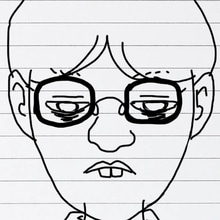
He Looks So Familiar is not the kind of game that kicks down the door with explosions, racing engines, or stickmen punching each other into the moon. No. This one slips in quietly, sits in the corner, and starts making random faces until your brain goes, “Wait... why does that guy look like my math teacher, my neighbor, and a very tired movie villain at the same time?” And suddenly you are in. Deep in. Gone. It is a casual puzzle-style face creator on Kiz10 where a simple click reshuffles facial features and generates strange, almost-recognizable characters, with the option to save the result like a little digital souvenir of your confusion.
That is the whole trick, really. The concept is so simple it almost feels like a joke at first. Click. New face. Click again. Another face. One looks suspiciously heroic. Another looks like a detective who has seen too much. Another looks like he definitely owns a small electronics store and gives long speeches nobody asked for. The game somehow lands in that magical space between toy, puzzle, and weird social experiment. There is no heavy tutorial, no complicated rulebook, no dramatic mission briefing. Just faces, endless combinations, and that strange human tendency to search for meaning in every pair of eyes and every crooked smile 😄
And honestly? That is why it works.
🎭 Click Once, Regret Nothing, Click Again
The core loop in He Looks So Familiar is beautifully ridiculous. You interact, the game gives you a new face, and your brain immediately starts trying to identify who this imaginary person might be. It becomes automatic. You do not choose for this to happen. It just does. One second you are casually testing a browser game on Kiz10, and the next you are staring at a generated face thinking, “This man looks like he writes very aggressive restaurant reviews.”
There is a strange power in randomness when it is used well. This game takes that randomness and lets it do most of the comedy. Every new face feels like a tiny reveal. Sometimes the result is oddly normal, almost believable. Other times it feels like the character was assembled by an alien trying very hard to understand what a human uncle looks like. The joy comes from that uncertainty. You never quite know whether the next click will give you a regular-looking stranger, a suspicious mastermind, or the kind of face that looks permanently caught in the middle of explaining cryptocurrency at a family barbecue.
And because the system is immediate, there is no friction. No waiting. No clutter. You click, it responds, and your curiosity gets fed instantly. That speed matters. It is what turns a novelty into something dangerously replayable. The game understands that its greatest weapon is momentum. Curiosity likes momentum. So does chaos.
🧠 Why Your Brain Starts Playing Tricks On You
The title is perfect, really, because the feeling it creates is incredibly specific. He Looks So Familiar is built around recognition, or maybe fake recognition. That weird mental hiccup where a face seems known even though you know perfectly well you have never seen it before. The game pokes directly at that part of the brain and keeps doing it until you are half laughing and half suspicious of your own memory.
Humans are absurdly good at finding patterns in faces. Too good, maybe. We notice tiny details, assign personality in seconds, imagine voices, moods, careers, even tragic backstories for random expressions. This game turns that natural instinct into the entire experience. It is not just a casual game. It is a machine for generating almost-memories. Weird phrase, yes, but that is exactly what it feels like.
One face looks like a retired action hero who now sells grilled corn near the beach 🌽 Another looks like the kind of guy who would absolutely say “Back in my day” before telling a story nobody can verify. Another somehow looks both kind and suspicious, which is frankly an incredible achievement for a few shuffled features on a screen. The game never says any of this, of course. You invent it yourself. That is where the fun gets personal.
And that personal reaction is what gives the game life. Two players can click through the same system and come away with completely different reactions. Someone else sees a businessman. You see a minor soap opera villain. Someone sees a cool avatar. You see a man who definitely forgot your birthday and then tried to blame the calendar. Beautiful. Nonsensical. Very human.
📸 Tiny Avatars, Big Energy
Another part of the appeal is that the game does not just throw faces at you and leave. On Kiz10, the game description notes that you can save the faces or avatar results you create, which changes the mood in a subtle but important way. Suddenly it is not only about generating random people. It becomes a little collection game. A digital gallery of strange men who do not exist and yet somehow feel like they have opinions about soup.
That simple save feature opens up a lot. You can chase the funniest result. The most heroic result. The one that looks alarmingly specific. The one that could pass as a profile picture for a made-up detective series that ran for one season and developed a cult following in three countries. It adds just enough purpose to keep the clicks from feeling disposable.
There is also something charmingly old-school about it. No overdesigned customization menus. No thirty sliders and a forehead depth setting that nobody understands. Just a quick, direct, slightly chaotic way to generate faces and keep the ones that amuse you most. In a world where many games feel desperate to prove how massive they are, He Looks So Familiar survives by being small, strange, and oddly confident about it.
That confidence matters. The game does not beg for attention. It simply presents the mechanic and lets your imagination do the heavy lifting. And somehow, that makes it more memorable than a lot of louder browser games.
😅 The Comedy of Accidental Character Creation
Some games are funny because they tell jokes. Others are funny because systems collide in unexpected ways. He Looks So Familiar belongs in the second camp. The humor comes from reaction. From timing. From the gap between what the game technically does and what your mind insists on adding to it.
You are not just making faces. You are accidentally inventing people.
One click creates a man who looks like he owns seven umbrellas and trusts none of them. Another creates someone who clearly introduces himself with too much eye contact. Another looks like he would absolutely appear in the background of a crime documentary with no explanation. The game becomes a low-key improv engine. It gives you the raw material, and your thoughts run off into the night with it.
This is why it can hook players who normally would not care about a face-making puzzle game at all. It is not about challenge in the traditional sense. It is about reaction, curiosity, and the tiny bursts of delight that come from seeing something unexpectedly perfect. Or unexpectedly cursed. Sometimes both at once, which is honestly the premium result.
Even the pacing supports that humor. Because every outcome arrives quickly, you never get bogged down. You stay in that lovely state of light surprise. Click, laugh, maybe save, move on. There is almost no room for boredom because the next oddball face is always one input away.
🌪️ Small Game, Strange Staying Power
He Looks So Familiar is easy to underestimate. It looks tiny. It sounds tiny. It is, structurally, tiny. But tiny games can have weird staying power when they understand exactly what feeling they want to trigger. This one knows. It wants that sharp little spark of recognition and nonsense. That instant where you almost know the face on screen and your imagination starts sprinting ahead before logic can catch it.
As a casual browser game on Kiz10, it works because it respects your time. It gives you the fun immediately. No drag, no filler, no fake complexity. Just interaction and payoff. That makes it perfect for short sessions, but also dangerously good at turning those short sessions into ten more minutes of “Okay, one last face.” A sentence nobody in history has ever meant sincerely.
If you enjoy quirky puzzle games, random generators, avatar makers, or browser games built around pure odd charm, this one has a very specific flavor worth trying. It is part toy, part comedy machine, part accidental creativity tool. And maybe that is the best way to describe it: not a grand adventure, not a competitive showdown, just a weird little box of human faces and near-recognition that somehow keeps making you smile.
There are bigger games on Kiz10. Louder games. Faster games. Games with monsters, lasers, impossible jumps, and enough explosions to wake up three neighborhoods. But He Looks So Familiar has something those games often lack: a distinct, peculiar personality. It knows exactly what it is. It is strange. It is simple. It is kind of hilarious. And after a few clicks, you may find yourself staring at the screen thinking, with complete sincerity, “Why does this fake man look like someone I owe money to?” 🤨
That is when you know the game has won.


















 2.5 (59 votes)
 Share
Share
 Embed
Embed