🌲 A Forest That’s Getting Quiet in the Wrong Way
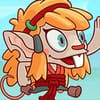
Max & Mink starts with that uneasy kind of calm, like the woods are holding their breath. The King of the Animal Forest is sick, the color of the world feels off, and the story doesn’t over-explain itself because it doesn’t need to. You feel the urgency in the level design: doors that won’t open unless both friends make it, platforms placed just a little too high for one character alone, and hazards positioned in a way that says, “Teamwork or restart.” On Kiz10, it lands as a co-op puzzle platformer with a gentle face and a surprisingly stubborn brain underneath.
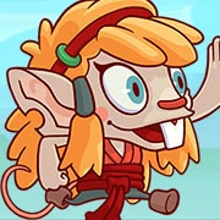
You’re guiding two characters who aren’t just “two skins.” They’re a partnership. Max has movement that can break the rules of normal platforming, while Mink brings grounded jumping and positioning that turns chaos into progress. The fun isn’t only in reaching the exit. The fun is in the small moments between: that half-second pause where you realize the solution is weird, and then you do it anyway and it works.
🧠 The Real Enemy Is the Room Itself
Every stage feels like a compact logic problem wearing a platform game costume. You walk in, you see the exit door, and your brain immediately wants the direct route. Max & Mink laughs at that instinct. The direct route is usually a decoy. The real path is the one you build by stacking bodies, bending movement, and using each character like a tool with personality.
What makes it addictive is the way it rewards observation more than speed. You’re not asked to pull off precise combo timing like a fighting game. You’re asked to look at shapes, distances, and “what if” angles. What if Max goes first and becomes a living platform? What if Mink triggers something while Max holds position? What if you stop trying to brute-force jumps and instead create a staircase out of friendship and mild desperation? When you start thinking that way, the levels stop feeling like walls and start feeling like conversations.
🤝 Co-op Energy, Even When You Play Solo
Yes, it’s a two-player teamwork game, and with a friend it becomes a comedy show: someone yells “DON’T MOVE,” someone moves anyway, and you both fall into the same mistake like it was scripted. But it’s also perfectly playable solo, where the teamwork becomes internal. You swap control, set up positions, then execute the plan. It’s the same cooperation, just happening inside your own head like two tiny gamers arguing politely.
The game’s best trick is that it makes cooperation feel necessary, not optional. You can’t just drag one character through the level while the other exists as decoration. Doors demand both. Gaps demand creativity. Platforms demand you stop thinking like one hero and start thinking like a duo. It’s a constant reminder that the puzzle isn’t “how do I jump there,” it’s “how do we get there together.”
🌀 The Sweet Spot Between Cute and Uncomfortable
Max & Mink has a soft, storybook vibe… with a slight edge. The forest is magical, but not purely cozy. The sickness theme gives the journey weight, and the world design can feel a little strange in a way that keeps you alert. That weirdness is a good thing. It stops the game from becoming background noise. You’re always paying attention because the atmosphere suggests consequences. Not heavy, not depressing, just enough to make your mission feel like it matters.
And that’s why collecting the three magical mushrooms (the cure you’re chasing) feels like more than a checkbox. You’re not collecting them because “collectibles exist.” You’re collecting them because the world needs them, and the levels are built to make you earn each one.
🧱 Stacking, Stretching, and That “Wait… That Works?!” Moment
This is where the game shines: solutions that look silly until they’re brilliant. You’ll stack Max and Mink in positions that would be ridiculous in real life, but in game logic it becomes elegant. You’ll use one character as a stepping stone, a blocker, a launcher, a living bridge. Sometimes you solve a room and you don’t even fully understand why it worked, you just know it felt right, like you found the rhythm the level wanted.
It’s also a game that teaches you not to panic. If you rush, you misplace a character and waste time correcting. If you slow down, you notice the tiny detail: a ledge that’s barely reachable, a path that only works if you approach from the opposite side, a safe spot that exists purely to set up the next move. It’s puzzle platforming, but with personality. The room isn’t only an obstacle, it’s a teacher that enjoys watching you guess wrong twice before you finally smile and say, “Ohhh… okay.”
🎮 The “Just One More Level” Trap
The levels are bite-sized, and that’s dangerous. You finish one, the next loads, and you think you’re still in the same mental groove, so you keep going. Then the game slightly changes the rules of the room and you get stuck again, but it doesn’t feel like a wall. It feels like a dare. And the restart loop is fast enough that failure doesn’t become punishment; it becomes iteration.
That loop is especially satisfying on Kiz10 because the game fits perfectly into quick sessions. You can play for five minutes and feel like you solved something. Or you can play for an hour because you got obsessed with a particular room and you refuse to leave until you outsmart it.
😅 Friendship Powered by Small Disasters
Some of the best memories in games like this come from mistakes, and Max & Mink provides plenty. You’ll accidentally jump too early. You’ll place Max one pixel too far and Mink will bonk into nothingness. You’ll do a perfect setup and then ruin it with one careless step. But the failures are usually funny, not cruel. The game doesn’t feel like it’s trying to humiliate you; it feels like it’s nudging you toward the clean solution.
And when you finally nail it, you get that satisfying calm. The door opens, both characters make it through, and the room that felt impossible thirty seconds ago suddenly feels obvious. That’s classic puzzle design when it’s done right: frustration that turns into clarity, and clarity that makes you feel smarter than you were a minute ago.
🌟 Why Max & Mink Belongs in Your Co-op Puzzle Rotation
If you like two-player platform games, switch puzzles, teamwork mechanics, and levels that reward creative movement more than speed, Max & Mink is a strong pick. It’s charming without being shallow, clever without being exhausting, and it has that rare quality where the solution often feels like a little magic trick you performed with your own hands.
On Kiz10, it’s the kind of co-op puzzle platformer that works for any mood: casual if you want something cute and clever, competitive if you and a friend start racing to solve rooms faster, and strangely intense when you’re one jump away from the exit and your brain decides to overthink everything. Save the forest, grab the mushrooms, and keep your friendship intact… or at least pretend the fall was intentional.



 4.4 (15 votes)
 Share
Share
 Embed
Embed