🛹🌊 Seaside Speed, Tiny Mistakes, Instant Regret
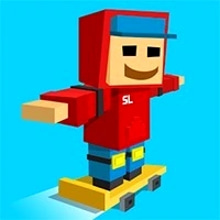
Skatelander has that classic runner-game trick: it looks peaceful until it starts disrespecting your reaction time. The setting feels breezy, almost vacation-like, a road by the sea, the kind of place where you’d normally slow down and enjoy the view. But the second you’re on the board, it stops being a postcard and turns into a precision test. You’re skating forward, the world keeps coming, and the game’s whole personality is built around one question that gets louder the longer you survive: can you stay clean when the road is begging you to get greedy?
Because Skatelander isn’t just “avoid obstacles.” It’s avoid obstacles while your brain keeps whispering, grab that coin, grab that one too, okay now grab those—oh no, why is that barrier there. That’s the magic. It’s a simple endless run at the surface, but it constantly pulls you into decisions. You’re never only moving forward. You’re choosing lanes, timing jumps, picking safe routes, and trying to keep the run alive long enough for your score to feel impressive.
🌴🧠 The Runner Formula, But With Skateboard Attitude
A skateboard changes the vibe compared to a normal runner. Everything feels a bit more slippery, a bit more “commit and hope,” even if the controls are easy. Your character moves with momentum, so small errors don’t feel small. You drift too close to something and suddenly you’re in a panic correction that eats your timing. You jump late and it doesn’t matter that you were only late by a heartbeat, because the obstacle doesn’t negotiate. Skatelander rewards the player who treats movement like a rhythm instead of a reaction.
The road becomes a pattern you learn to read. The gaps, the objects, the placement of pickups—none of it feels random once you’ve played a few rounds. It’s more like the game is setting traps that only work if you stop paying attention. The moment you switch into autopilot, the highway (yes, even a beach road) finds a way to remind you that you’re not in control, you’re borrowing control.
💰⚡ Coins Are Candy With Wheels
Coins in Skatelander are dangerous for the same reason candy is dangerous in other runners: they make you lie to yourself. You’ll convince yourself that a risky path is “worth it” because it’s shiny and feels efficient. Then you’ll clip a hazard, lose the run, and realize the coin wasn’t worth anything compared to the distance you just threw away.
The smarter way to think about coins is as bonus profit, not a requirement. If they sit on your safe route, great, scoop them up. If they pull you into a tight lane with a bad escape route, skip them and keep flow. Flow matters more than loot. The best runs come from staying alive, not from collecting every shiny thing like you’re doing taxes for a candy company.
And the funny part is: once you stop chasing coins emotionally, you usually end up collecting more coins anyway. Because you survive longer. You reach more sections. You give yourself more chances to pick up clean lines of money without risking everything on one sketchy cluster.
🧱😵💫 Obstacles That Arrive Like Punchlines
Skatelander’s obstacles don’t feel like “big boss moments.” They feel like fast little jokes. A barrier appears right when you were mentally celebrating. A tight gap shows up right when you drifted too far to one side. A sequence forces you to commit to a lane early, then punishes you if you decide late. That’s where the game gets spicy: it’s not testing your raw speed, it’s testing your decision timing.
If you’re late, you die. If you overreact, you die. If you change lanes too aggressively, you die. The solution is annoyingly simple: smaller moves, earlier reads, calmer hands. It’s a skate runner, so it wants you to look smooth, not frantic. The irony is that “smooth” is also the optimal strategy. Smooth lines keep your options open and stop you from pinballing into the next hazard.
🌬️🎬 When You’re In The Zone, It Feels Like a Clip
There’s a point in a good endless runner where the controls disappear and you start moving on instinct. Skatelander has that moment. You’re skating, you’re jumping, you’re adjusting lanes without thinking too hard, and everything feels clean. The road is still dangerous, but it feels readable. You’re not surviving by luck, you’re surviving because you’re predicting what’s coming.
That’s when the game becomes cinematic in a weird, low-budget way. Not cutscene cinematic, but “I just threaded three tight sections in a row without messing up” cinematic. You’ll feel your shoulders relax for half a second… and that half second is exactly when you get punished, because relaxation makes you greedy. Greedy is how you take a tight line you didn’t need. Greedy is how you jump late because you were staring at coins. Greedy is how you lose a run that was going to be your personal best.
🛟🛹 The Secret Skill: Always Keep One Escape Lane
If you want longer runs, you need to drive (skate) like you’re planning exits. In dense sections, don’t aim for the “best” lane, aim for the lane that still gives you another option if the next obstacle pattern gets nasty. Players lose because they trap themselves. They hug an edge, they chase a coin line, and then the next hazard arrives and there’s nowhere to go.
So the best habit is to keep your position flexible. Hover around the safer middle when you can. Commit to edges only when the road is clearly open. Make your lane change early, then hold steady for a beat, because constant twitching feels fast but it burns attention. Attention is the real fuel in Skatelander. When your attention is intact, you see patterns early. When your attention is scattered, everything looks like a surprise, and surprises are expensive.
🏁😈 The “One More Run” Curse Is Real
Skatelander is built to make you restart immediately, because the failure moments are usually obvious. You’ll know exactly what happened. You’ll remember the obstacle you misread, the jump you rushed, the coin you chased like it was a life goal. That clarity is what makes it addictive. It doesn’t feel unfair. It feels fixable. And anything that feels fixable becomes personal.
So you run it back. And again. And again. And you start improving without noticing. Your jumps get cleaner. Your lane changes become calmer. You stop panicking when the road tightens. You learn to value stability over greed. Eventually you’ll hit a run that feels perfect… until it ends, because endless runners are always waiting for the moment you stop respecting them. That’s the deal. Skatelander gives you the beach, the speed, the flow, and the chaos. You bring the disciplines.



 4.3 (62 votes)
 Share
Share
 Embed
Embed


