🧀🐭 The crime was cheese, the punishment is cardio
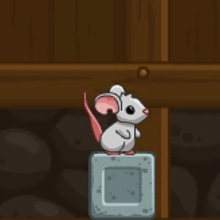
The Mouse and Its Cheese drops you into the worst kind of success story: you stole too much cheese, you celebrated for exactly one second, and now the universe has decided you’re a wanted legend with a price on your head. The vibe is simple and rude in the best arcade way. You’re a tiny mouse with a very big appetite, and a cat has finally tracked you down. No speeches, no mercy, just a chase that turns into a pure reflex test the moment your paws start moving. On Kiz10, it plays like a classic runner game where the road is never safe for long and your brain quickly learns one rule that feels unfair but also kind of hilarious: if you hesitate, you become lunch.
What makes it work is how fast it becomes personal. At first you’re just running, learning the rhythm, getting comfortable. Then a trap shows up in a spot that feels designed to embarrass you. You jump late, you clip it, the cat closes in, and suddenly you’re sitting forward like your posture can somehow help. This is that kind of game. It turns small mistakes into loud consequences, and that’s why it’s addictive. Every run feels like it could be cleaner. Every failure feels like it was your fault in a very specific way. That’s dangerous, because “specific fault” is what makes you hit restart immediately.
🐱👀 The cat isn’t fast, it’s inevitable
The best chases don’t need the enemy to be a genius. They just need the enemy to be consistent. The cat in this game is basically pressure with fur. It’s always there, always threatening, always reminding you that your goal isn’t to win a fight, it’s to survive the road long enough to stay ahead. The more you mess up, the closer it feels. The more you play clean, the more it becomes background terror, which is honestly worse because background terror makes you relax. Relaxing is how you die.
And the chase has a funny psychological effect. You stop thinking “I will avoid traps” and start thinking “I will keep rhythm.” Rhythm becomes your weapon. Jump timing becomes your shield. You begin to treat each obstacle like a beat in a song. If you hit the beat, you glide through. If you miss it, the whole track turns into noise and panic. That’s the moment the runner turns from casual to intense, and it happens fast.
🪤⚡ Traps that punish confidence, not ignorance
The trap design in a good runner isn’t about surprising new players forever. It’s about punishing patterns. The Mouse and Its Cheese does that well. You’ll see obstacles that demand clean jumps, others that demand quick decision-making, and moments where the “safe-looking” route is actually the risky one because it disrupts your movement flow. A lot of your losses won’t come from not understanding what to do. They’ll come from doing the right thing at the wrong time.
That’s why your second attempt is always better than your first. You learn where the timing window really is. You learn that jumping early is sometimes safer than jumping late. You learn that a small hesitation right before a trap is worse than committing, because hesitation breaks your alignment and turns a clean jump into a messy scrape. The game quietly trains you to commit with confidence, which is ironic, because too much confidence is also how you eat a trap. It’s a balancing act between calm and alertness.
🧠🧀 Greed isn’t the mechanic, it’s the mood
Even in a simple runner, there’s always something that makes you greedy. In this game, the theme itself does it. You’re a cheese thief. The whole identity is “I want more.” And once you’re in that mindset, you start running like a thief: pushing harder, trying to squeeze extra distance, taking riskier jumps because you feel like you can. Some runs will feel heroic. Others will end in an instant because you tried to be stylish when the road only wanted you to be accurate.
The funniest part is how quickly you start negotiating with yourself. One more jump, then I’ll focus. One more risky move, then I’ll play safe. That’s the lie every runner tells you. The road doesn’t care about your promises, and the cat definitely doesn’t care. The real skill is discipline: treating every trap like it deserves attention, even after you’ve already survived ten in a row.
🏃♂️💨 The flow state feels like escaping physics
When you’re playing well, something clicks. Your jumps stop feeling like separate actions and start feeling like one smooth movement. You’re no longer reacting late. You’re anticipating. Your eyes begin scanning ahead instead of staring at your character. You start moving like you already know what’s coming, even when you don’t. That’s the runner flow state, and it’s the reason games like this stay replayable for years.
In that flow, you’ll have moments that feel almost cinematic. A trap comes in fast, you jump clean, land perfectly, immediately jump again, and keep going without losing speed. It feels effortless, but it isn’t. It’s your brain doing timing math without asking permission. Then you realize you’re doing great, you glance at your progress, and the next trap catches you because you stopped respecting the rhythm for half a second. The game loves that. It loves humbling you right after it lets you feel good.
🎭🐭 Tiny hero, big chaos, zero patience
There’s a silly charm to playing as a small mouse in a big chase. You’re not a soldier. You’re not a superhero. You’re a creature with stolen cheese and a survival instinct. That makes the whole thing feel playful even when it’s intense. When you fail, it’s not tragic. It’s slapstick. When you succeed, it’s not epic. It’s satisfying in a clean, arcade way, like you outpaced a problem that never stops chasing.
That tone is why it fits Kiz10 so well. It’s quick to start, easy to understand, and it creates instant stakes without needing complicated systems. You run. You jump. You avoid. You try not to get caught. The difficulty comes from speed and pressure, not from learning a hundred mechanics. It’s pure runner gameplay, the kind that makes your hands sharper the more you play.
🧷🐱 How you actually improve without noticing
The hidden progression isn’t upgrades, it’s you. Your timing gets earlier. Your jumps get cleaner. Your panic reduces. You stop wasting motion. You stop correcting mid-air like you can negotiate with gravity. You start aligning before the obstacle, not during it. That’s real skill improvement, and you can feel it because your runs last longer and feel calmer.
And once you’re calmer, you start making smarter decisions. You don’t jump just because you’re nervous. You jump because it’s correct. You don’t rush into a trap sequence. You let your rhythm carry you through. That’s the difference between a run that feels chaotic and a run that feels controlled. The irony is that the controlled run is usually the faster run, because you’re not losing momentum to mistakes.
🏁🧀 The final vibe: a chase you’ll replay because it’s always “almost”
The Mouse and Its Cheese is a classic cat-and-mouse endless runner built on pressure, timing, and that constant feeling that your next attempt will be the clean one. The traps are straightforward but demanding, the chase keeps your nerves awake, and the theme adds just enough humor to make every failure feel like a lesson instead of a punishment. If you like runner games with quick reflex gameplay, simple controls, and the kind of replays loop that turns “just one try” into ten tries, this is exactly that. Run fast, jump cleaner, and remember: the cat doesn’t need to be faster than you… it only needs you to mess up once.





 Share
Share
 Embed
Embed


