🚦 The first tap feels innocent, the second tap starts a war
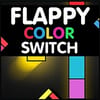
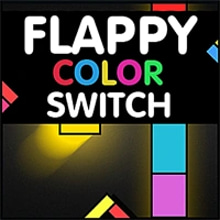
Flappy Colors Switch has that classic “one-button” vibe that looks friendly until you realize it’s built to expose every shaky nerve in your hands. You tap to stay in the air, you steer through gaps, and you keep moving forward because stopping is not part of the deal. The twist is the color-switch rule: it’s not enough to fly clean, you also have to pass through the correct color segments. A wrong match isn’t a small mistake. It’s the end. On Kiz10, it plays like a neon reflex challenge that turns a simple flappy flight into a timing puzzle where your brain is constantly whispering, wait… which color am I right now?
And that little question is the whole drama. You’ll be gliding perfectly, feeling calm for half a second, then the next obstacle shows up like a rotating traffic light with attitude. Suddenly you’re not just tapping, you’re reading. You’re deciding. You’re committing. And the moment you commit, the game speeds up just enough to make you doubt yourself.
🎨 One rule, endless ways to panic
The beauty of Flappy Colors Switch is that the rule set is tiny, but the situations it creates are surprisingly messy. You are always doing two things at once: controlling altitude and obeying color logic. That dual pressure changes how flappy games usually feel. In a normal flappy run, you stare at the gap and tap your way through. Here, you stare at the gap and also the paint on the gap, because the gap might be a trap if your color doesn’t match.
It creates those great little human moments where you know what to do, but your fingers do something else. You’ll see the right opening, you’ll be lined up perfectly, and then your eyes catch the wrong color at the last instant and your brain flinches. That flinch turns into a tap you didn’t need. The extra tap turns into a bad angle. The bad angle turns into a collision. The game didn’t outsmart you. Your own hesitation did. Which is honestly the most painful kind of defeat 😅
🧠 The real challenge is staying calm when the screen gets loud
As the run continues, the obstacles begin to feel more “alive.” Rotating rings, shifting blocks, narrow lanes that demand precise altitude… it’s like the level is trying to force you into rushed decisions. And the more you rush, the more you stop seeing the colors clearly. That’s when mistakes happen. Not because the game is impossible, but because you’re no longer processing what you’re looking at. You’re reacting to stress.
The secret skill is keeping your attention wide. Don’t glue your eyes to your character. Don’t chase the obstacle when it’s already close. Instead, read the next pattern early, keep your flight line smooth, and tap with intention. When your taps are consistent, your character’s movement becomes predictable, and predictability is safety in any flappy-style arcade game. When your taps are emotional, everything becomes chaos.
🌈 Color switching turns “easy gaps” into trick questions
There’s a special kind of frustration in Flappy Colors Switch when the gap is huge but you still can’t use it. The opening looks generous, the path looks obvious, and then you realize your current color doesn’t match the safe segment. Now you’re forced to aim for a smaller, specific section, and the game has effectively turned a simple obstacle into a logic test.
That’s what makes it feel fresh compared to basic tap-to-fly games. You’re not just surviving the physics. You’re surviving the rules. It’s like the game keeps asking, are you paying attention, or are you just tapping on autopilot? Autopilot gets punished quickly here. Paying attention gets rewarded with that delicious feeling of slipping through the exact correct color lane like you planned it five seconds ago.
⚡ When you hit the flow state, it feels unreal
The best runs happen when you stop thinking in full sentences. You stop saying “tap, tap, tap.” You stop naming colors. You just see the correct path and your finger matches it. Your taps become tiny and steady, your character floats at the right height, and the obstacles start feeling less like threats and more like rhythm cues. That’s the addictive part. A clean run feels like a dance. A messy run feels like falling down stairs.
And the game loves playing with your confidence. The moment you feel too comfortable, it introduces an awkward pattern, a tighter color segment, or a sequence that forces quick adjustments. It’s not unfair, it’s just demanding, the same way a rhythm game is demanding. The timing has to be yours. The decision has to be yours. If you hesitate, it punishes you immediately.
😵 The “almost” deaths are the ones that hook you
You’ll have a lot of endings that feel like a joke. The kind where you were one pixel away from success. The kind where you matched the color but clipped the edge. The kind where you had the altitude perfect but entered the wrong segment because your eyes lied for a split second. Those deaths are annoying, but they’re also the reason the game keeps you playing. Because every time it happens, you feel like you can fix it. Not eventually. Next run. Right now.
That’s why it works so well on Kiz10. It’s instant replay fuel. The restart isn’t a punishment, it’s an invitation. You don’t lose progress in some long campaign, you just lose a run, and runs are meant to be challenged. It becomes personal fast. You start chasing a cleaner flight line. A calmer mind. A longer streak. And suddenly a “simple” arcade game is making you concentrate like it’s an exam.
🎯 Little habits that quietly raise your score
If you want longer runs, the biggest improvement usually comes from reducing panic taps. Not tapping less, tapping smarter. Keep your taps small so your altitude changes are controlled. Stay centered when possible so you have room to adjust up or down. Read the next obstacle early so you’re not making last-second decisions. And most importantly, don’t let one mistake infect the next five seconds. The game is good at baiting you into revenge tapping after a near miss. Revenge tapping is how you lose.
There’s also a sneaky emotional trap: greed. When you’re doing well, you start trying to squeeze through the tightest possible lane because it looks cool. Or you try to speed your rhythm up because you feel strong. That’s when you crash. The best players look boring. Smooth, steady, calm. Boring wins.
🏁 A bright, fast obsession that respects your time
Flappy Colors Switch doesn’t ask for a long commitment. It asks for your attention in short bursts. It’s a perfect “quick session” arcade game that turns into a score chase because the rules are strict and the improvement is obvious. You can feel yourself getting better. You can feel when you’re calm. You can feel when you’re rushing. The game becomes a tiny mirror for your patience, and it somehow makes that fun.
If you enjoy color-switch mechanics, flappy tap controls, neon obstacle patterns, and the satisfying pain of almost-perfect runs, Flappy Colors Switch is exactly that kind of challenge on Kiz10: bright, simple, slightly cruel, and dangerously replayable. One more run is never just one more run 🌈🕹️





 Share
Share
 Embed
Embed