🧙♂️🔥 The Kingdom Calls, The Orcs Don’t Knock
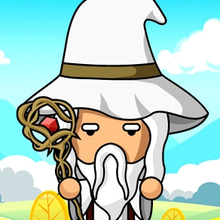
Spell Orcs starts with the kind of problem that has zero interest in diplomacy: a whole flock of orcs is coming, the magical kingdom is in trouble, and you’re the wizard on duty. Not the “wise mentor who gives advice” wizard. The “stand here and fix it” wizard. The screen looks calm for a second, like a storybook before the page catches fire, and then you realize what the game actually is: a focused magic puzzle where each level is a tiny siege and every spell you cast is a decision you can’t take back. On Kiz10, it feels like a classic brain-and-aim challenge wrapped in fantasy chaos. You’re not grinding stats. You’re not roaming a huge map. You’re solving one battle at a time, using spells like tools, trying to win cleanly and move forward.
What makes Spell Orcs instantly addictive is how clear the objective feels. Orcs exist. Orcs threaten the realm. Orcs need to stop existing. But the game doesn’t let you solve that with random clicking. It wants timing. It wants positioning. It wants you to look at the battlefield and think for half a second before you commit, because your magic isn’t just “damage,” it’s geometry. It’s trajectory. It’s controlling space. The orcs are the pressure, but your real opponent is the level layout that keeps daring you to waste a spell on the wrong target.
🪓👀 The Orc Wave Is a Moving Puzzle
Orcs in Spell Orcs don’t behave like polite targets lined up for practice. They move, they stack, they crowd lanes, and they force you to prioritize. Some are slow and feel harmless until they aren’t. Others feel like they arrive faster than your brain can finish a sentence. And that’s where the puzzle begins. You start reading the wave like it’s a sentence written in footsteps. Which orc matters first? Which one is bait? Which one is safe to ignore for two seconds while you set up a bigger hit?
This is the part where players usually mess up in the funniest way. You see an orc and you want to delete it immediately because that’s the human instinct. Threat appears, remove threat. Spell Orcs punishes that instinct if it’s sloppy. The better strategy is to remove the orc that breaks your control, not the orc that simply exists. A single enemy in the wrong spot can block your best angle, soak your damage, or force a panic cast that ruins the whole level. When you learn to spot that “problem orc,” the game starts feeling smoother, like you’re not reacting anymore, you’re directing the scene.
✨💥 Spells That Feel Like Power, But Also Like Responsibility
The magic is the main character here. You’re a powerful wizard, yes, but power in Spell Orcs isn’t unlimited. Even if the game is generous, it still expects you to use your spells with intent. A fire spell might feel like the obvious choice because fire is satisfying, but the level might be asking for control, not brute force. You’ll find yourself switching between spells the way a smart player switches between moods: aggressive when the lane is open, careful when the crowd gets tight, patient when you’re setting up a chain reaction.
The best feeling is when you cast something that solves two problems at once. You remove the immediate threat and you also create space for the next wave. That’s when you realize Spell Orcs is less about “being strong” and more about being efficient. Efficiency is the real magic. A clean cast that deletes the right targets makes the rest of the level easier. A messy cast that only looks powerful can leave you in a worse position even though you “hit something.”
And yes, there will be moments where you cast a spell and immediately regret it. Not because it didn’t work, but because it worked in a way that messed up your next move. That’s the delicious cruelty of good puzzle combat. It’s not random. It’s consequence.
🧩🏰 Levels That Teach You Without Talking Too Much
Spell Orcs has 36 levels, and the difficulty curve feels like a teacher with a sense of humor. Early levels let you learn the basics. You experiment. You feel smart. Then the game begins layering the challenge. Suddenly you’re dealing with tighter timing, trickier positioning, and more situations where a “good” spell is only good if you cast it at the right moment. The levels become little lessons in patience. The game isn’t telling you “be patient,” it’s letting you fail until you become patient out of survival.
You’ll notice how the environment becomes part of the fight. Layout matters. Where the orcs enter matters. The spacing between them matters. Even the little gaps and corners matter, because those are the places where your spells either do maximum work or get wasted. At some point, you stop seeing the battlefield as decoration and start seeing it as a tool. You aim not just at orcs, but at the situation around them.
That’s also when you start doing something very gamer and very silly: you begin pre-planning like you’re a wizard general. “If I hit that group now, the next ones bunch up here.” “If I wait half a second, I can catch more in the blast.” “If I panic-cast, I lose.” Spell Orcs turns your inner monologue into part of the gameplay, and it’s honestly entertaining to realize you’re taking a tiny browser level this seriously.
😵💫⏱️ The Panic Trap: Casting Too Early, Casting Too Late
Most losses in Spell Orcs happen in one of two ways. First: casting too early. You see enemies and you throw magic immediately, but the wave wasn’t fully committed yet, so you hit fewer targets than you could’ve. You win the moment, but you lose efficiency, and later the level punishes you for that wasted value. Second: casting too late. You get greedy and you wait for the “perfect” moment, and the perfect moment arrives one second after the orcs have already broken your safety line. Now you’re casting while stressed, and stressed casting is how you miss angles, mis-time hits, and spiral.
The sweet spot is controlled timing. You’re not waiting forever, you’re waiting for shape. You want the wave to form a pattern you can punish. Once you start seeing those patterns, the game becomes less frantic and more satisfying. It feels like you’re solving a moving puzzle instead of surviving a mess.
🧠🪄 The Weird Joy of Playing Like a Wizard, Not a Button Masher
There’s a specific kind of satisfaction Spell Orcs delivers: the feeling that you outsmarted the level. You didn’t just blast harder, you chose better. You used the right spell, at the right time, in the right place, and the wave collapsed like it was always fragile. Those wins feel clean. They feel earned. And they make you want to replay levels just to do them more elegantly, because once you see the solution, your pride starts demanding a “perfect” run.
You’ll also start noticing your own improvement fast. Early on, you’ll waste casts on single targets. Later, you’ll naturally wait for clusters. Early on, you’ll focus only on the closest threat. Later, you’ll think two steps ahead and remove the orc that will become a problem, not the orc that is currently loud. That progression is pure player skill, and it’s one of the reasons Spell Orcs fits so well on Kiz10: you can feel yourself getting better without any complicated systems.
🏆🌙 The Final Stretch: When the Kingdom Feels Heavy
As you push deeper, the levels start feeling less forgiving. You can still win, but you can’t coast. That’s where Spell Orcs becomes at its best, because it forces you into a calm focus state. You stop rushing. You stop chasing flashy casts. You start respecting the wave. The kingdom becomes more than a story line, it becomes a pressure meter in your head: keep it safe, keep it stable, finish the level.
And when you finally clear a tough stage, it feels like relief. Not the loud “I’m a champion” relief, more like “okay… I handled that.” A quiet victory that still tastes good. That’s the vibe of Spell Orcs: fantasy chaos with puzzle discipline. You’re a wizard, yes, but the real spell is learning to stay calm while everything tries to make you panics.



 4.3 (54 votes)
 Share
Share
 Embed
Embed